
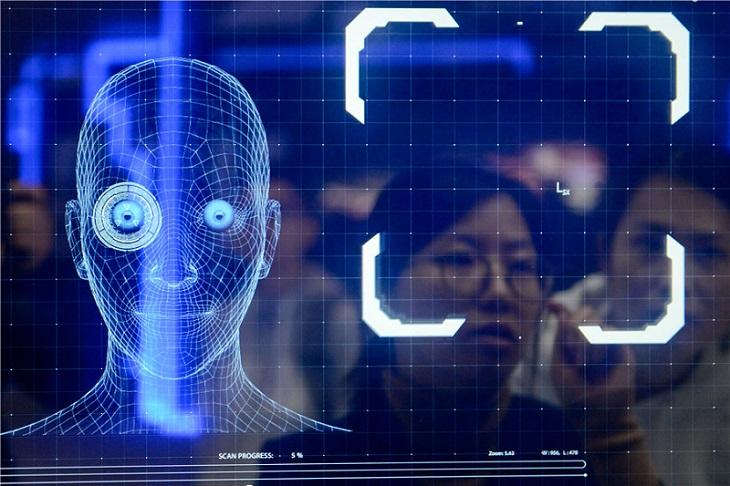
The influence of visual AI has expanded far beyond research labs and tech company campuses; it is now a pervasive force reshaping operations and creating new value across the global economy. The modern AI Image Recognition Industry is characterized by its broad and deep integration into the core processes of countless sectors. From automating quality control on factory floors to helping doctors diagnose diseases and enabling frictionless retail experiences, the technology is acting as a powerful catalyst for innovation, efficiency, and safety. This widespread adoption is driven by the industry's ability to provide a suite of tools that can be tailored to solve specific, real-world problems, turning vast streams of visual data into actionable intelligence. The result is a fundamental transformation of traditional business models and the creation of entirely new capabilities that were previously unimaginable.
In the healthcare sector, the impact of the AI image recognition industry has been nothing short of revolutionary. It is becoming an indispensable tool for medical professionals, particularly in the field of radiology. AI algorithms trained on millions of medical scans can detect subtle signs of diseases like cancer, diabetic retinopathy, and neurological disorders in X-rays, CT scans, and MRIs, often with a level of accuracy that matches or even exceeds that of human experts. This augments the capabilities of radiologists, helping to reduce their workload, minimize diagnostic errors, and enable earlier detection and treatment, ultimately leading to better patient outcomes. In digital pathology, AI systems are automating the analysis of tissue samples, accelerating a traditionally labor-intensive process and providing more quantitative and objective insights for diagnosis and research.
The retail and e-commerce industries have also been profoundly reshaped by the adoption of visual AI. In the online world, visual search has become a key feature, allowing consumers to find products by simply uploading a picture, creating a more intuitive and seamless shopping experience. In physical stores, AI-powered cameras are used to analyze customer foot traffic patterns, dwell times, and product interactions, providing retailers with valuable insights into store layout and merchandising effectiveness. The most futuristic application is the automated checkout system, pioneered by Amazon Go, where cameras and sensors track the items a customer selects, allowing them to simply walk out of the store without a traditional checkout process. This technology is also being used for automated inventory management, using drones or robots to scan shelves and monitor stock levels.
The automotive and security sectors are two other domains where the AI image recognition industry's influence is critical. In the automotive world, it forms the sensory core of Advanced Driver-Assistance Systems (ADAS) and the pursuit of full autonomy. Cameras and AI models work together to identify and classify pedestrians, cyclists, other vehicles, lane markings, and traffic signals, enabling features like automatic emergency braking, lane-keeping assist, and adaptive cruise control. In the security and public safety domain, the technology powers next-generation surveillance systems that can automatically detect anomalies, such as unattended bags or unusual crowd behavior. Facial recognition is used for secure access control in buildings and for identity verification at borders, demonstrating the technology's vital role in creating safer and more efficient environments.
Top Trending Reports:
Programmatic Advertising Market

 Arabic
 French
 Spanish
 Portuguese
 Deutsch
 Turkish
 Dutch
Dutch
 Italiano
 Russian
 Romaian
 Portuguese (Brazil)
 Greek
Greek