
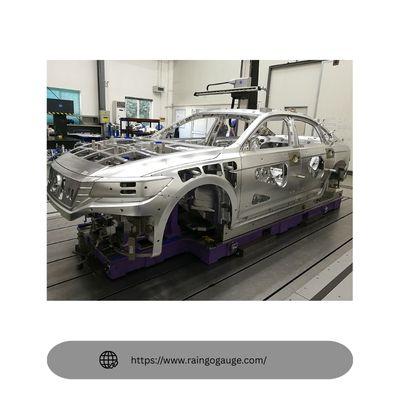
Modular Cubing Fixtures for Automotive Applications
Modular cubing fixtures are widely used in automotive manufacturing to improve productivity, accuracy, and flexibility in machining and inspection processes. As vehicle designs become more complex and production cycles shorter, automotive manufacturers increasingly rely on modular cubing fixtures to meet demanding quality and efficiency requirements.
What Are Modular Cubing Fixtures?
Modular cubing fixtures are multi-sided workholding systems designed to hold automotive components securely during machining, welding, inspection, or assembly. These fixtures are built using standardized modular elements, allowing manufacturers to configure, reconfigure, or expand the fixture based on specific part geometries and production needs. The cube-style design enables access to multiple faces of a component without repositioning, saving time and improving precision.
Importance in Automotive Manufacturing
In automotive applications, consistency and repeatability are critical. Modular cubing fixtures ensure precise positioning of parts such as engine blocks, transmission housings, suspension components, and structural assemblies. Their rigid construction minimizes vibration and deflection, resulting in better surface finishes, tighter tolerances, and reduced scrap rates.
Key Benefits of Modular Cubing Fixtures
One of the biggest advantages of modular cubing fixtures is flexibility. Automotive manufacturers can adapt the same fixture system for different vehicle models or design changes without building entirely new tooling. This significantly reduces tooling costs and lead times.
Another major benefit is increased productivity. Since multiple sides of a component can be accessed in a single setup, machining and inspection operations become faster and more efficient. This reduced setup time directly contributes to higher throughput on the shop floor.
Modular cubing fixtures also support automation. They are commonly used in robotic machining cells and automated inspection systems, where precise and repeatable positioning is essential for consistent results.
Applications Across Automotive Components
Modular cubing fixtures are used across a wide range of automotive applications, including powertrain components, chassis parts, body-in-white assemblies, and electric vehicle components. They are especially valuable for complex parts that require multi-axis machining or inspection from several angles.
In quality control, these fixtures allow coordinate measuring machines and vision inspection systems to access multiple features without part re-clamping, improving measurement accuracy and reducing inspection cycle time.
Supporting Lean and Agile Manufacturing
As the automotive industry moves toward lean manufacturing and rapid model changes, modular cubing fixtures support agile production strategies. Their reusable design aligns with sustainability goals by reducing material waste and extending tooling life. Manufacturers can quickly respond to new product introductions while maintaining high quality standards.
Conclusion
Modular cubing fixtures play a vital role in modern automotive manufacturing by enhancing flexibility, precision, and efficiency. Their modular design, multi-face accessibility, and compatibility with automation make them an essential solution for automotive applications. As production demands continue to evolve, modular cubing fixtures will remain a key component in achieving reliable, cost-effective, and scalable manufacturing processes.

 English
 Arabic
 French
 Spanish
 Portuguese
 Deutsch
 Turkish
 Dutch
Dutch
 Italiano
 Russian
 Portuguese (Brazil)
 Greek
Greek