
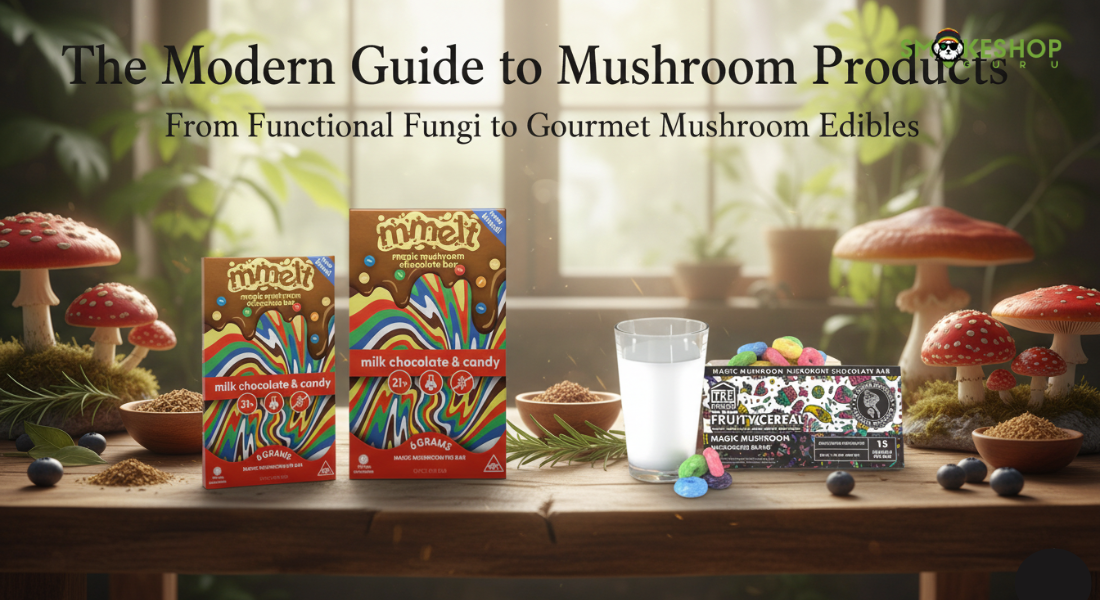
The Modern Guide to Mushroom Products: From Functional Fungi to Gourmet Mushroom Edibles
I remember walking through a local farmers market a few years ago and seeing a small stand dedicated entirely to fungi. Back then, most people only thought of mushrooms as a pizza topping or something you’d find in a dusty forest. Today, that has completely changed. As we move through 2026, the industry for mushroom products has exploded into a multi-billion dollar market. From high-tech tinctures to artisan chocolates, mushrooms have moved from the fringe of the forest to the center of the alternative lifestyle movement.
The surge in interest is driven by a new understanding of how these organisms interact with our daily routines. Whether you are a fan of traditional culinary varieties or you are curious about the more specialized "nootropic" blends, there is a mushroom product for every type of consumer. The diversity is staggering, and for a newcomer, it can be a bit overwhelming to distinguish between a functional blend and a recreational treat.
Understanding the Functional Fungi Boom
When people talk about functional mushroom products, they are usually referring to a group of non-intoxicating fungi like Lion's Mane, Reishi, Cordyceps, and Chaga. These aren't the kind of mushrooms you’d find in a standard grocery store aisle. They have been used in traditional practices for centuries, but modern extraction methods have made them more accessible and potent than ever.
I have a friend who replaced his second cup of afternoon coffee with a Lion's Mane and Cordyceps blend. He noticed that instead of the usual caffeine jitters, he had a much more sustained and "even" sense of energy throughout the day. This is the hallmark of the functional mushroom product market. It is about supporting your natural systems and finding balance without the "crash" often associated with synthetic alternatives.
The Rise of Mushroom Edibles in the USA
One of the biggest shifts we have seen in 2026 is the creative way these fungi are being delivered to the consumer. The days of swallowing giant, earthy-tasting capsules are largely over. Now, mushroom edibles have taken over the shelves. We are talking about gourmet gummies, dark chocolate bars, and even infused honey.
The appeal of a mushroom edible is simple: it tastes good and it is incredibly convenient. I recently tried a mushroom edible that was flavored like wild huckleberry. If I hadn't seen the label, I would have thought it was just a high-end candy from a boutique confectioner. This "democratization" of fungi means that more people are willing to give them a try because the barrier of the "mushroom taste" has been completely removed.
Popular Mushroom Varieties and Their Typical Uses
| Mushroom Type | Common Format | Known For | Key Market Trend |
| Lion's Mane | Gummies / Coffee | Cognitive Support | The "Nootropic" Leader |
| Reishi | Tea / Tincture | Adaptive Support | Evening Rituals |
| Cordyceps | Capsules / Shots | Physical Stamina | Fitness and Athletics |
| Amanita | Edibles / Vapes | Perceptual Shift | Legal "Magic" Alternative |
Navigating the World of Magic Mushroom Edibles
There is a lot of buzz surrounding magic mushroom edibles right now, especially as state-level regulations in the USA begin to shift. It is important to understand that while some states have decriminalized or legalized certain types of fungi for specific uses, the legal landscape is still very much a patchwork.
Many products currently on the market labeled as "magic" actually use a different type of fungus called Amanita muscaria. This is distinct from the psilocybin-containing mushrooms that are often associated with the term. Amanita-based magic mushroom edibles provide a unique experience that many describe as "dream-like" or deeply contemplative. Because these products are becoming more common in smoke shops and specialty stores, it is vital for consumers to read labels carefully and understand exactly what is in their mushroom edible before they begin their session.
Quality Control in the Mushroom Market
As with any fast-growing industry, quality can vary significantly between brands. I always tell people that the most important thing to look for in a mushroom product is transparency. Does the brand offer third-party lab results? Do they specify if they are using the "fruiting body" of the mushroom or the "mycelium"?
The fruiting body is the actual cap and stem that you see above ground, and it typically contains the highest concentration of beneficial compounds. Some budget-friendly functional mushroom products use mycelium grown on grain, which can be less potent and include a lot of "filler" material. In 2026, savvy consumers are looking for "fruiting body only" extracts to ensure they are getting the most value for their money.
Edible Mushrooms: From the Kitchen to the Smoke Shop
It is interesting to see how the line between edible mushrooms used for cooking and those used for their active compounds is blurring. We are seeing a "gourmet" crossover where high-end smoke shops are carrying dried, infused edible mushrooms that can be added to soups or teas.
I remember a dinner party where the host served a risotto made with dried functional mushrooms. It was rich, savory, and had a depth of flavor that ordinary button mushrooms just can't match. This culinary approach to the mushroom product is a huge trend this year. It turns the act of consumption into a creative experience rather than just another supplement in a cabinet.
The Future of Mushroom Tech and Innovation
What is next for the world of fungi? In 2026, we are seeing the emergence of "smart" mushroom products that use liposomal delivery systems. This technology wraps the mushroom extracts in tiny bubbles of fat, which helps the body absorb the active compounds more efficiently.
We are also seeing more sustainable packaging solutions. Because the mushroom industry is so closely tied to nature, many brands are leading the way in biodegradable or compostable packaging made from—you guessed it—mushroom mycelium itself. It is a beautiful full-circle moment where the product and the packaging are part of the same biological cycle.
Tips for the First-Time User
If you are new to the world of mushroom edibles, my best advice is to start low and go slow. Even though functional mushroom products are non-intoxicating, everyone's body chemistry is different. You want to see how a specific mushroom edible affects you before you make it a permanent part of your daily routine.
Also, don't be afraid to ask questions at your local shop. The staff at a quality smoke shop should be able to explain the difference between a Lion's Mane gummy and a Reishi tea. They can help you find a mushroom product that aligns with what you are looking for, whether that is a bit of extra focus during your workday or a more grounded feeling in the evening.
Final Thoughts on the Fungi Revolution
The mushroom movement is about more than just a new set of products; it is about a shift in how we think about our relationship with the natural world. Mushrooms are the great recyclers of the earth, and as we learn to work with them, we are discovering new ways to enhance our own lives.
Whether you are interested in the cognitive benefits of functional mushroom products or the unique experiences offered by magic mushroom edibles, there has never been a more exciting time to explore this space. The variety and quality available in 2026 are truly remarkable, and we are still just scratching the surface of what these incredible organisms can do.
Conclusion
The rise of mushroom products in the USA marks a significant chapter in the evolution of the alternative lifestyle market. From the kitchen-ready versatility of edible mushrooms to the sophisticated delivery of a modern mushroom edible, the options for consumers are expanding every day. As we continue to see advancements in how functional mushroom products are formulated and regulated, the focus remains on quality, transparency, and a deeper connection to nature. Whether you are searching for a new daily ritual or are curious about the shifting world of magic mushroom edibles, staying informed is the key to a positive experience. For those looking to explore a curated selection of the finest fungi-based innovations, Smoke Shop Gurus offers a gateway to high-quality, lab-tested options that fit perfectly into a modern, health-conscious lifestyle. The world of mushrooms is vast, ancient, and full of potential—it is time to see what it has in store for you.
Frequently Asked Questions
1. What is the difference between mycelium and fruiting body in mushroom products?
The fruiting body is the visible part of the mushroom (the cap and stem), while the mycelium is the underground root-like network. Most experts agree that the fruiting body contains a higher concentration of active compounds, though some brands use mycelium because it is faster and cheaper to grow.
2. Are mushroom edibles legal to buy in every state?
Functional mushroom products (like Lion's Mane or Reishi) are legal nationwide. However, products containing psychoactive compounds are subject to a complex web of state and local laws. Always check your local regulations before purchasing any magic mushroom edibles.
3. How long does it take to feel the effects of a mushroom edible?
Because they must be processed by your digestive system, it usually takes between 30 to 90 minutes to feel anything from a mushroom edible. This can vary depending on your metabolism and whether you have eaten recently.
4. Can I take multiple types of mushroom products at the same time?
Yes, many people "stack" different mushrooms to get a broader range of benefits. For example, a popular stack is Lion's Mane for the morning and Reishi for the evening. Just be sure to read the serving sizes on each mushroom product to ensure you aren't overdoing it.
5. Do mushroom products have a specific taste?
Raw mushrooms can have a very earthy or bitter flavor. However, most modern mushroom edibles use natural fruit flavors and sweeteners to mask the taste, making them quite delicious. If you prefer the natural taste, dried edible mushrooms or unflavored tinctures are still widely available.

 Arabic
 French
 Spanish
 Portuguese
 Deutsch
 Turkish
 Dutch
Dutch
 Italiano
 Russian
 Romaian
 Portuguese (Brazil)
 Greek
Greek