
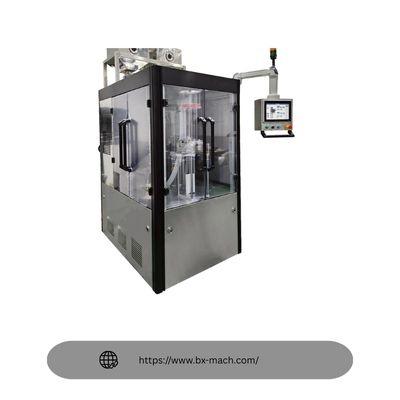
Softgel Capsule Drying Tunnel: Design, Function, and Importance in Softgel Manufacturing
Introduction
Soft gelatin capsules (softgels) are widely used in pharmaceutical, nutraceutical, and health supplement industries due to their ease of swallowing, accurate dosing, and ability to encapsulate liquids and semi-solids. One of the most critical stages in softgel production is drying, and the softgel capsule drying tunnel plays a central role in ensuring capsule quality, stability, and shelf life.
What Is a Softgel Capsule Drying Tunnel?
A softgel drying tunnel is a controlled-environment system designed to remove excess moisture from freshly formed softgel capsules after encapsulation. Immediately after encapsulation, softgels contain a high percentage of water and plasticizers (such as glycerin or sorbitol) in the gelatin shell. The drying tunnel initiates the moisture reduction process before final tray drying.
Purpose of the Drying Tunnel
The drying tunnel serves several essential functions:
-
Reduces surface moisture to prevent capsules from sticking together
-
Stabilizes capsule shape and prevents deformation
-
Prepares capsules for secondary drying (tray or tumble drying)
-
Improves production efficiency by shortening overall drying time
-
Ensures uniform drying across large batch volumes
Without proper tunnel drying, softgels may suffer from defects such as leakage, brittleness, deformation, or microbial growth.
Working Principle
After encapsulation and washing, softgel capsules enter the drying tunnel via conveyor belts or perforated trays. The tunnel operates under carefully controlled conditions of:
-
Temperature
-
Relative humidity (RH)
-
Airflow velocity
Dehumidified air is circulated uniformly around the capsules, allowing gradual moisture evaporation from the gelatin shell without damaging capsule integrity.

 English
 Arabic
 French
 Spanish
 Portuguese
 Deutsch
 Turkish
 Dutch
Dutch
 Italiano
 Romaian
 Portuguese (Brazil)
 Greek
Greek