
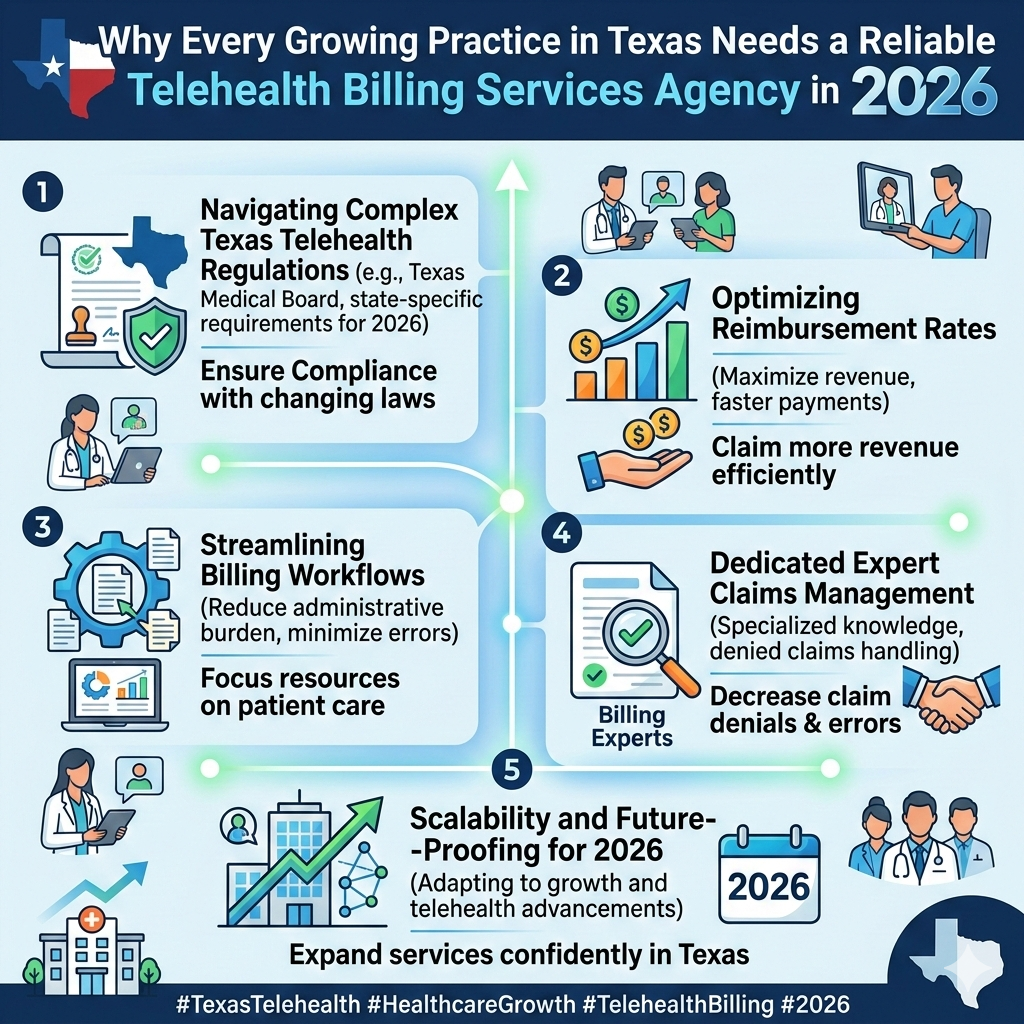
Telehealth is no longer a temporary solution—it has become a permanent and powerful part of modern healthcare delivery. Across Texas, from Houston and Dallas to Austin and smaller rural communities, healthcare providers are embracing virtual care to improve access, increase patient satisfaction, and maintain operational flexibility.
However, while telehealth has expanded clinical reach, it has also introduced new billing complexities. Reimbursement rules, payer policies, coding updates, and compliance requirements vary significantly—especially within Texas. That’s why partnering with a specialized telehealth billing services agency has become essential for providers who want to thrive in today’s competitive environment.
In this article, we’ll explore why telehealth billing requires expertise, how Texas regulations impact reimbursements, and how 247 Medical Billing Services supports providers across the state with accurate, compliant, and revenue-focused solutions.
The Growth of Telehealth in Texas
Texas is one of the largest and most diverse healthcare markets in the United States. From metropolitan hospital systems to rural independent practices, telehealth has helped bridge geographic and accessibility gaps.
Several factors continue to drive telehealth adoption in Texas:
-
Increased demand for remote care convenience
-
Expanded insurance coverage for virtual services
-
Growing patient acceptance of video consultations
-
Rising need for mental health and chronic care management
-
Workforce shortages in rural areas
But with growth comes complexity.
Billing for telehealth services involves more than submitting standard claims. Providers must ensure:
-
Correct use of telehealth modifiers
-
Proper place-of-service (POS) codes
-
Accurate CPT and HCPCS coding
-
Payer-specific documentation requirements
-
Texas Medicaid compliance standards
Without specialized knowledge, reimbursement delays and denials can quickly increase.
Why Telehealth Billing Is More Complex Than Traditional Billing
Many providers initially assumed telehealth billing was simply an extension of in-office billing. In reality, it involves additional regulatory layers.
A professional telehealth billing services agency understands that telehealth reimbursement depends on:
1. Modifier Accuracy
Telehealth claims often require modifiers such as:
-
95
-
GT
-
FQ (audio-only services, where applicable)
Using the wrong modifier can result in immediate claim rejection.
2. Place of Service (POS) Codes
POS codes changed significantly after pandemic-related temporary rules. Misusing POS 02 or 10 can directly impact reimbursement levels.
3. Payer-Specific Policies
Texas-based commercial insurers may follow different telehealth reimbursement models compared to federal programs.
4. Documentation Requirements
Telehealth visits must clearly document:
-
Patient consent
-
Technology used
-
Provider location
-
Duration of visit
-
Medical necessity
Incomplete documentation often leads to audits or payment recoupments.
https://www.247medicalbillingservices.com/
Texas-Specific Telehealth Considerations
Texas has its own regulatory framework that affects telehealth billing. While federal guidelines provide a foundation, Texas Medicaid and private payers often have unique conditions.
Key Texas considerations include:
-
State-specific Medicaid telehealth guidelines
-
Audio-only coverage variations
-
Cross-state licensure compliance
-
Rural health reimbursement adjustments
-
Behavioral health billing nuances
A telehealth billing services agency experienced in Texas understands how to align claims with both federal and state rules, minimizing compliance risks.
Financial Risks of In-House Telehealth Billing
Many Texas practices attempt to handle telehealth billing internally. While this may work initially, it often leads to long-term revenue challenges.
Common in-house billing issues include:
-
High denial rates due to coding errors
-
Delayed reimbursements
-
Staff overwhelmed by regulatory updates
-
Inconsistent follow-ups on unpaid claims
-
Lack of telehealth-specific audit protocols
Over time, these issues impact cash flow stability and practice growth.
Outsourcing to a specialized telehealth billing services agency shifts the focus back to patient care while ensuring optimized revenue cycle management.
How 247 Medical Billing Services Supports Texas Providers
247 Medical Billing Services has built a reputation for helping healthcare providers improve revenue performance while maintaining strict compliance standards. For Texas-based practices offering telehealth services, the company provides tailored solutions designed to address state-specific complexities.
Their approach includes:
Comprehensive Telehealth Coding Expertise
Certified billing professionals ensure accurate:
-
CPT and HCPCS selection
-
Modifier usage
-
POS code alignment
-
Documentation review
Denial Prevention and Management
Instead of reacting to denials, proactive claim scrubbing reduces rejection rates before submission.
Texas Medicaid and Commercial Payer Expertise
Understanding regional payer behavior allows for faster claim approvals and reduced back-and-forth corrections.
Transparent Reporting
Practices receive detailed financial reports covering:
-
Claim submission rates
-
Denial percentages
-
Reimbursement timelines
-
Accounts receivable aging
This data-driven transparency helps providers make informed operational decisions.
Benefits of Partnering With a Telehealth Billing Services Agency
When Texas healthcare providers collaborate with a specialized agency, the benefits extend beyond simple claims processing.
1. Improved Cash Flow Stability
Accurate claims submission leads to faster reimbursements and fewer payment delays.
2. Reduced Administrative Burden
Clinical staff can focus on patient care instead of billing corrections.
3. Enhanced Compliance Protection
Staying aligned with federal and Texas telehealth regulations reduces audit risks.
4. Scalable Growth Support
As telehealth services expand, billing systems adapt without requiring internal restructuring.
5. Lower Operational Costs
Outsourcing often costs less than maintaining full-time, in-house billing teams.
Telehealth Specialties That Benefit Most in Texas
While telehealth spans multiple disciplines, certain specialties in Texas see particularly strong returns when using a telehealth billing services agency:
-
Mental and behavioral health practices
-
Primary care providers
-
Occupational and physical therapy clinics
-
Chronic disease management programs
-
Remote patient monitoring services
-
Pediatric follow-up care
These services often involve complex coding combinations and recurring virtual visits, making billing accuracy critical.
Compliance and Audit Preparedness in 2026
As telehealth becomes permanent, regulatory scrutiny is increasing. Texas providers must be prepared for audits related to:
-
Medical necessity validation
-
Frequency of virtual visits
-
Audio-only service justification
-
Cross-state service delivery
A reliable telehealth billing services agency ensures that documentation, coding, and billing processes are audit-ready.
Proactive compliance measures include:
-
Routine internal claim audits
-
Ongoing staff training
-
Monitoring CMS and Texas policy updates
-
Updating billing workflows based on new regulations
247 Medical Billing Services integrates these compliance safeguards into its revenue cycle management model.
The Competitive Advantage of Revenue Optimization
In Texas’ competitive healthcare landscape, revenue optimization is essential. Practices that manage telehealth billing strategically can:
-
Increase reimbursement accuracy
-
Reduce claim turnaround time
-
Strengthen financial forecasting
-
Expand telehealth service offerings confidently
Rather than viewing billing as a back-office task, forward-thinking practices treat it as a strategic growth function.
A telehealth billing services agency plays a direct role in shaping this growth by ensuring that every eligible service is billed accurately and reimbursed appropriately.
Choosing the Right Telehealth Billing Partner in Texas
Not all billing agencies are equipped to handle telehealth complexities. When evaluating a partner, Texas providers should consider:
-
Experience with Texas Medicaid and regional payers
-
Certified coding expertise
-
Transparent reporting systems
-
Proven denial reduction strategies
-
HIPAA-compliant technology infrastructure
-
Clear communication channels
247 Medical Billing Services aligns with these expectations by offering customized solutions designed for evolving telehealth models.
The Future of Telehealth Billing in Texas
As 2026 unfolds, telehealth will continue to evolve. Artificial intelligence-driven documentation tools, expanded remote monitoring programs, and hybrid care models will introduce new billing codes and reimbursement structures.
Texas practices that proactively align with a professional telehealth billing services agency will be better positioned to:
-
Adapt quickly to regulatory changes
-
Maintain revenue consistency
-
Avoid costly compliance errors
-
Support long-term expansion
Telehealth is no longer an experimental offering—it is a permanent pillar of modern healthcare delivery.
Conclusion: A Strategic Move for Sustainable Growth
For healthcare providers across Texas, telehealth offers immense opportunity—but only when supported by accurate and compliant billing systems. The complexities of modifiers, POS codes, payer variations, and state regulations make specialized expertise essential.
Partnering with a trusted telehealth billing services agency like 247 Medical Billing Services empowers practices to:
-
Improve reimbursement rates
-
Reduce administrative strain
-
Strengthen compliance safeguards
-
Enhance financial performance
In a rapidly evolving healthcare landscape, billing precision is not optional—it is foundational to sustainable growth. Texas providers who invest in expert telehealth billing support today are positioning their practices for long-term success tomorrow.

 English
 Arabic
 French
 Spanish
 Portuguese
 Deutsch
 Turkish
 Dutch
Dutch
 Italiano
 Russian
 Romaian
 Greek
Greek