
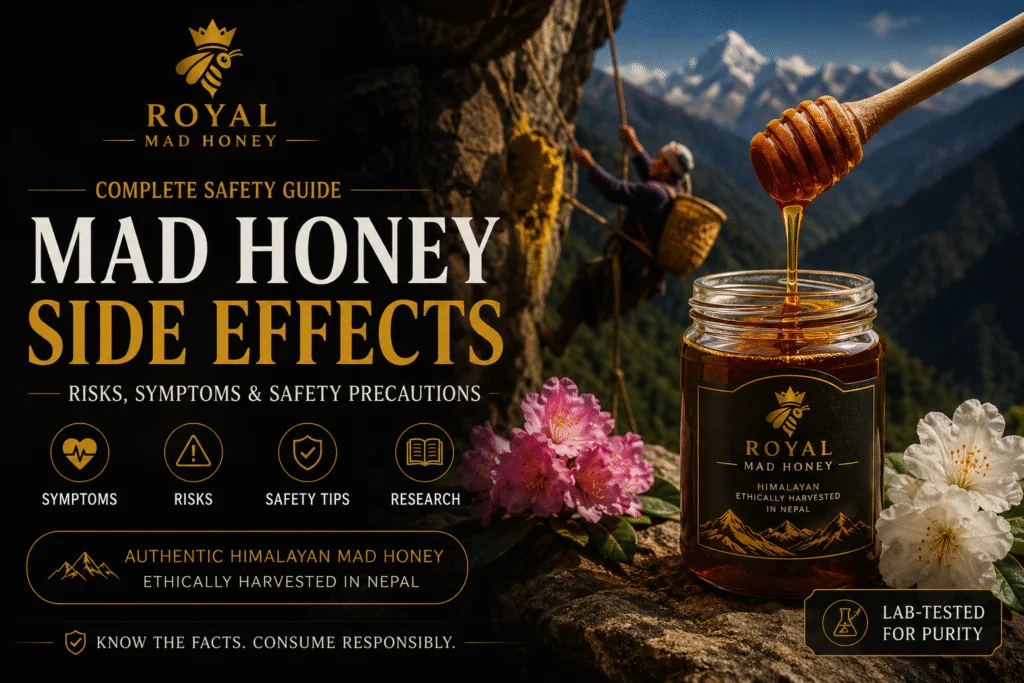
Mad honey has been used for centuries in the Himalayan regions of Nepal and parts of Turkey, where local communities have traditionally valued it for its unique properties. Unlike ordinary honey, authentic Himalayan mad honey naturally contains grayanotoxins—compounds found in the nectar of certain wild rhododendron flowers.
While many people consume mad honey without serious problems when used responsibly, consuming too much can cause temporary side effects that range from mild dizziness to more significant cardiovascular symptoms. Because the natural concentration of grayanotoxins varies between harvests, understanding the possible side effects is essential before trying mad honey for the first time.
In this guide, you’ll learn what causes mad honey side effects, the symptoms to watch for, who may be at greater risk, and practical safety tips based on current scientific understanding and traditional harvesting knowledge. If you’re new to this unique Himalayan product, start by learning what mad honey is and where it comes from before exploring its possible side effects.

 English
 French
 Spanish
 Portuguese
 Deutsch
 Turkish
 Dutch
Dutch
 Italiano
 Russian
 Romaian
 Portuguese (Brazil)
 Greek
Greek