
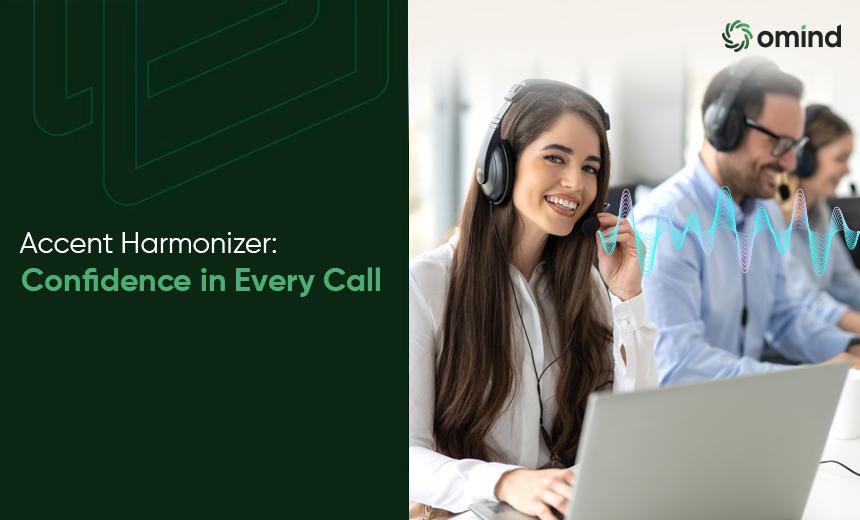
In the world of high-stakes audio production—whether you are a podcaster, a remote professional, or a content creator—clarity is king. However, achieving studio-grade audio in an imperfect environment has historically been an uphill battle. We have long relied on heavy microphones, sound-treated booths, and complex post-production workflows to remove background hums and distracting room reflections.
Today, the landscape is shifting. We are entering an era where AI voice harmonizer software and AI accent conversion are no longer just creative tools for music or character acting; they are becoming the backbone of a sophisticated, all-in-one noise cancellation ecosystem.
The Evolution of Noise Cancellation
Traditional noise cancellation software typically operates by identifying static frequencies—like the low rumble of an air conditioner or the whir of a computer fan—and subtracting them from the audio signal. While effective, this approach often leaves the remaining voice sounding "robotic" or thin.
The next generation of audio processing moves beyond simple subtraction. By integrating AI-driven voice modeling, current software doesn’t just remove noise; it reconstructs the voice. This is where the synthesis of noise cancellation, voice harmonization, and accent conversion creates a powerful competitive advantage.
Strengthening the Signal with AI Voice Harmonizers
AI voice harmonizer software was originally designed to add depth and texture to vocal tracks by creating layered harmonies in real-time. However, when applied to standard speech, these tools serve as a sophisticated form of "signal reinforcement."
By analyzing the characteristics of a speaker’s voice, harmonizer software can fill in the gaps left by aggressive background noise suppression. If a noise gate or a filter cuts out a portion of the speech frequency, the AI harmonizer can intelligently predict and reconstruct those gaps. The result is a voice that sounds thick, present, and professional, regardless of the environment in which it was recorded.
The Role of AI Accent Conversion
While noise cancellation cleans the environment, AI accent conversion ensures the message is understood with maximum clarity. In a globalized digital workspace, regional accents can sometimes be affected by poor-quality microphone capture or high-compression video conferencing tools.
When you combine accent conversion with noise cancellation, you aren't just ensuring the audio is "clean"; you are ensuring it is "articulate." The AI models used for accent conversion are trained on high-fidelity, studio-recorded datasets. By routing a captured voice through these models, the software effectively replaces the muddy, noise-polluted signal with a clear, synthesized iteration of that speaker's voice. It is the audio equivalent of turning a shaky, low-resolution video into 4K footage.
The Combined Solution: Why It Works
When you bring these three technologies together, you create a "triad of clarity." Here is how the workflow functions in practice:
-
AI Noise Cancellation: The "front line" defense. It strips away ambient noise, traffic, and mechanical hums from the source.
-
AI Voice Harmonizer: The "restoration" layer. It takes the output from the noise canceller and adds richness, ensuring the speaker doesn't sound thin or artificial.
-
AI Accent Conversion: The "optimization" layer. It maps the speaker’s vocal cadence and intonation onto a clean, high-fidelity model, ensuring that the listener hears every syllable with perfect precision.
This workflow is particularly transformative for remote work. Imagine a software developer working from a bustling coffee shop or a journalist filing a report from a windy outdoor location. Instead of the listener hearing wind or clinking dishes, they hear a crystal-clear, studio-quality voice. The technology effectively decouples the speaker's vocal identity from their physical location.
Future Implications for Creators
The implications of this convergence extend far beyond just clean meetings. For podcasters, this tech means they can record anywhere without needing a professional studio, democratizing high-quality production. For streamers, it means an end to the "background noise" chatter that often distracts viewers.
However, as with any technological leap, ethical considerations remain. With the power to convert accents and harmonize voices, creators have a responsibility to be transparent about how their audio is being processed. When used for improvement rather than misdirection, these tools represent the greatest advancement in audio fidelity since the invention of the condenser microphone.
Conclusion
The future of professional audio isn't about better hardware; it’s about better intelligence. By merging AI accent conversion with AI voice harmonizer software, we are transcending the limits of physical acoustics. We are no longer limited by the noise around us or the inherent characteristics of our recording spaces. We are moving toward a world where the message—your voice—is the only thing that matters, transmitted with perfect clarity, every single time.

 Arabic
 French
 Spanish
 Portuguese
 Deutsch
 Turkish
 Dutch
Dutch
 Italiano
 Russian
 Romaian
 Portuguese (Brazil)
 Greek
Greek