
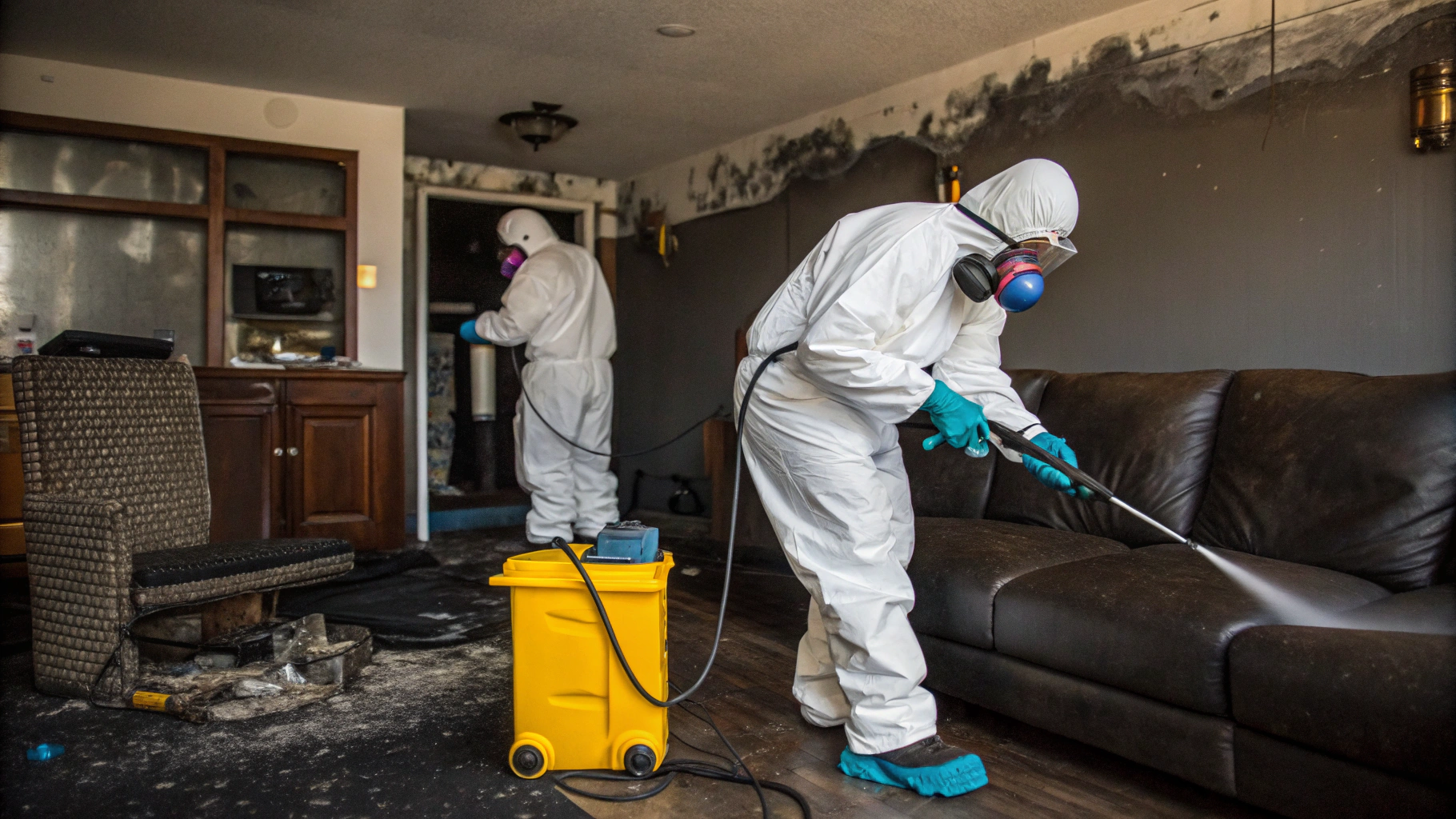
When a property suffers water, mold, and smoke damage together, restoration must follow a strict sequence to prevent further contamination. Professionals begin with inspection and safety containment, then prioritize water extraction and drying to stop mold growth. Mold remediation follows, removing spores and damaged materials. Afterward, smoke and soot cleanup eliminates residue and odors. Final steps include deep sanitization, air quality restoration, and reconstruction to return the property safely to its original condition.
-
Introduction
When a home or commercial building suffers water damage, mold growth, and smoke damage at the same time, the restoration process becomes more complex than handling a single issue.
Each type of damage affects the structure differently, and if not restored in the correct order, one problem can worsen another.
So, how do professionals manage restoration when multiple disasters overlap?
Let’s break down the property damage restoration sequence step by step in a clear and easy-to-understand way.
Why Restoration Sequence Matters in Multi-Damage Properties
When water, mold, and smoke damage exist together, the restoration team cannot treat them separately or randomly. In these situations, a proper water mold fire restoration sequence is essential to prevent one issue from making another worse. Here’s why the sequence is critical: water damage can fuel mold growth, smoke residue can contaminate wet materials, mold spores can spread during demolition, and improper cleanup can cause long-term health risks. That’s why restoration follows a structured process to ensure safety, efficiency, and full recovery.
Step-by-Step Restoration Sequence for Water, Mold, and Smoke Damage
Step 1: Emergency Inspection and Damage Assessment
The first step is always a complete evaluation of the property.
Restoration professionals inspect:
-
Water saturation levels
-
Mold contamination zones
-
Smoke and soot residue spread
-
Structural integrity
-
Air quality hazards
They also determine whether the property is safe to enter.
Why it comes first:
Without a full assessment, the restoration team cannot create the right plan or prevent cross-contamination.
Step 2: Immediate Safety and Containment Measures
Before cleanup begins, safety protocols are established.
This may include:
-
Shutting off electricity and gas
-
Setting up containment barriers
-
Installing negative air pressure systems
-
Using PPE (respirators, gloves, suits)
Why it matters:
Mold spores and soot particles can become airborne and spread quickly.
Step 3: Water Extraction and Moisture Removal (Top Priority)
When water damage is present, it must be addressed immediately.
The team removes standing water using:
-
Industrial pumps
-
Wet vacuums
-
Water extraction systems
Then they begin drying with:
-
Air movers
-
Dehumidifiers
-
Moisture monitoring tools
Why water comes first:
Water is the root cause that accelerates mold growth and can damage materials rapidly.
Step 4: Mold Remediation After Drying Begins
Once the property is drying and moisture levels are controlled, mold remediation starts.
Mold cleanup includes:
-
Isolating affected areas
-
Removing mold-infested materials (drywall, insulation)
-
HEPA vacuuming
-
Applying antimicrobial treatments
-
Air scrubbing to remove spores
Why mold is next:
Mold thrives in damp environments. If not removed early, it will continue spreading even after water is gone.
Step 5: Smoke and Soot Cleanup After Mold Containment
After water and mold issues are stabilized, smoke damage restoration begins.
Smoke cleanup involves:
-
Removing soot residue from walls and ceilings
-
Cleaning HVAC systems
-
Neutralizing smoke odors
-
Using thermal fogging or ozone treatments
Why smoke cleanup comes later:
Smoke particles can bond with wet surfaces, and cleaning too early can smear soot deeper into materials.
Step 6: Structural Cleaning and Debris Removal
Now that major contaminants are addressed, the property is cleared of damaged materials.
This includes:
-
Removing charred debris
-
Disposing of mold-infested materials
-
Cleaning salvageable furniture and belongings
-
Deep sanitization of surfaces
Why this step is essential:
It prepares the property for rebuilding and prevents hidden contamination.
Step 7: Deodorization and Air Quality Restoration
When water, mold, and smoke are involved, odors can be intense and persistent.
Professionals use:
-
HEPA filtration
-
Activated carbon systems
-
Odor neutralizers
-
Air purification treatments
Goal:
Restore clean indoor air and remove harmful particles.
Step 8: Repairs and Reconstruction
After cleanup, the restoration process shifts into rebuilding.
This can include:
-
Replacing drywall and flooring
-
Repainting and refinishing
-
Reinstalling insulation
-
Restoring structural components
This is the final stage where the property is returned to pre-loss condition.
Why You Need Professional Restoration for Combined Damage
Handling one type of damage is difficult enough. Combined water, mold, and smoke damage requires:
-
Certified technicians
-
Specialized equipment
-
Proper sequencing
-
Insurance documentation
-
Safe disposal methods
A professional restoration company ensures the property is restored fully and safely.
Final Thought
When water, mold, and smoke damage impact the same property, restoring it successfully requires more than just quick repairs; it demands the right order of action. Following a proper sequence ensures that moisture is removed before mold spreads, and contaminants like soot and smoke residue are cleaned without causing further damage. With a professional property damage restoration approach, homeowners and business owners can feel confident that every layer of damage is addressed safely, thoroughly, and in a way that supports long-term recovery.

 English
 Arabic
 Spanish
 Portuguese
 Deutsch
 Turkish
 Dutch
Dutch
 Italiano
 Russian
 Romaian
 Portuguese (Brazil)
 Greek
Greek