
At the core of the mission-critical communication market is a complex, integrated system engineered for absolute dependability. A modern Mission Critical Communication Market Solution is not a single product but a holistic ecosystem of hardware, software, and services designed to provide seamless, secure, and resilient connectivity. The architecture of such a solution is meticulously planned to ensure there is no single point of failure, guaranteeing that communication remains possible even under the most extreme circumstances. It begins with a resilient network foundation, is accessed through ruggedized physical devices, and is managed and leveraged through a suite of intelligent software applications. The ultimate goal is to provide first responders and critical workers with a tool that is as reliable as a hammer but as powerful as a supercomputer, giving them instant access to both crystal-clear group voice communication and a wealth of real-time data. Understanding the distinct layers of this solution—the network, the devices, and the applications—is key to appreciating the technology that powers the response to our most critical moments and keeps essential services running smoothly every day.
The Network Infrastructure Layer
The foundation of any mission-critical solution is the network itself. This layer is designed with multiple levels of redundancy and resilience that far exceed those of commercial networks. For traditional Land Mobile Radio (LMR) systems, this consists of a network of strategically placed radio towers, repeaters, and a central network switch, all often hardened to withstand natural disasters and equipped with backup power. For modern broadband solutions, the infrastructure can take several forms. It may be a dedicated, private LTE/5G network built exclusively for public safety or a specific enterprise, using licensed spectrum to guarantee performance. Alternatively, it can be a secure service provided over a commercial mobile network, but with crucial mission-critical features like Quality of Service (QoS), Priority, and Preemption, which ensure that first responder traffic always gets through, even when the network is congested. Often, the solution is a hybrid, combining a private LMR network for voice with an LTE network for data. This layer also includes deployable network assets, such as a "Cell on Wheels" (COW) or "System on Wheels" (SOW), which can be driven to an incident scene to create a temporary bubble of LMR or LTE coverage in an area where the permanent network is damaged or non-existent.
The Device and Endpoint Layer
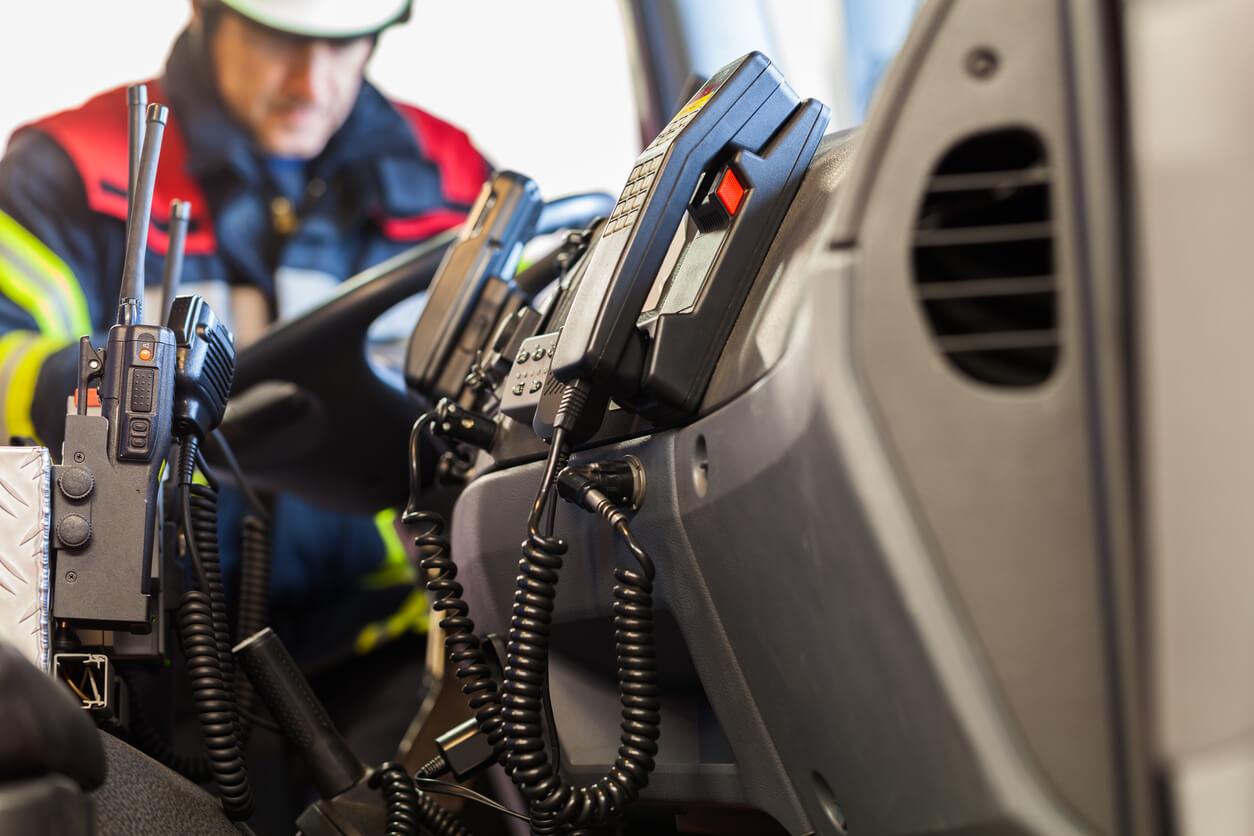
The physical interface for the end-user is the device and endpoint layer. These are not your standard consumer smartphones or radios; they are purpose-built tools designed to survive in the harshest environments. The quintessential mission-critical device is the LMR handheld radio, renowned for its ruggedness (often built to military specifications for drop, water, and dust resistance), its large, tactile push-to-talk (PTT) button that can be used with gloves, its powerful speaker for noisy environments, and its long battery life. As the industry moves to broadband, a new class of ruggedized LTE devices has emerged. These include hardened smartphones and tablets with similar durability features, as well as innovative hybrid devices that combine a fully functional LMR radio and an LTE smartphone in a single unit. This layer also extends to a wide range of other connected endpoints. These include body-worn cameras that stream video, in-vehicle modems and routers that create a mobile communication hub, and a growing ecosystem of IoT sensors, from biometric wearables that monitor a firefighter's vitals to environmental sensors that detect hazardous materials, all feeding critical data back to the command center through the network.
The Application and Software Layer
If the network is the nervous system and the devices are the hands, then the software layer is the brain of the mission-critical solution. This is where data is processed, visualized, and turned into actionable intelligence. The centerpiece is the Command and Control (C&C) or Computer-Aided Dispatch (CAD) software platform. This is the application used in 9-1-1 centers and operational headquarters to manage incidents, dispatch resources, and monitor the location and status of all field personnel on a map. On the user's device, the key application is the Mission Critical Push-to-Talk (MCPTT) client, which provides the instant, one-to-many voice communication that first responders rely on. This is supplemented by MCVideo and MCData clients for sharing real-time video and files. Beyond these core applications, there is a rich ecosystem of specialized software. This includes records management systems (RMS) for filing reports, video management and analytics software for storing and searching body camera footage, and data analytics platforms that can analyze incident data to identify trends and improve future responses. This software layer is what unlocks the true power of the broadband network, transforming raw data into the situational awareness that saves lives.
Explore More Like This in Our Reports:

 English
 Arabic
 French
 Spanish
 Deutsch
 Turkish
 Dutch
Dutch
 Italiano
 Russian
 Romaian
 Portuguese (Brazil)
 Greek
Greek