
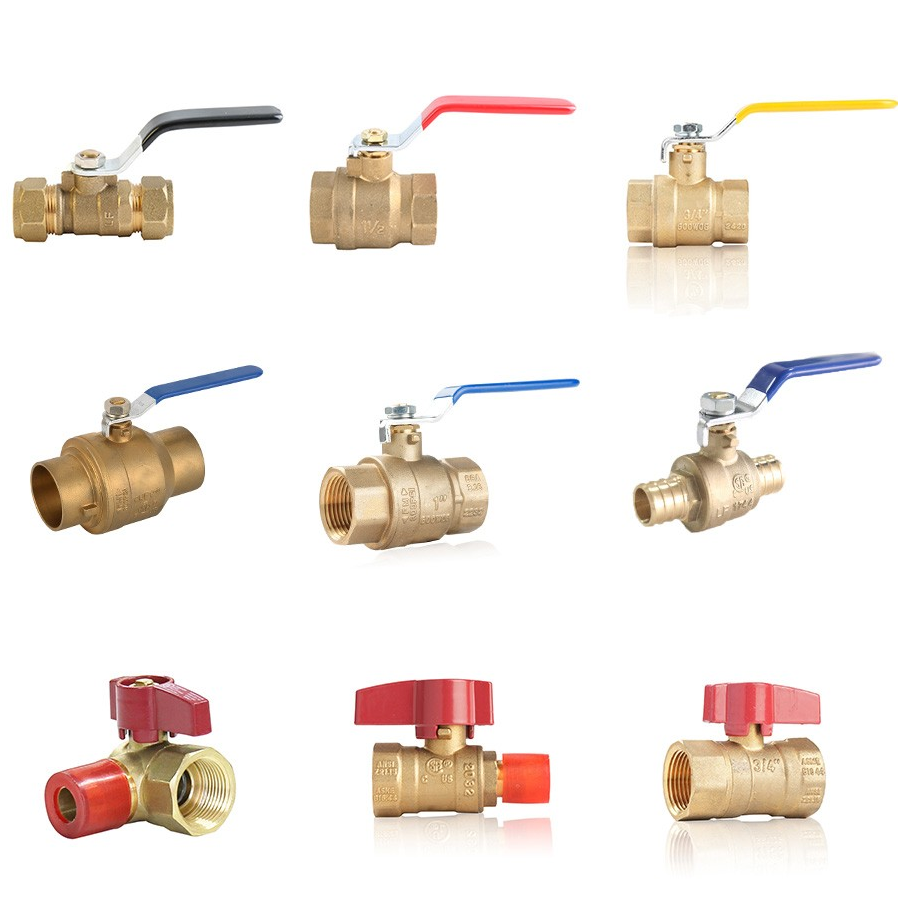
Flow control in industrial pipelines often depends on valve accuracy, durability, and installation flexibility. Among compact control valves, the Internal Thread Globe Valve plays an important role in systems requiring stable throttling and reliable shutoff performance. It is widely applied in water treatment, steam pipelines, chemical distribution lines, and low-to-medium pressure industrial networks.
The basic structure of a globe valve is designed around linear motion. A disc moves vertically against a seat inside the valve body, which allows operators to regulate flow rather than simply open or close the line. Compared with rotational valves, this linear movement creates more predictable control behavior.
In an Internal Thread Globe Valve, the connection method uses female threaded ends such as BSP, NPT, or PT standards. This structure is especially suitable for compact pipeline layouts where welding or flange installation is not practical. Typical size ranges are DN6 to DN50, with pressure ratings commonly between PN16 and PN40 depending on material grade and design .
Structural Design Features
The valve body is usually manufactured from stainless steel grades such as CF8 (304) or CF8M (316). These materials provide resistance against corrosion, making the valve suitable for water, oil, gas, and mildly aggressive chemical media.
Key structural parameters often include:
Nominal pressure: 1.6 MPa to 4.0 MPa
Temperature range: -20°C to 180°C or higher depending on sealing material
Seat structure: conical or flat sealing surface
Stem material: stainless steel or 2Cr13 hardened steel
Packing material: PTFE or flexible graphite
The sealing system is designed to reduce leakage during frequent operation. The threaded bonnet design allows easier maintenance without removing the full pipeline section.
Working Principle in Industrial Flow Control
The Internal Thread Globe Valve operates through a handwheel-driven stem. When the handwheel rotates, the stem moves the disc closer or further from the seat. This vertical movement controls the opening area of the flow path.
Unlike ball valves that rely on quick shutoff, globe valves provide smoother regulation. This makes them more suitable for systems requiring continuous adjustment, such as cooling circuits or pressure balancing lines.
A notable feature is the directional flow path inside the valve body. Fluid typically changes direction twice inside the valve, which increases control precision but also introduces moderate pressure loss. This trade-off is acceptable in applications where accuracy matters more than flow efficiency.
Application Scenarios
This valve type is widely used in:
Industrial water circulation systems
Small boiler feed pipelines
Chemical dosing systems
Compressed air distribution lines
HVAC auxiliary pipelines
In these systems, operators often need fine adjustment rather than full open/close operations. The threaded connection makes installation faster in confined equipment environments.
Operational Considerations
Proper installation improves performance and service life. Flow direction marking should be followed strictly to avoid sealing damage. Periodic inspection of packing seals is recommended, especially in high-temperature environments.
The Internal Thread Globe Valve performs well in moderate-pressure systems where stability and maintenance convenience are priorities. It is not typically selected for large-diameter pipelines due to higher flow resistance.

 Arabic
 French
 Spanish
 Portuguese
 Deutsch
 Turkish
 Dutch
Dutch
 Italiano
 Russian
 Romaian
 Portuguese (Brazil)
 Greek
Greek