
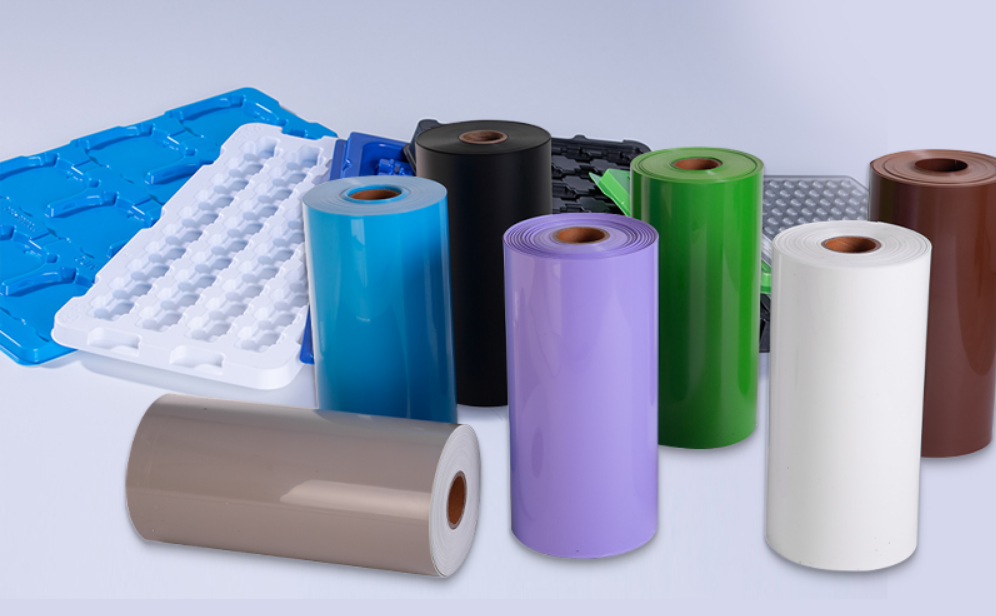
Electrostatic discharge has become a major concern across electronics, semiconductor, automotive, and precision manufacturing industries. A small static charge can damage sensitive components, create production defects, or reduce product reliability during transportation. Material engineers have responded by developing advanced packaging and thermoforming materials that combine electrical protection with structural stability. Among these materials, ttri laminate conductive black polystyrene has attracted attention because it combines multiple functional layers into a single sheet.
A tri-laminate structure typically consists of an outer protective skin, a conductive core, and an additional stabilizing layer. This arrangement creates a balance between mechanical strength and electrostatic control while maintaining the processing advantages associated with polystyrene materials. Conductive polystyrene often relies on carbon black additives to achieve permanent electrical properties. Industry references indicate that conductive grades can reach surface resistance ranges suitable for ESD packaging and transport applications.
Layered Construction Supports Multiple Functions
A single-layer conductive sheet can provide static control, but a laminated structure introduces additional benefits.
The outer layer may provide:
Scratch resistance
Surface smoothness
Improved appearance
Better compatibility with printing or labeling
The conductive middle layer serves as the electrical pathway that dissipates accumulated charges. Carbon black networks distribute electrical conductivity throughout the material instead of relying on temporary antistatic coatings.
The backing layer contributes to:
Dimensional stability
Impact resistance
Thermoforming consistency
Better handling during manufacturing
A typical sheet thickness may range from 0.5 mm to 3.0 mm depending on the final application. Laboratory sheets and industrial packaging sheets are available across various thickness ranges.
Stable Electrical Performance Matters
Electronic devices encounter static electricity during several stages:
Injection molding
Conveyor transport
Robotic handling
Warehouse storage
International shipping
Tri laminate conductive black polystyrene helps reduce charge accumulation through permanent conductive pathways.
Common electrical targets include:
Surface resistivity:
10⁴ to 10⁸ Ω
Volume conductivity:
≤10⁴ Ω for highly conductive grades
Dissipative grades:
10⁴ to 10⁸ Ω
These values can support applications involving integrated circuits, PCB assemblies, semiconductor carriers, and electronic modules.
Thermoforming Efficiency
Manufacturers often choose conductive polystyrene because it processes efficiently using established thermoforming equipment.
Processing characteristics may include:
Sheet extrusion
Vacuum forming
Pressure forming
Die cutting
CNC trimming
Heating temperatures often fall between 140°C and 180°C depending on sheet formulation and thickness.
The tri-laminate arrangement can reduce deformation during forming because each layer contributes structural support.
Typical products include:
IC trays
Component carriers
Electronic packaging inserts
Assembly line containers
Reusable shipping trays
Mechanical Properties Add Practical Value
Packaging materials must survive repeated handling.
Several performance characteristics influence material selection:
Impact resistance:
High-impact polystyrene formulations improve durability.
Dimensional stability:
Maintains tray geometry during storage.
Abrasion resistance:
Protects electrical properties over repeated use.
Lightweight construction:
Reduces shipping costs.
Conductive black polystyrene materials are recognized for stiffness and good thermoforming behavior while maintaining conductive performance.
Environmental Conditions Influence Performance
Electronic packaging may encounter different environments.
Typical operating conditions include:
Storage:
-20°C to 60°C
Relative humidity:
20% to 80%
Repeated handling cycles:
Hundreds or thousands depending on design.
Carbon black conductive systems maintain electrical performance without depending entirely on ambient moisture, unlike some temporary antistatic treatments.
Applications Across Industries
Tri laminate conductive black polystyrene serves many sectors.
Electronics:
Protection for circuit boards and connectors.
Automotive:
Sensor modules and electronic control units.
Medical devices:
Sensitive diagnostic components.
Telecommunications:
Fiber optic connectors and network hardware.
Industrial automation:
Precision control modules.
Battery manufacturing:
Cell carriers and assembly trays.
Reusable packaging systems benefit because the conductive function remains integrated into the material structure rather than existing only as a surface treatment.
Manufacturing Flexibility
Material suppliers can produce sheets with different specifications.
Possible customization includes:
Matte or textured surfaces
Different sheet thicknesses
Custom colors within conductive requirements
Printed identification marks
Various conductivity levels
Some grades also support recycling of production scrap back into manufacturing processes, helping reduce raw material waste.
Future Demand Continues to Expand
Electronic products continue becoming smaller and more sensitive to electrostatic discharge.
Factories increasingly automate production, increasing the number of conveyor systems and robotic handling stations where static control becomes important.
Tri laminate conductive black polystyrene offers a practical combination of:
Permanent conductivity
Thermoforming capability
Mechanical stability
Lightweight construction
Reusable packaging potential
Material development continues to improve conductivity consistency, dimensional accuracy, and forming performance. As electronic manufacturing expands across different industries, laminated conductive polystyrene materials are expected to remain a practical option for protective packaging and component handling.

 English
 Arabic
 French
 Spanish
 Portuguese
 Deutsch
 Turkish
 Dutch
Dutch
 Italiano
 Russian
 Portuguese (Brazil)
 Greek
Greek