
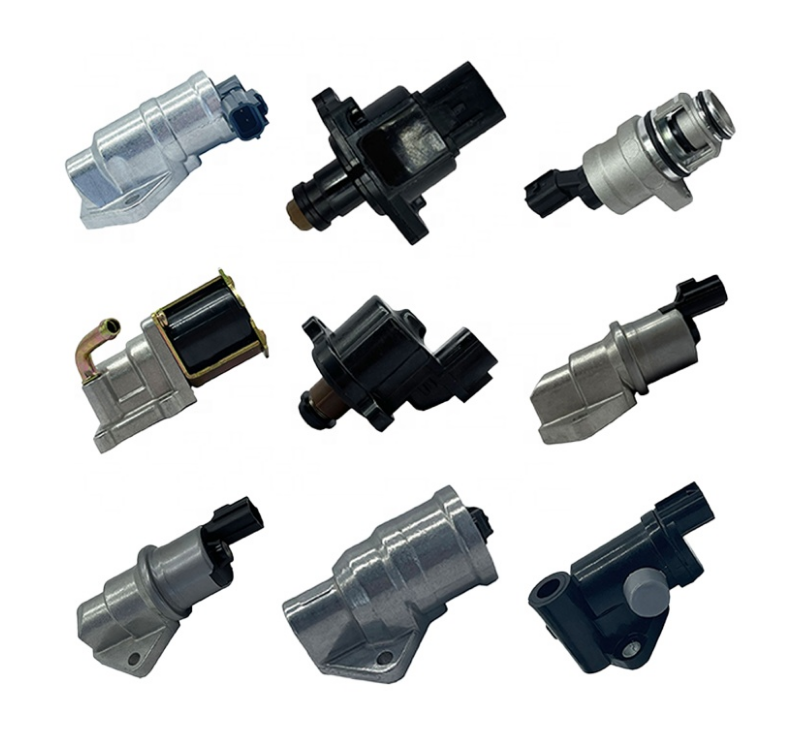
A stable engine idle is something drivers rarely notice until it disappears. Rough idling, unexpected stalling, and fluctuating RPM can turn a comfortable drive into an annoying experience. Behind this process is a small but important component known as the Idle Air Control Valve. Many repair shops and automotive suppliers pay close attention to this part because its condition directly affects engine operation at low speeds.
Modern fuel injection systems rely on electronic controls to manage airflow. During idle conditions, the throttle plate remains nearly closed, limiting the amount of air entering the engine. The Idle Air Control Valve creates a bypass passage, allowing a controlled volume of air to enter the intake manifold. The engine control unit continuously adjusts this airflow to maintain the target idle speed under changing loads. Air conditioning, power steering, headlights, and cold starts all require additional airflow compensation.
Many Idle Air Control Valve manufacturers design products using either stepper motor technology or solenoid-driven actuators. Both systems have the same goal but achieve it differently.
A typical stepper motor IAC valve may include:
Operating voltage: 12V DC
Coil resistance: 40–80 ohms
Operating temperature: -40°C to 125°C
Response time below 100 milliseconds
Precision-machined pintle and valve seat
Aluminum alloy housing with corrosion-resistant coating
These specifications allow the valve to react quickly to ECU commands while maintaining accurate airflow.
Cold starts present one of the biggest challenges for engine management. Low temperatures require additional air to support combustion until the engine reaches operating temperature. The ECU signals the Idle Air Control Valve to increase airflow, raising idle speed. As coolant temperature increases, the valve gradually reduces bypass airflow to stabilize engine RPM.
Accessory loads create another challenge. Turning on the air conditioner or steering at low speed increases engine resistance. Without compensation, idle speed would drop significantly. The IAC valve reacts by opening further, helping maintain smooth operation.
A properly functioning valve can contribute to several operating advantages:
Stable idle speed during traffic stops.
Reduced risk of engine stalling.
Smoother cold starting.
Improved response during accessory operation.
Balanced air supply during changing engine loads.
Maintenance also plays a role in valve performance. Carbon deposits naturally accumulate around the throttle body and bypass passages. Over time, these deposits restrict airflow and slow valve movement. Routine cleaning can help restore function and extend service life.
Technicians often inspect related components before replacing the valve itself. Vacuum leaks, damaged wiring, dirty throttle bodies, and sensor issues may produce similar symptoms. A systematic inspection reduces unnecessary part replacement.
Quality manufacturing practices influence long-term reliability. Idle Air Control Valve manufacturers typically focus on several production stages:
Material selection for the housing and internal components.
Precision machining of airflow passages.
Coil winding consistency.
Surface treatment against corrosion.
Leak testing and electrical testing.
Cycle durability verification.
Many production lines perform repeated open-and-close cycle testing. Some valves undergo hundreds of thousands of simulated operating cycles before approval.
Vehicle compatibility is another factor buyers consider. A well-designed IAC valve should match original equipment dimensions, electrical connectors, mounting holes, and airflow characteristics. Small dimensional differences can affect idle quality.
The automotive aftermarket continues to support a large number of fuel-injected vehicles that use separate idle air control systems. While electronic throttle bodies have become common in newer models, millions of engines still rely on traditional IAC valves for stable operation.
A small airflow adjustment can make a noticeable difference in engine behavior. Careful engineering, precision manufacturing, and regular maintenance help this component perform its task through varying temperatures and driving conditions. As repair markets continue to expand, Idle Air Control Valve manufacturers remain an important part of the automotive supply chain, providing components that support engine stability and everyday vehicle reliability.

 English
 French
 Spanish
 Portuguese
 Deutsch
 Turkish
 Dutch
Dutch
 Italiano
 Russian
 Romaian
 Portuguese (Brazil)
 Greek
Greek