
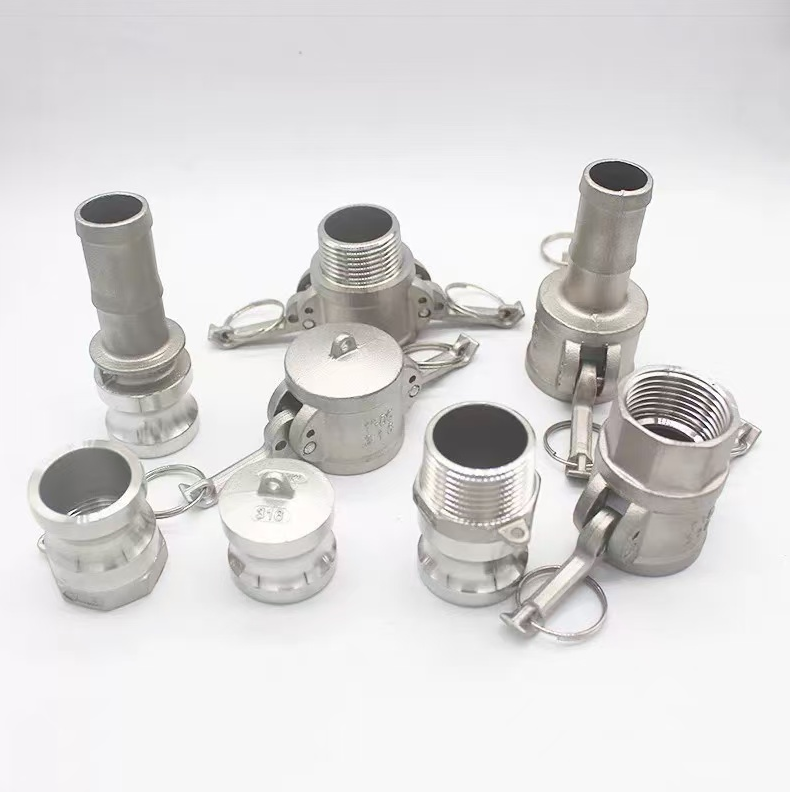
A fire protection system relies on many components working together under demanding conditions. One small but critical part is the hose connection. An Instantaneous Fire Coupling provides a quick method of joining fire hoses, hydrants, pumps, and branch pipes without lengthy threaded operations. Fire services, industrial plants, warehouses, ports, and municipal facilities often use this type of connection because it supports rapid deployment and straightforward operation. BS 336 style instantaneous couplings have become widely adopted in several regions for water delivery applications. Typical designs feature spring-loaded locking mechanisms and standardized dimensions.
Fast Connection Design
Traditional threaded fittings require multiple turns before a secure connection is achieved. During emergency operations, every second spent connecting equipment can affect water delivery.
An Instantaneous Fire Coupling uses a male and female arrangement. The female section contains spring-loaded catches, while the male section includes a locking groove. After insertion, the catches engage automatically, creating a secure mechanical connection.
Typical characteristics include:
Standard BS336 configuration
Double pull release mechanism
Quick attachment and disconnection
Compatibility with fire hoses and hydrant equipment
Interchangeable coupling heads
This design helps maintenance personnel and emergency responders assemble hose lines efficiently.
Material Selection
Material choice depends on the working environment.
Light alloy versions are commonly used in fresh water applications because they reduce handling weight and resist corrosion.
Gunmetal or brass versions are suitable for marine facilities, offshore platforms, and industrial locations exposed to saltwater or aggressive conditions.
Common materials include:
Aluminum alloy
Brass
Gunmetal
Bronze alloys
The material should provide adequate mechanical strength while maintaining dimensional stability after repeated coupling cycles.
Pressure Performance
A coupling must withstand pressure fluctuations during water transfer.
Many Instantaneous Fire Coupling products are designed around working pressures between 10 and 16 bar, depending on material and configuration. Test pressures may reach approximately 24 bar for certain assemblies. Standard water flow activates the sealing surface inside the female coupling, helping create a reliable connection under operating conditions.
Typical technical data may include:
Working pressure:
10–16 bar
Test pressure:
Up to 24 bar
Nominal coupling head:
2.5 inches
Hose tail sizes:
1.5", 1.75", 2", 2.5", and 3"
Operating temperature:
-20°C to +80°C for standard water service
Actual specifications vary according to application requirements.
Water Flow Efficiency
Smooth internal passages help reduce turbulence and unnecessary pressure loss.
Proper installation is important because the water direction influences sealing efficiency. The female side generally contains the sealing element, which engages against the matching taper of the male section under pressure. Correct orientation supports stable water delivery.
Engineers also pay attention to:
Internal bore alignment
Surface finish
Seal material
Locking force
Flow path geometry
These factors contribute to hydraulic performance.
Industrial Applications
An Instantaneous Fire Coupling is suitable for many sectors beyond municipal firefighting.
Industrial facilities often use these couplings for:
Chemical plants
Oil and gas terminals
Power stations
Mining operations
Marine docks
Commercial buildings
Water transfer stations
Agricultural irrigation support
Temporary emergency water supply systems
Many installations standardize coupling dimensions across equipment fleets to simplify maintenance and spare parts management.
Maintenance Considerations
Routine inspection extends service life.
Recommended checks include:
Examining locking catches.
Inspecting sealing rings.
Looking for corrosion or impact damage.
Cleaning debris from grooves.
Checking hose tail attachment.
Verifying smooth release operation.
Lubrication should follow manufacturer recommendations and avoid contamination of sealing surfaces.
Damaged seals should be replaced before leakage develops during operation.
Installation Tips
A secure installation depends on both the coupling and the hose assembly.
Common hose attachment methods include:
Double rib hose tails
Wire binding
Expansion rings
Mechanical clamps
Hydraulic crimping
The selected method should match hose construction and working pressure.
Proper assembly helps prevent hose separation during water delivery.
Future Development
Modern fire protection systems continue to improve equipment reliability and maintenance efficiency.
Manufacturers are exploring:
Lightweight alloys
Enhanced corrosion resistance
Improved seal materials
Precision machining
Surface treatments
Digital identification for maintenance tracking
These developments support long-term service while maintaining compatibility with existing infrastructure.
Conclusion
A reliable hose connection contributes to the overall performance of a fire protection system. An Instantaneous Fire Coupling combines rapid connection, standardized dimensions, and practical maintenance features into a compact component suitable for firefighting and industrial water delivery. Material selection, pressure capability, sealing design, and routine inspection all play important roles in maintaining dependable operation across a wide range of applications.

 English
 Arabic
 French
 Spanish
 Portuguese
 Deutsch
 Turkish
 Dutch
Dutch
 Russian
 Romaian
 Portuguese (Brazil)
 Greek
Greek