
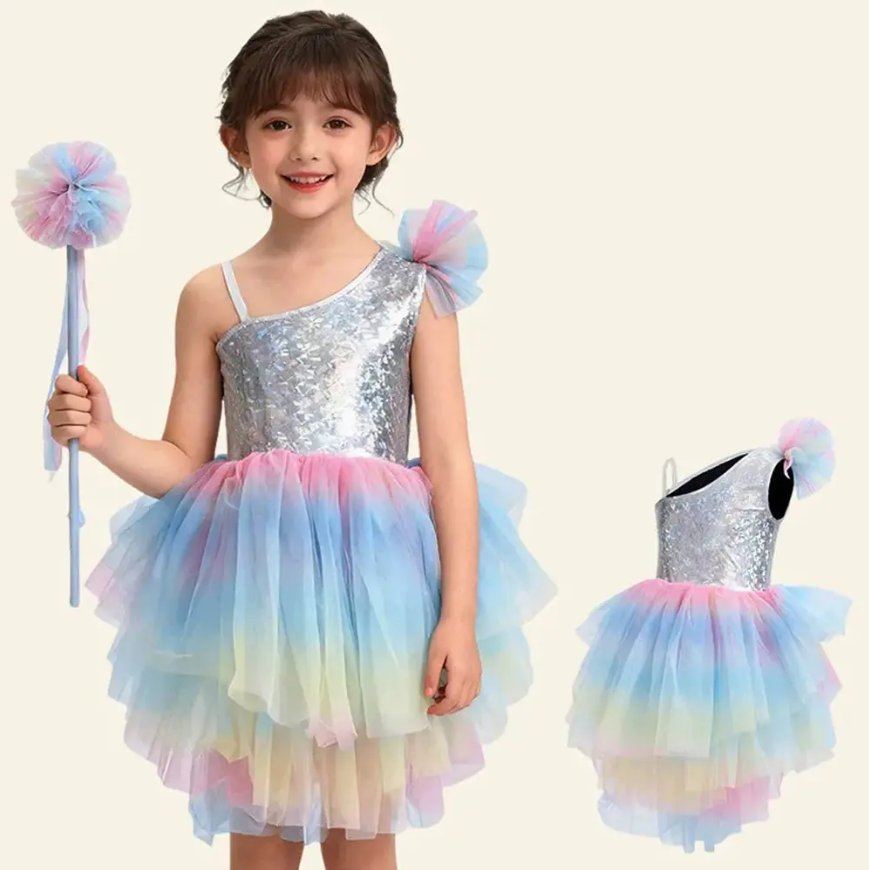
The modern cosplay industry has shifted from small handmade hobby work to structured production systems that resemble light apparel manufacturing. A cosplay costume factory plays a key role in turning character designs into wearable costumes that meet requirements for conventions, performances, photography, and online content creation. Unlike casual sewing at home, factory-level production focuses on repeatability, material stability, and size consistency across batches.
A typical production workflow begins with design interpretation. Designers or clients submit reference images, character sheets, or concept sketches. Technical teams then break down the costume into components such as fabric garments, armor parts, accessories, and decorative elements. Each component is assigned a construction method depending on material behavior and wearability expectations.
Fabric-based sections often use polyester blends, spandex, cotton twill, or satin depending on visual style. For example, stretchable suits may use 220–280 GSM four-way stretch spandex to ensure mobility and shape retention. Structured coats may rely on 180–350 GSM woven polyester-cotton blends to balance stiffness and breathability. These parameters are selected to maintain consistency during repeated production runs.
Armor and prop sections are typically processed using EVA foam sheets ranging from 2mm to 10mm thickness. Higher-density foam around 38–45 kg/m³ is preferred for helmets and shoulder plates due to its ability to hold heat-formed shapes. Heat guns operating between 200°C and 500°C are used to mold curves and edges, followed by contact cement bonding. After shaping, surface sealing is applied using flexible coatings before painting.
Inside a cosplay costume factory, cutting systems are also important. Fabric sections are usually processed with CNC fabric cutters or precision laser cutters, reducing deviation in pattern shapes to less than 1–2 mm. Foam components may also be cut digitally using knife plotters to ensure alignment between mirrored armor pieces.
Assembly stages combine sewing and structural bonding. Industrial sewing machines capable of handling multiple fabric layers are used for reinforced seams, especially in high-stress areas such as shoulders, waistlines, and zippers. Stitch density often ranges from 8–12 stitches per inch depending on elasticity requirements. Meanwhile, armor segments are assembled using heat welding, adhesives, or mechanical fastening systems like rivets or elastic straps.
Quality control is a major step in production. Each costume is checked for measurement deviation, seam strength, color uniformity, and accessory stability. A deviation of more than 1.5 cm in sizing can affect wearability, so measurement verification is done multiple times during production.
Packaging and finishing include folding, moisture protection, and accessory separation. Some factories also perform pre-shipment fitting simulations using standardized mannequins to reduce size mismatch risks.
Overall, a cosplay costume factory integrates textile engineering, prop fabrication, and visual design adaptation into a structured production pipeline. This allows creators, retailers, and event suppliers to scale character-based designs into consistent wearable products without losing essential visual detail.

 Arabic
 French
 Spanish
 Portuguese
 Deutsch
 Turkish
 Dutch
Dutch
 Italiano
 Russian
 Romaian
 Portuguese (Brazil)
 Greek
Greek