
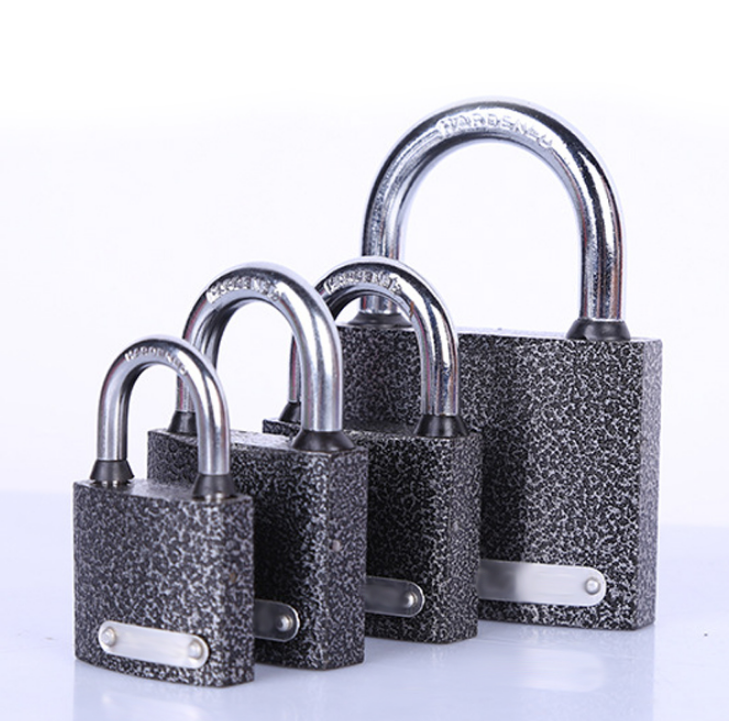
Security hardware selection often depends on structural durability, material composition, and resistance to physical attack. Among mechanical locking solutions, padlocks remain widely used in industrial storage, logistics facilities, construction sites, and residential protection systems. Demand for consistent supply and standardized quality has increased interest in sourcing a Wholesale High Quality Padlock from manufacturers that focus on controlled production and tested security performance.
A padlock is generally composed of three main parts: the body, the shackle, and the locking cylinder. Each part contributes to overall resistance against cutting, pulling, and impact forces. Industrial-grade models often adopt hardened steel or boron alloy for the shackle, while the internal mechanism may use a multi-pin tumbler system to reduce unauthorized opening risk.
Typical technical parameters for a high security padlock include:
Shackle diameter: 6mm to 10mm depending on application level
Shackle material: hardened steel, boron alloy steel, or stainless steel
Body material: solid steel or reinforced brass alloy
Locking mechanism: 5-pin or 6-pin tumbler system
Corrosion resistance testing: up to 240 hours salt spray exposure in outdoor models
Pull resistance: enhanced double-locking structure in advanced models
One important structural upgrade in modern designs is the double-ball or double-locking shackle mechanism. This system secures both ends of the shackle inside the body, making forced opening significantly more difficult compared to single-lock designs. Such structures are commonly used in gates, storage containers, and industrial equipment protection.
Surface treatment also plays a role in durability. Chrome plating or nickel coating helps improve corrosion resistance, especially in humid or coastal environments. Some models also integrate protective caps over keyholes to prevent dust and moisture intrusion.
A Wholesale High Quality Padlock is typically produced under standardized machining processes, ensuring consistency across batches. CNC precision cutting is often applied to shackle forming, while internal cylinder components require micron-level tolerance control to ensure smooth key rotation and reduced wear over time.
Another factor influencing performance is the key system. Keyed-different systems provide individual security for each lock, while keyed-alike systems are used in facilities requiring multiple access points controlled by a single key.
From an application perspective, padlocks are widely used in:
Warehouse doors and storage cages
Transport and logistics locking systems
Construction site toolboxes
Outdoor gates and fences
Industrial machinery safety locking points
Selecting appropriate specifications depends on environmental exposure and security requirements. Outdoor use generally requires thicker shackle diameter and anti-corrosion treatment, while indoor use may prioritize convenience and compact size.
With increasing demand for scalable procurement, wholesale sourcing ensures uniform security standards across multiple locations. It also simplifies inventory management for distributors and industrial users.
Overall, padlock design continues to evolve toward higher mechanical strength, improved weather resistance, and more precise internal locking systems.

 English
 Arabic
 French
 Spanish
 Portuguese
 Deutsch
 Turkish
 Dutch
Dutch
 Italiano
 Russian
 Romaian
 Greek
Greek