
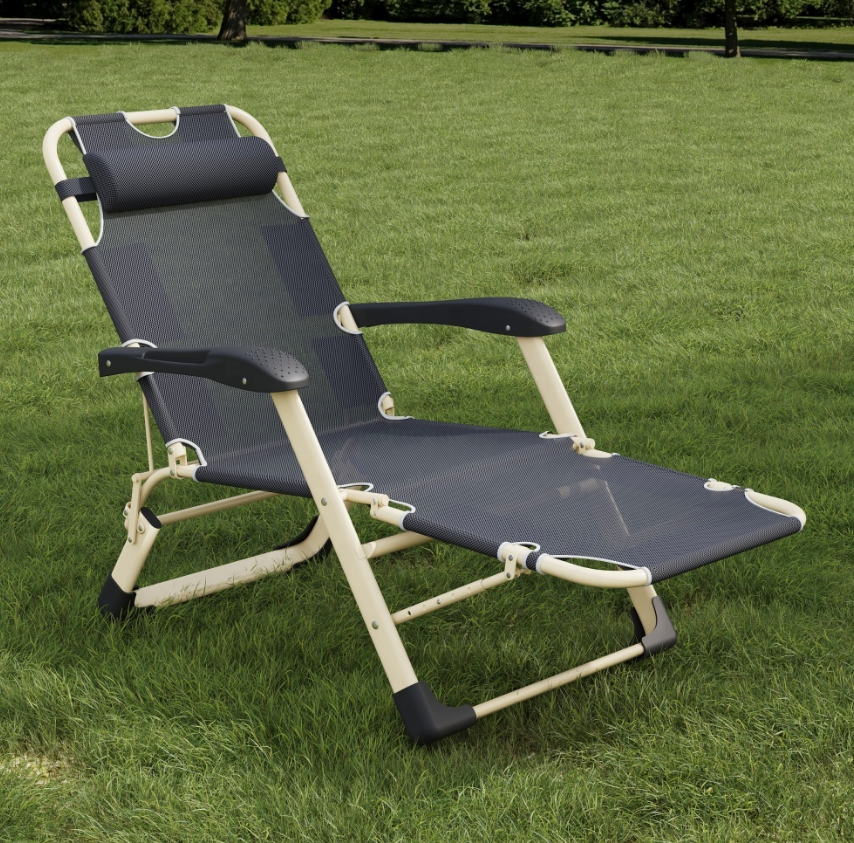
A well-designed outdoor seating solution often depends on structural balance, fabric performance, and frame stability. A Folding Outdoor Lounge Chair is widely used in patios, gardens, camping setups, and poolside environments due to its ability to combine portability with long-duration comfort. Its structural layout typically emphasizes collapsibility without sacrificing load-bearing capability or reclining flexibility.
Modern versions of this chair often use powder-coated steel or aluminum alloy frames. Steel frames may have tube diameters around 22–28 mm, offering stable support under repeated weight pressure. Aluminum frames, although lighter, reduce overall carrying weight to approximately 3–6 kg depending on configuration. This difference affects portability and long-distance transport during outdoor activities.
Seat fabrics are commonly constructed from 600D or 1200D Oxford cloth, sometimes combined with PVC or breathable mesh coatings. These materials provide tensile strength and resistance to UV exposure and moisture. A typical density rating of 600D ensures balanced flexibility while maintaining resistance to tearing under frequent folding motion. Some designs incorporate quick-dry mesh panels, allowing air circulation during hot weather conditions and reducing heat buildup during extended sitting periods.
Reclining structure is another important technical feature. Many Folding Outdoor Lounge Chair models include multi-position backrest systems, ranging from 3 to 5 adjustable angles. These positions are often controlled through locking joints or sliding hinge systems, allowing transition between upright seating and near-flat reclining angles around 160–170 degrees. This flexibility supports different usage scenarios such as reading, resting, or sunbathing.
Weight capacity is also an essential factor. Standard designs generally support between 120 kg and 150 kg. Reinforced versions may use cross-bracing metal bars under the seat area to improve load distribution and reduce frame stress during long-term use.
Portability plays a central role in product design. Folded dimensions often shrink to less than one-third of the expanded size. For example, a fully opened chair measuring 180 cm in length may fold down to approximately 90 cm or less, making storage in vehicle trunks or compact storage rooms easier. Some designs also include carry handles or shoulder straps integrated into the frame or storage bag.
Additional functional features may include side pockets, detachable headrests, or cup holders. These additions enhance usability without significantly increasing structural complexity. Headrests are usually filled with foam padding density between 20–30 kg/m³, providing moderate neck support during extended rest.
Outdoor durability also depends on coating and finishing processes. Powder-coated frames resist oxidation and surface corrosion, especially in humid or coastal environments. UV-resistant fabric treatment helps reduce fading after long exposure to sunlight.
A Folding Outdoor Lounge Chair represents a balance between engineering simplicity and functional versatility. Its structure is optimized for repeated folding cycles, stable support geometry, and adaptable comfort positions. These combined characteristics make it suitable for diverse outdoor environments where both mobility and relaxation are required.

 English
 Arabic
 French
 Portuguese
 Deutsch
 Turkish
 Dutch
Dutch
 Italiano
 Russian
 Romaian
 Portuguese (Brazil)
 Greek
Greek