
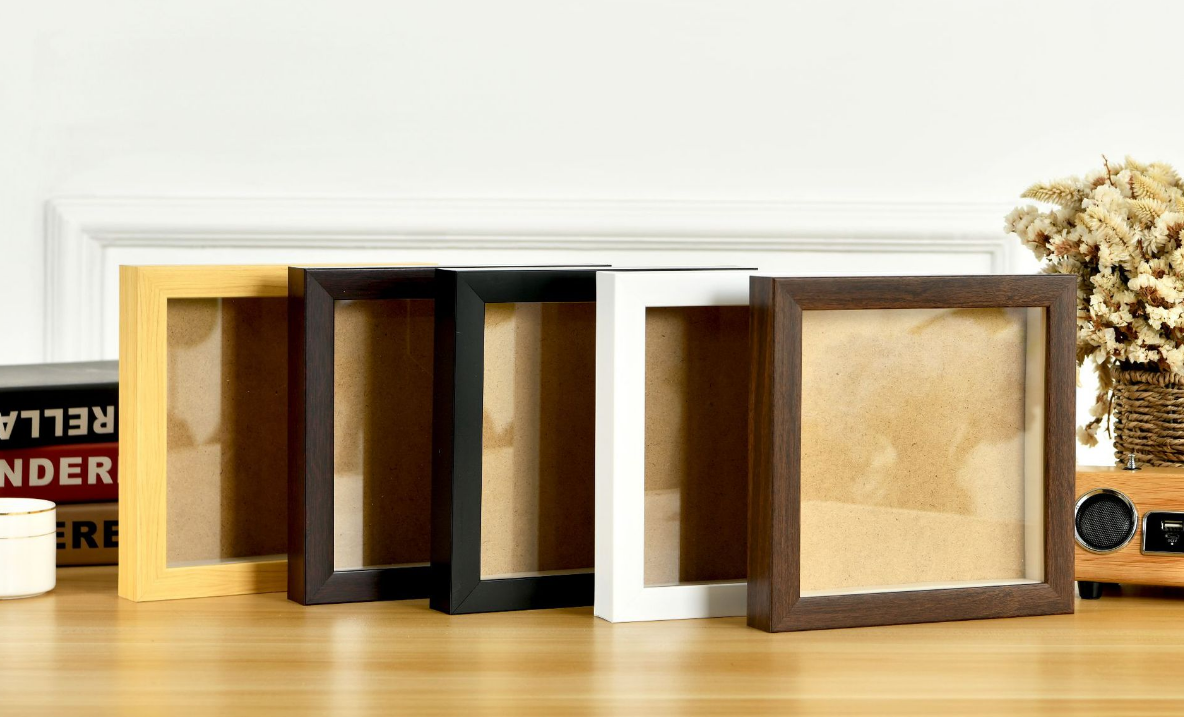
Aluminum-based framing systems have become widely adopted in modern display environments due to their balance of structural strength and refined appearance. An Aluminum Alloy Photo Frame is engineered using extruded aluminum profiles, typically from 6063 or similar alloy series, which provide stable mechanical properties and smooth surface finishing suitable for decorative and functional applications.
The core structure of an aluminum alloy frame is produced through high-precision extrusion. During this process, heated aluminum billets are forced through a shaped die, forming consistent cross-sectional profiles. Dimensional tolerance is usually controlled within ±0.1 mm, ensuring tight assembly alignment when frames are connected. This accuracy is essential for maintaining square corners and stable image retention.
Surface treatment plays a major role in performance. Most aluminum alloy frames undergo anodizing, forming an oxide layer typically between 8–20 microns thick. This layer improves corrosion resistance and surface hardness, often reaching 200–300 HV on the Vickers scale. The anodized surface also reduces oxidation risk, especially in humid or coastal environments.
A standard Aluminum Alloy Photo Frame often includes several structural elements:
Front profile frame rail
Acrylic or glass protective sheet (1.5 mm to 3 mm thickness)
Back panel board, usually MDF or composite sheet (2 mm to 5 mm)
Locking system using spring clips or screw fasteners
These components work together to secure photographic prints or artwork while maintaining flatness and visual clarity. Some frame systems use snap-lock mechanisms, allowing quick replacement of images without tools.
Weight efficiency is another advantage. Aluminum alloy density is approximately 2.7 g/cm³, significantly lower than steel, making wall-mounted installations easier without compromising rigidity. Even large-format frames, such as A1 or A0 size displays, remain structurally stable under long-term vertical load.
Thermal stability is also notable. Aluminum alloy maintains dimensional consistency under temperature fluctuations ranging from -30°C to 80°C, reducing warping risks commonly seen in wood-based frames. This makes it suitable for indoor commercial signage, office displays, and exhibition environments.
In decorative applications, frame profiles are available in multiple finishes including matte black, brushed silver, champagne gold, and anodized natural tones. These finishes are achieved through controlled surface oxidation or powder coating processes. Coating thickness in powder-coated variants usually ranges from 60–120 microns.
Installation flexibility is another key feature. Aluminum alloy frames can be:
Wall-mounted using concealed brackets
Suspended via cable systems
Placed on desktop stands with rear support legs
Each configuration supports different usage scenarios, from gallery exhibitions to corporate certificate displays.
Modern manufacturing also allows modular customization. Frame profiles can be cut to precise lengths and joined using corner connectors made of aluminum or reinforced polymer. This modular system reduces material waste and improves scalability for bulk installations.
Because of its durability, corrosion resistance, and clean visual profile, the Aluminum Alloy Photo Frame has become a standard solution in professional display systems where long-term stability and visual consistency are required.

 Arabic
 French
 Spanish
 Portuguese
 Deutsch
 Turkish
 Dutch
Dutch
 Italiano
 Russian
 Romaian
 Portuguese (Brazil)
 Greek
Greek