
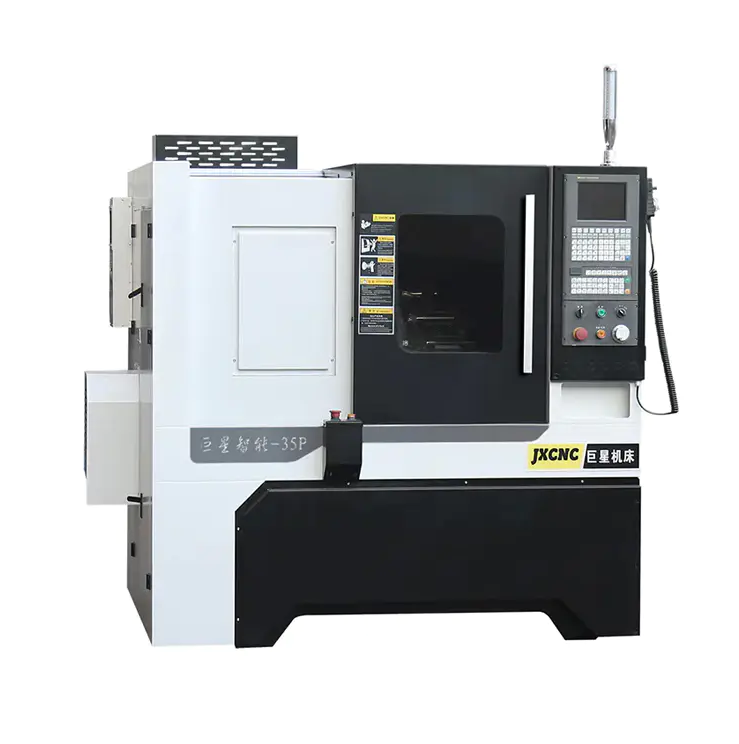
Modern manufacturing continues to demand tighter tolerances, stable production, and shorter machining cycles. A Linear Guide CNC Machine has become a practical solution for workshops producing automotive components, molds, aluminum parts, steel products, and precision mechanical components. Unlike traditional sliding guide structures, linear guide technology uses rolling contact between the guide rail and carriage, reducing friction and helping maintain stable movement throughout the machining process.
A machine equipped with linear guides is not simply designed for speed. The combination of precision, rigidity, and repeatable positioning creates advantages across a wide range of applications.
Smooth Motion Supports Stable Cutting
The guide system is one of the key mechanical structures in any CNC machine. During machining, the spindle and worktable move continuously while carrying cutting loads. Any vibration or inconsistent movement can affect dimensional accuracy and surface finish.
A Linear Guide CNC Machine commonly uses hardened alloy steel guide rails with recirculating ball or roller blocks. Rolling friction is significantly lower than traditional sliding contact, allowing the servo system to move smoothly during acceleration and deceleration.
Typical machine specifications may include:
X-axis travel: 600–1500 mm
Y-axis travel: 400–800 mm
Z-axis travel: 500–700 mm
Rapid traverse speed: 24–48 m/min
Positioning accuracy: ±0.005 mm
Repeat positioning accuracy: ±0.003 mm
Linear guide preload for improved rigidity
Low friction helps reduce stick-slip effects, contributing to consistent tool paths during contour machining and pocket milling.
Rigidity Matters During Heavy Loads
High-speed movement alone does not guarantee productive machining. Cutting forces generated during milling or drilling create radial and axial loads that the machine structure must absorb.
Linear guide systems are designed to support loads from multiple directions. Four-row ball contact structures and roller guide designs improve stiffness while distributing forces evenly.
A Linear Guide CNC Machine may feature:
Double-nut precision ball screws
Large-size linear guide blocks
Heavy ribbed cast iron machine base
Finite element optimized column structure
These design features help maintain machine stability during rough cutting and semi-finishing operations.
Materials commonly processed include:
Carbon steel
Alloy steel
Stainless steel
Aluminum alloys
Copper
Cast iron
Engineering plastics
Faster Feed Rates Increase Productivity
Cycle time has become an important factor in manufacturing costs. A machine capable of moving rapidly between machining positions can reduce idle travel.
Many Linear Guide CNC Machine designs offer:
Cutting feed rates up to 15,000 mm/min
Rapid traverse up to 48,000 mm/min
Servo-driven automatic tool changing
High acceleration axis control
These characteristics can shorten machining cycles during batch production.
Common spindle configurations include:
BT30
BT40
BT50
Spindle speed ranges may vary from 8,000 rpm to 15,000 rpm depending on production requirements.
Surface Finish Benefits from Controlled Motion
Precision components often require smooth surface quality. Mold cavities, medical parts, and aerospace components may need fine finishes before secondary polishing.
Linear guide technology contributes to surface quality by reducing vibration and maintaining stable axis movement. Combined with balanced spindle assemblies and precision ball screws, the machine can produce consistent cutting paths.
Factors affecting surface finish include:
Tool rigidity
Spindle balance
Guide rail precision
Servo tuning
Cutting parameters
Coolant management
A Linear Guide CNC Machine integrates these elements to support repeatable machining performance.
Maintenance Can Be Straightforward
Machine availability affects production planning. Maintenance procedures designed into the machine can reduce downtime.
Common maintenance features include:
Automatic lubrication systems
Sealed guide blocks
Chip protection covers
Central grease distribution
Easy access service panels
Routine inspection generally includes:
Lubrication condition
Ball screw cleanliness
Guide rail wear
Axis backlash
Coolant filtration
Spindle temperature
Scheduled maintenance helps preserve positioning accuracy over long operating periods.
Automation Compatibility
Modern factories increasingly integrate automation into machining operations.
A Linear Guide CNC Machine may support:
Automatic tool changers
Fourth-axis rotary tables
Fifth-axis trunnion systems
Robotic loading
Automatic pallet changers
Tool measurement probes
Workpiece inspection systems
These options support flexible manufacturing for mixed production environments.
Industry Applications
Many industries use linear guide CNC equipment for different products.
Automotive:
Transmission housings
Brake components
Engine parts
Industrial equipment:
Pump housings
Valve bodies
Gearbox covers
Electronics:
Heat sinks
Enclosures
Precision fixtures
Medical:
Surgical equipment components
Instrument housings
Mold manufacturing:
Injection molds
Die casting molds
Precision inserts
The adaptability of a Linear Guide CNC Machine allows manufacturers to switch between different production tasks with limited setup adjustments.
Conclusion
Manufacturing continues to balance productivity with precision. A Linear Guide CNC Machine combines low-friction movement, structural rigidity, stable positioning, and efficient axis control into a practical machining platform. High rapid traverse speeds, precise guide systems, rigid machine structures, and compatibility with automation contribute to reliable production across many industries.
Choosing equipment with suitable travel ranges, spindle capacity, guide specifications, and control systems allows manufacturers to align machine performance with actual production requirements while supporting consistent part quality over extended operating cycles.

 English
 Arabic
 Spanish
 Portuguese
 Deutsch
 Turkish
 Dutch
Dutch
 Italiano
 Russian
 Romaian
 Portuguese (Brazil)
 Greek
Greek