
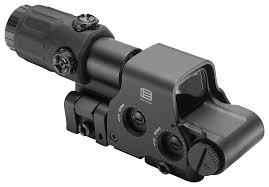
A holographic sight is an advanced aiming device used in firearms, tactical systems, sports shooting, and precision targeting equipment. It helps users aim quickly and accurately by projecting a holographic reticle (aiming pattern) onto a viewing window.
In the B2B manufacturing world, holographic sights are high-precision optical-electronic products. Many buyers and manufacturers face challenges such as high cost, battery dependency, optical distortion, calibration drift, and performance issues under harsh conditions.
In this article, you will learn what a holographic sight is, how it works, common problems, applications, and how to choose the right one in simple English.
What is a Holographic Sight?
A holographic sight is a non-magnifying optical device that uses laser technology to project a holographic aiming reticle onto a transparent viewing window.
Simple meaning:
It is a smart aiming system that shows a floating target mark (hologram) for fast and accurate shooting.
Unlike traditional sights, the reticle is not physically printed—it is projected using laser holography.
How a Holographic Sight Works (Simple Explanation)
The system uses laser and holographic technology.
Step-by-step process:
- A laser diode generates a light beam
- The beam hits a holographic film inside the sight
- The film reconstructs a reticle pattern
- The pattern is projected into the viewing window
- The user sees a floating aiming mark on the target
Simple idea:
It creates a floating digital aiming point that stays aligned with the target even when the eye moves.
Key Problems in Holographic Sight Systems
In industrial manufacturing and field use, several issues are common.
1. High Production Cost
Holographic components and laser systems are expensive to produce.
2. Battery Dependency
Most systems require continuous power, which affects reliability.
3. Heat Sensitivity
Laser and electronic components can be affected by heat.
4. Optical Alignment Drift
Small internal shifts can affect reticle accuracy.
5. Durability Issues
Harsh environments can reduce system lifespan if not properly sealed.
Why Holographic Sights Are Important
Holographic sights are widely used because they provide:
- Faster target acquisition
- Wide field of view
- High accuracy in close and mid-range targeting
- Better performance in dynamic conditions
- No need for perfect eye alignment
This makes them highly valuable in defense, tactical, and sports applications.
Key Applications of Holographic Sights
Holographic sights are used in multiple industries:
1. Military & Defense Systems
Used in tactical weapons for fast and accurate aiming.
2. Law Enforcement
Used in police operations requiring quick response.
3. Sports Shooting
Used in competitions for improved accuracy.
4. Hunting Industry
Used for fast target tracking in moving environments.
5. Training Simulators
Used in virtual and real-world shooting training systems.
Holographic Sight vs Red Dot Sight
Many buyers confuse holographic sights with red dot sights.
1. Holographic Sight
- Uses laser + hologram projection
- Reticle stays stable even if glass is dirty or damaged
- Better for fast movement
2. Red Dot Sight
- Uses LED reflection
- Cheaper and simpler
- May lose accuracy if lens is obstructed
Manufacturing Challenges (B2B Perspective)
Holographic sight production requires high precision engineering.
Key challenges include:
1. Laser Stability
Laser output must remain stable for accurate projection.
2. Hologram Film Accuracy
Any defect in holographic film affects reticle clarity.
3. Shock Resistance
Must handle recoil and vibration without losing calibration.
4. Environmental Protection
Must resist dust, water, and temperature changes.
5. Power Efficiency
Low power systems are required for longer operation.
How to Choose the Right Holographic Sight
For B2B buyers and manufacturers, selection depends on several factors:
1. Optical Clarity
Ensure clear and sharp reticle projection.
2. Build Quality
Strong housing improves durability.
3. Battery Life
Long battery life is important for field use.
4. Shock Resistance
Must withstand vibration and recoil forces.
5. Field of View
Wide field improves fast target tracking.
6. Weather Resistance
Check waterproof and dustproof ratings.
Importance in Precision Industry
Holographic sights are part of a larger precision optics ecosystem.
They share engineering principles with:
- Laser alignment systems
- Industrial optical sensors
- Precision measurement tools
Like mechanical systems where bearings ensure smooth motion, holographic sights ensure fast and accurate visual alignment in targeting systems.
Future Trends in Holographic Sight Technology
The industry is evolving rapidly with new innovations:
1. Smart Digital Integration
AI-assisted targeting and tracking systems.
2. Ultra-Lightweight Designs
Compact models for better portability.
3. Improved Battery Efficiency
Longer operational time with low power consumption.
4. Enhanced Durability Materials
Stronger resistance to recoil and extreme conditions.
5. Hybrid Optical Systems
Combination of holographic + digital smart features.
Conclusion
A holographic sight is an advanced aiming system that uses laser-based holography to project a floating reticle for fast and accurate targeting. It is widely used in defense, sports, hunting, and training applications.
For B2B manufacturers and buyers, understanding its working system, common problems, and selection factors is very important because precision, durability, and stability directly affect performance.
As technology continues to improve, holographic sights are becoming smarter, more compact, and more reliable, making them a key product in the advanced optical and tactical equipment industry.

 English
 Arabic
 French
 Spanish
 Portuguese
 Deutsch
 Turkish
 Dutch
Dutch
 Russian
 Romaian
 Portuguese (Brazil)
 Greek
Greek