
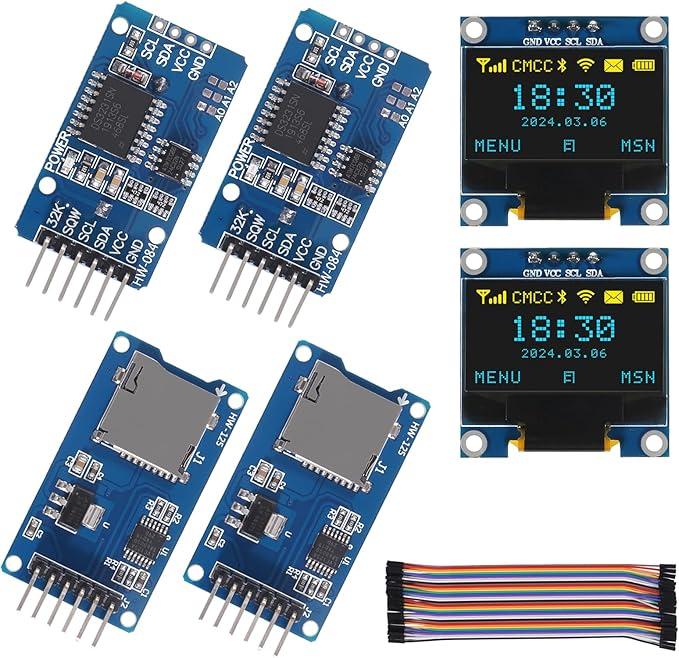
Display technology has improved rapidly over the last few years. One of the most advanced innovations is the Micro OLED display. This technology offers excellent image quality, high brightness, deep contrast, and a compact design. It is becoming increasingly popular in AR glasses, VR headsets, military optics, and electronic viewfinders.
In this article, we will explain how a Micro OLED display works, its main components, benefits, and common applications.
What Is a Micro OLED Display?
A Micro OLED display is a tiny display panel built directly on a silicon wafer instead of a traditional glass substrate. It uses organic light-emitting diodes (OLEDs) to create images.
Unlike LCD displays, Micro OLED technology does not require a separate backlight. Each pixel produces its own light, allowing the display to achieve true black colors and excellent contrast.
Because the display is extremely small, it can deliver very high pixel density, making images appear sharp and detailed even when viewed through magnifying optics.
How Does a Micro OLED Display Work?
The working principle of a Micro OLED display is based on self-emitting organic materials.
1. Silicon Backplane Controls the Pixels
The foundation of a Micro OLED display is a silicon backplane. This layer contains tiny electronic circuits that control each individual pixel.
The silicon backplane manages:
- Pixel activation
- Brightness levels
- Image processing
- Power distribution
2. Organic Layers Generate Light
Several organic material layers are deposited on top of the silicon wafer. When electrical current passes through these layers, they emit light.
Different organic materials create different colors, including:
- Red
- Green
- Blue
These colors combine to produce full-color images.
3. Each Pixel Emits Its Own Light
Unlike LCD technology, every pixel in a Micro OLED display generates light independently.
This allows:
- Perfect black levels
- High contrast ratios
- Better energy efficiency
- Faster response times
When a pixel is turned off, it produces no light, creating true black areas on the screen.
4. Optical System Magnifies the Image
Since Micro OLED displays are extremely small, they are usually paired with lenses or optical modules.
The optical system enlarges the image so users can comfortably view it inside:
- AR smart glasses
- VR headsets
- Night vision systems
- Camera viewfinders
Benefits of Micro OLED Displays
Micro OLED technology offers several important advantages:
High Resolution
The small pixel size allows extremely high pixel density, resulting in sharp and detailed images.
Excellent Contrast
Self-emitting pixels create true blacks and vibrant colors.
Fast Response Time
Pixels switch on and off quickly, reducing motion blur in fast-moving content.
Compact Design
The small display size makes it ideal for wearable devices and compact optical systems.
Lower Power Consumption
Because only active pixels emit light, power usage can be more efficient in many applications.
Common Applications of Micro OLED Displays
Micro OLED displays are widely used in:
- AR smart glasses
- VR headsets
- Military imaging devices
- Thermal imaging systems
- Electronic viewfinders (EVFs)
- Medical visualization equipment
- Industrial inspection devices
As demand for immersive experiences grows, Micro OLED displays continue to play a key role in next-generation display solutions.
Conclusion
A Micro OLED display works by combining a silicon backplane with self-emitting organic materials to create bright, high-resolution images. Each pixel generates its own light, providing exceptional contrast, fast response times, and superior image quality. These advantages make Micro OLED technology an excellent choice for AR, VR, defense, medical, and industrial applications. As display technology continues to evolve, Micro OLED displays are expected to become even more important in advanced optical and wearable devices.

 English
 Arabic
 French
 Portuguese
 Deutsch
 Turkish
 Dutch
Dutch
 Italiano
 Russian
 Romaian
 Portuguese (Brazil)
 Greek
Greek