
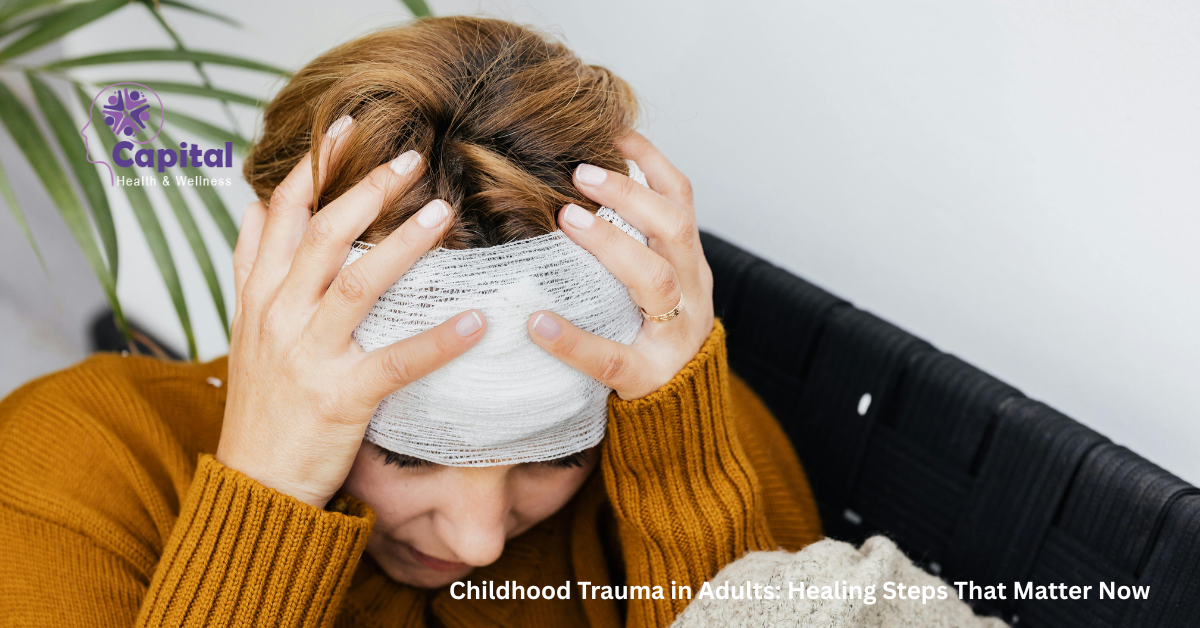
Capital Health and Wellness understands that childhood trauma in adults can appear as anxiety, depression, emotional numbness, substance abuse concerns, relationship conflict, anger, avoidance, or chronic shame. For mental health professionals in Texas, Virginia, and across the USA, the urgency is clear: when trauma patterns are identified early, treatment planning can become more accurate, compassionate, and clinically effective.
Capital Health and Wellness created this Education guide for therapists, counselors, psychologists, psychiatrists, psychosocial rehabilitation professionals, and behavioral health teams who want to recognize trauma-related patterns without overpathologizing clients. Childhood trauma in adults is not only about what happened in the past. It is also about how the nervous system, attachment system, and coping behaviors continue responding in the present.
Why Childhood Trauma in Adults Requires Careful Clinical Attention
Capital Health and Wellness emphasizes that many adult symptoms make sense when viewed through the lens of survival. A client may appear resistant, detached, angry, controlling, overly agreeable, or emotionally unstable. Underneath those behaviors may be a trauma response shaped by early experiences.
Capital Health and Wellness encourages clinicians to consider adverse childhood experiences, also known as ACEs, when assessing adult mental health concerns. The CDC describes ACEs as potentially traumatic events that occur before age 18, including abuse, neglect, witnessing violence, or growing up in environments affected by substance use, mental health problems, instability, separation, or incarceration. ACEs can have long-term effects on health, opportunity, and well-being.
Capital Health and Wellness recommends that clinicians look beyond the presenting complaint. When childhood trauma in adults is missed, treatment may focus only on surface symptoms such as anxiety, depression, anger, or substance use. Those concerns matter, but they may not tell the full clinical story.
Common Childhood Trauma in Adults Symptoms
Capital Health and Wellness helps professionals identify childhood trauma in adults symptoms across emotional, behavioral, relational, and physical domains. These symptoms do not prove trauma by themselves, but they can signal the need for a deeper trauma-informed assessment.
Emotional Dysregulation
Capital Health and Wellness often sees emotional dysregulation as a key sign of unresolved trauma. Adults may report intense shame, sudden anger, panic during conflict, fear of rejection, or difficulty calming down after stress.
Capital Health and Wellness encourages clinicians to listen closely when clients say, “I know my reaction is too much, but I cannot stop it.” That statement may point to a nervous system responding to old danger rather than current reality alone.
Avoidance and Emotional Shutdown
Capital Health and Wellness views avoidance as a protective behavior, not simply poor motivation. Adults with childhood trauma may avoid conflict, intimacy, family conversations, body awareness, or therapy topics because these situations activate distress.
Capital Health and Wellness also recognizes that emotional shutdown can be mistaken for indifference. Some clients look calm, logical, or detached, but internally they may be overwhelmed. A trauma-informed approach asks what the behavior is protecting the client from.
Hypervigilance and Chronic Anxiety
Capital Health and Wellness notes that many adults with childhood trauma live in a state of threat detection. They may scan for rejection, overthink conversations, struggle to relax, become easily startled, or feel unsafe even when their environment is stable.
Capital Health and Wellness reminds clinicians that hypervigilance can look like generalized anxiety, perfectionism, irritability, or control. The clinical question is not only “What symptoms are present?” but also “What danger is the body preparing for?”
Attachment Patterns and Relationship Struggles
Capital Health and Wellness understands that childhood trauma can affect adult attachment. Clients may fear abandonment, avoid closeness, struggle with boundaries, choose emotionally unavailable partners, or feel responsible for other people’s emotions.
Capital Health and Wellness encourages professionals to explore these patterns with compassion. A client who people-pleases may have learned that safety depended on keeping others calm. A client who avoids intimacy may have learned that closeness leads to pain.
Somatic Symptoms
Capital Health and Wellness also highlights the body’s role in trauma recovery. Adults with trauma histories may report headaches, stomach problems, muscle tension, fatigue, chest tightness, sleep disturbance, or chronic pain.
Capital Health and Wellness stresses that medical concerns should be evaluated appropriately. Trauma should not be used as a shortcut explanation. However, when somatic symptoms appear alongside emotional dysregulation, hypervigilance, avoidance, or shame, the stress response may be part of the clinical picture.
Childhood Trauma, Substance Abuse, and Co-Occurring Conditions
Capital Health and Wellness recognizes that childhood trauma in adults can be closely connected to substance abuse, emotional numbing, and high-risk coping behaviors. Some adults use alcohol, drugs, food, work, sex, or constant busyness to manage distress they cannot yet name.
Capital Health and Wellness encourages clinicians to ask a more useful question than “Why is this client doing this?” A trauma-informed question is, “What pain, fear, memory, or nervous system state is this behavior helping the client survive?”
Capital Health and Wellness aligns this perspective with SAMHSA’s trauma-informed approach, which emphasizes recognizing trauma’s widespread impact, identifying signs and symptoms, integrating trauma knowledge into care, and actively resisting retraumatization. SAMHSA also connects trauma-informed approaches to mental health and substance use disorder settings. (SAMHSA)
Clinical Story: When High Functioning Hides Trauma
Capital Health and Wellness often reminds professionals that high functioning does not mean trauma-free. Consider an adult client who works full-time, manages family responsibilities, and appears organized, but reports panic when receiving feedback and guilt when setting boundaries.
Capital Health and Wellness would encourage the clinician to explore the pattern carefully. The client may later disclose emotional criticism, unpredictable caregiving, or childhood environments where mistakes led to rejection. In that case, perfectionism is not vanity. It is protection.
Capital Health and Wellness uses examples like this to help clinicians identify the story beneath the symptom. When the root pattern becomes clearer, treatment can become more targeted, respectful, and effective.
Healing Steps That Matter Now
Capital Health and Wellness does not promote one-size-fits-all trauma recovery. Healing from childhood trauma in adults requires careful assessment, clinical pacing, emotional safety, and evidence-informed care.
Step 1: Recognize the Trauma Pattern
Capital Health and Wellness encourages clinicians to begin with recognition. Help clients understand that avoidance, shame, hypervigilance, anger, emotional numbness, and relationship distress may be trauma responses rather than personal failures.
Capital Health and Wellness recommends using language that reduces shame. For example, clinicians may say, “This response may have helped you survive earlier in life, even if it is creating pain now.”
Step 2: Build Safety Before Deep Trauma Processing
Capital Health and Wellness emphasizes stabilization before deeper trauma processing. Many clients need grounding skills, emotional regulation tools, crisis planning, sleep support, and trust-building before exploring painful memories.
Capital Health and Wellness cautions clinicians not to rush. This is especially important when clients experience dissociation, self-harm risk, substance abuse, severe depression, unsafe relationships, or unstable living conditions.
Step 3: Use Trauma-Informed Assessment Questions
Capital Health and Wellness recommends gentle, consent-based questions that focus on function and safety rather than forcing disclosure. Useful questions may include:
-
“What happens in your body when conflict begins?”
-
“What did you learn about emotions growing up?”
-
“When do you feel most unsafe in relationships?”
-
“What helped you survive as a child that may be hurting you now?”
-
“What do you do when you feel rejected, criticized, or ignored?”
Capital Health and Wellness encourages clinicians to let the client set the pace. The goal is not to extract a trauma history. The goal is to understand the client’s present-day patterns with accuracy and care.
Step 4: Match Treatment to Clinical Need
Capital Health and Wellness understands that adult trauma therapy may include several evidence-informed approaches depending on the client’s symptoms, readiness, diagnosis, and goals. Options may include trauma-focused CBT, EMDR, DBT-informed regulation skills, somatic approaches, attachment-based therapy, psychoeducation, relapse prevention, and psychiatric support when clinically appropriate.
Capital Health and Wellness also recognizes that some clients need more structure than weekly outpatient therapy. When symptoms significantly impair functioning or co-occur with substance abuse, severe depression, or safety concerns, a higher level of care such as an Intensive Outpatient Program may be appropriate.
Step 5: Strengthen Long-Term Resilience
Capital Health and Wellness views childhood abuse healing as more than symptom reduction. Long-term progress may include healthier boundaries, safer relationships, improved emotional regulation, reduced shame, stronger coping skills, and a more stable sense of identity.
Capital Health and Wellness reminds professionals that the goal is not to erase the past. The goal is to help clients stop living as if the past is still happening.
Internal Linking Opportunities
Capital Health and Wellness can strengthen SEO and user engagement by linking this article to related Education pages, such as trauma-informed care resources, adult trauma therapy, anxiety treatment, depression support, substance abuse recovery, intensive outpatient program information, and mental health treatment options.
Capital Health and Wellness can also use this article as a lead-generation bridge by offering a downloadable trauma-informed assessment checklist, a clinician-focused webinar, or a consultation request page for professionals in Texas, Virginia, and across the USA.
Take the Next Step With Capital Health and Wellness
Capital Health and Wellness supports mental health professionals who want clearer insight into childhood trauma in adults, trauma recovery, substance abuse concerns, adult trauma therapy, and appropriate care pathways.
Capital Health and Wellness invites therapists, counselors, psychologists, psychiatrists, and behavioral health leaders to explore educational resources, consultation opportunities, or partnership inquiries. Early recognition can help professionals move from symptom management to deeper, safer, and more effective care planning.
Capital Health and Wellness provides this article for educational purposes only. This content does not replace professional diagnosis, clinical supervision, individualized treatment, emergency care, or legal/ethical consultation. Anyone in immediate danger or crisis should contact emergency services or a qualified crisis support resource.
FAQs
What are the most common signs of childhood trauma in adults?
Capital Health and Wellness identifies common signs as anxiety, shame, emotional dysregulation, avoidance, hypervigilance, relationship struggles, emotional numbness, somatic symptoms, and substance abuse concerns.
Can childhood trauma in adults lead to substance abuse?
Capital Health and Wellness notes that some adults use substances to cope with emotional pain, distress, memories, or nervous system activation. Trauma-informed care can help identify the function behind the behavior.
How can clinicians assess childhood trauma without retraumatizing clients?
Capital Health and Wellness recommends gentle, consent-based, function-focused questions. Clinicians should prioritize emotional safety, pacing, stabilization, and the client’s readiness before exploring painful details.
Is childhood trauma the same as complex PTSD?
Capital Health and Wellness explains that childhood trauma may contribute to complex PTSD, but they are not always the same. Diagnosis requires careful clinical assessment, symptom review, and professional judgment.
What treatment options support childhood trauma recovery?
Capital Health and Wellness notes that treatment may include trauma-focused CBT, EMDR, DBT-informed skills, somatic therapy, attachment-based therapy, psychoeducation, psychiatric care, or higher levels of care when appropriate.
When should adults with childhood trauma consider a higher level of care?
Capital Health and Wellness suggests considering higher support when symptoms impair daily functioning, involve safety concerns, include severe dissociation, or co-occur with substance abuse, depression, or crisis risk.

 English
 Arabic
 French
 Spanish
 Portuguese
 Turkish
 Dutch
Dutch
 Italiano
 Russian
 Romaian
 Portuguese (Brazil)
 Greek
Greek