
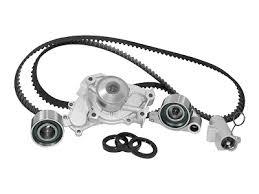
Maintaining an engine’s internal synchronization is a feat of precision engineering. At the heart of this process is the timing belt kit—a system that ensures the crankshaft and camshaft rotate in perfect harmony. When this harmony is disrupted, the results are often catastrophic. For both fleet managers and individual vehicle owners, understanding the mechanics of failure is the first step toward operational reliability.
At NMR Bearing, we specialize in the high-precision components that make these systems work. Whether you are a professional mechanic or a first-time buyer, choosing the right timing belt kit is about more than just a rubber belt; it is about the synergy of the tensioners, idlers, and bearings that support it.
Why Timing Belt Kits Fail: A Technical Perspective
Most engine failures attributed to "the belt" are actually caused by the peripheral components within the kit. A timing belt does not operate in a vacuum; it relies on constant, calibrated tension and smooth rotation provided by the bearings.
-
Bearing Seizure: If the idler or tensioner bearing fails due to heat or lubrication loss, it creates immense friction. This friction generates heat that can melt the belt’s teeth or cause the belt to snap entirely.
-
Tensioner Loss: A hydraulic or mechanical tensioner that has lost its "spring" allows the belt to go slack. This leads to "tooth jumping," where the timing shifts, causing the pistons to strike the valves.
-
Environmental Contamination: Oil leaks from camshaft seals can degrade the rubber compounds of the belt. Once the structural integrity is compromised, the belt can no longer handle the high-torque loads of the engine.
Anatomy of a Premium Timing Belt Kit
When evaluating a kit from NMR Bearing, it is essential to look at the three pillars of quality: material science, bearing precision, and kit completeness.
1. The Belt: HNBR Construction
Modern high-performance belts are made from Hydrogenated Nitrile Butadiene Rubber (HNBR). This material is chosen for its superior resistance to heat and chemicals. Cheap alternatives often use standard EPDM, which may crack prematurely under the high temperatures of a modern engine bay.
2. The Bearings: The Heart of the Kit
The idlers and tensioners in our kits utilize premium-grade steel and advanced seal technology. In the bearing industry, we focus on L10 life—the calculation of how long a bearing will last under specific loads. Our bearings are engineered to exceed the standard replacement interval of the belt itself, ensuring that the "support system" doesn't fail before the rubber does.
3. Tensioning Systems
Whether manual or automatic, the tensioner must maintain a specific Newton-meter (Nm) load on the belt throughout the entire RPM range. A high-quality kit includes a tensioner that can dampen the vibrations produced by the engine’s firing pulses.
Technical Problem Solving: Identifying Wear Before Failure
For the expert buyer, visual inspection is a critical skill. You shouldn't wait for a snapped belt to take action. Look for these specific technical red flags:
-
Glazing: If the back of the belt appears shiny or "glassy," it indicates that the belt is slipping or a pulley is sticking.
-
Pitting: Small chunks missing from the rubber teeth often suggest that debris has entered the timing cover.
-
Whirring Noises: A high-pitched "whirr" or "chirp" coming from the timing cover usually indicates a bearing that has lost its internal grease. This is a "replace immediately" signal.
The Importance of a Complete Kit Replacement
A common mistake in the industry is replacing only the belt while leaving the old tensioners and pulleys in place. From a technical and SEO-optimized maintenance standpoint, this is a high-risk strategy.
Bearings have a finite fatigue life. If you install a new, stiff belt on an old, worn idler pulley, the new tension will often cause the old bearing to fail within weeks. NMR Bearing recommends a "Total System Replacement." By replacing all components at once, you reset the clock on the entire timing drive system, ensuring another 60,000 to 100,000 miles of worry-free operation.
How to Choose the Right Kit for Your Application
Selecting the correct kit requires matching the exact specifications of your engine code. Even within the same vehicle year, manufacturers may change the tooth profile of the belt (Curvilinear vs. Trapezoidal).
-
Check the Tooth Profile: Using a trapezoidal belt on a curvilinear sprocket will lead to rapid wear and noise.
-
Verify the Width: Even a 1mm difference in belt width can cause tracking issues, leading to the belt rubbing against the engine block.
-
Bearing Grade: Ensure the kit uses bearings rated for the high-speed centrifugal forces of your specific engine.
Conclusion: Precision is Non-Negotiable
A timing belt kit is one of the most critical investments you can make in vehicle maintenance. By focusing on high-grade materials and precision-engineered bearings, NMR Bearing provides solutions that prevent the "problem-based" failures that lead to expensive engine rebuilds.
For the new buyer, remember: the belt is the messenger, but the bearings are the muscle. For the expert, you know that technical specs and material quality are what truly outrank the competition. Ensure your engine remains in perfect sync by choosing a kit that prioritizes durability and engineering excellence.

 English
 Arabic
 French
 Spanish
 Portuguese
 Turkish
 Dutch
Dutch
 Italiano
 Russian
 Romaian
 Portuguese (Brazil)
 Greek
Greek