
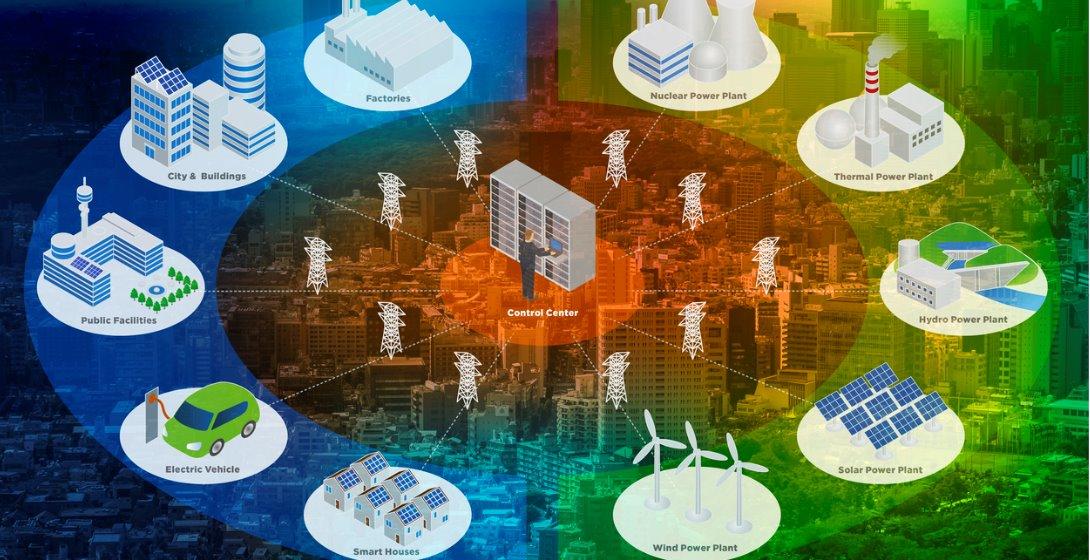
A modern Smart Grid Market Platform is designed to unify data, control, and operations across transmission, distribution, and the grid edge. Platforms connect advanced metering infrastructure, feeder sensors, intelligent switches, substations, and distributed energy resources into a coordinated system. At the core are operational applications such as SCADA, outage management systems (OMS), advanced distribution management systems (ADMS), and distributed energy resource management systems (DERMS). These tools ingest telemetry, model the network, and issue control actions like switching, voltage regulation, and demand response dispatch. A platform approach reduces siloed operations and enables faster decisions by providing a shared view of the grid. It also supports workflow integration, linking outage events to crew dispatch and asset records. Because utilities operate multi-vendor equipment, platforms increasingly emphasize standards-based interfaces, flexible integration layers, and scalable data ingestion. As data volumes rise, platforms also include analytics engines that prioritize alerts and provide actionable insights rather than raw telemetry streams.
Data management is a defining platform capability. AMI generates high-frequency meter reads and outage “last gasp” signals, while distribution sensors stream operational data continuously. Platforms must normalize, store, and secure this data, often integrating with enterprise data lakes and utility asset management systems. Real-time analytics support fault location, voltage optimization, and theft detection. Predictive analytics support asset health monitoring, identifying transformers or cables at risk before failure. Platform vendors increasingly offer digital twins and network models that update as switching changes, improving accuracy for operational decisions. Communications and device management are also part of the platform: monitoring connectivity health, managing firmware updates, and ensuring devices remain securely configured. Interoperability is critical. Utilities cannot replace all legacy systems at once, so platforms must coexist with older SCADA and GIS systems and support phased modernization. Open APIs and integration tooling reduce vendor lock-in and allow utilities to add new applications such as EV charging management or microgrid controllers without rebuilding core infrastructure.
Cybersecurity and governance are embedded into platform requirements. Smart grid platforms operate critical infrastructure, so they must support segmentation, role-based access, encryption, and audit logging. Utilities often require compliance alignment with national critical infrastructure frameworks. Platforms also need strong incident response integration, providing logs to SOC tools and supporting rapid isolation of compromised endpoints. Operational governance is equally important. Utilities must manage change control for switching logic, voltage settings, and demand response dispatch rules. Platforms provide workflow approvals and simulation capabilities to reduce operational risk. Human factors matter; dispatchers and field crews must trust platform recommendations and understand automated actions. Therefore, platforms invest in usability, situational awareness dashboards, and training tools. Customer-facing integration is also growing. Platforms may interface with customer portals, outage notifications, and dynamic pricing systems, requiring careful privacy controls. As distributed resources grow, platforms will increasingly coordinate assets not owned by utilities, requiring consent management and standardized control protocols.
Platform evolution will focus on distributed control, flexibility markets, and AI-driven operations. Edge intelligence will enable faster local decisions, improving resilience during communications disruptions. DERMS platforms will expand to orchestrate distributed solar, batteries, and EV charging as grid services, enabling virtual power plant participation. AI will improve forecasting, anomaly detection, and outage prediction, but utilities will require explainability and validation due to safety and reliability concerns. Platforms will also integrate more tightly with planning tools, connecting real-time operations data to long-term investment decisions. Utilities selecting platforms should evaluate scalability, integration capability, cybersecurity posture, and support for both operational control and analytics. A phased deployment approach—integrating AMI first, then ADMS functions, then DER coordination—reduces risk. Ultimately, smart grid platforms act as operating systems for modern power networks, enabling reliable service, renewable integration, and customer participation. As electrification grows, platform maturity will be a key determinant of grid performance and resilience.
Top Trending Reports:
Mobile Collaboration Productivity And Innovation From Workplace Market

 English
 Arabic
 French
 Portuguese
 Deutsch
 Turkish
 Dutch
Dutch
 Italiano
 Russian
 Romaian
 Portuguese (Brazil)
 Greek
Greek