
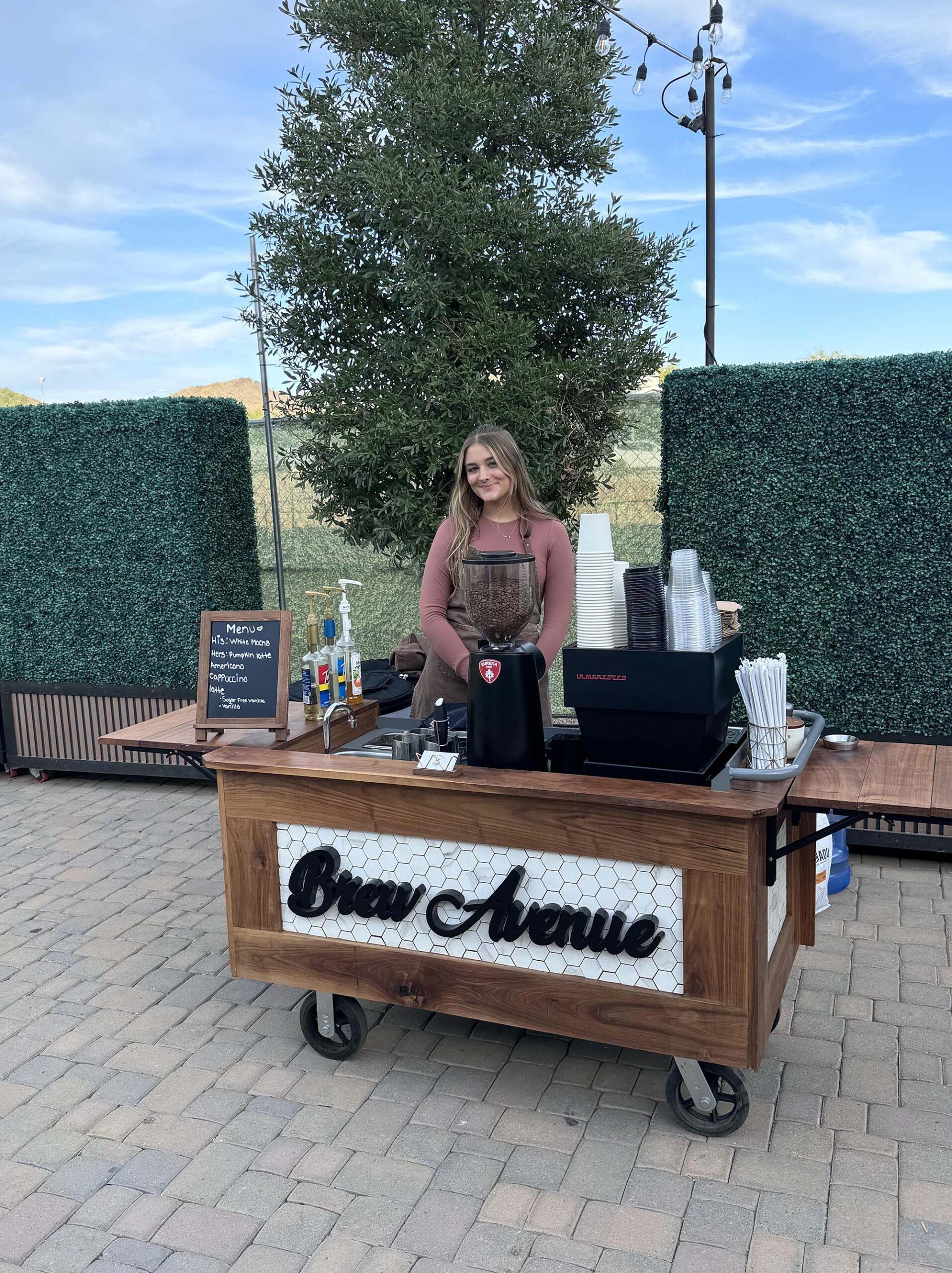
There is a moment in every office worker's afternoon that feels inevitable. The clock edges past 2:30 PM. Energy flags. Focus fragments. And the only refuge is the break room—a fluorescent-lit purgatory offering stale coffee from a pot brewed at 8:00 AM and a vending machine's worth of processed sugar. This daily ritual, repeated across thousands of Phoenix offices, is not a refreshment break. It is a slow drain on morale, productivity, and health. The solution is simpler than most office managers realize: replace the break room with a barista. A professional coffee catering service transforms the dreaded afternoon lull into a moment of genuine anticipation. At Brew Avenue Coffee, we are located in Phoenix, Arizona, United States, and we have seen firsthand how replacing break room burnout with craft coffee revitalizes entire organizations.
The Anatomy of Break Room Burnout
Let us name the specific ways the traditional office break room fails the people it supposedly serves.
The Coffee Quality Crisis: Coffee brewed at 8:00 AM and left on a warmer until 4:00 PM undergoes a chemical transformation. The delicate oils oxidize. The aromatic compounds degrade. What remains is a bitter, acidic liquid that requires substantial cream and sugar to become drinkable. Employees are not refueling; they are administering a sugar spike followed by an inevitable crash.
The Social Vacuum: Break rooms are often sterile, unwelcoming spaces. They lack the warmth that encourages genuine conversation. Employees grab their coffee and retreat to their desks, missing opportunities for the casual cross-departmental interaction that builds company culture.
The Administrative Burden: Someone in the office must manage the coffee supply. This invisible labor—ordering beans, cleaning the machine, restocking cups—falls on administrative staff already stretched thin. It is work that goes unnoticed until it is not done, at which point complaints multiply.
The Health Implications: When the only beverage options are poor coffee and sugary sodas, employees make choices that undermine their afternoon energy and long-term health. The 3:00 PM sugar crash leads to decreased productivity and early departures.
The Barista Intervention
Introducing a mobile barista service addresses each of these failures simultaneously.
| Break Room Failure | Barista Service Solution |
|---|---|
| Stale, low-quality coffee | Freshly pulled espresso, perfectly steamed milk, single-origin pour-overs |
| Isolated, transactional visits | A welcoming cart that invites lingering and conversation |
| Hidden administrative labor | Zero office staff involvement—we handle everything |
| Unhealthy beverage options | Craft coffee, alternative milks, sugar-free syrups, herbal infusions |
The 10:00 AM Reset: Many offices schedule their barista visit mid-morning, around 10:00 AM. This timing catches employees after they have settled into work but before the pre-lunch energy dip. It creates a natural break that feels earned rather than disruptive.
The 2:30 PM Rescue: For offices battling the notorious afternoon slump, a 2:30 PM service window is transformative. A perfectly crafted cortado or a refreshing cold brew provides sustained alertness without the sugar crash. Employees return to their desks actually recharged, not temporarily stimulated.
The Friday Fuel-Up: End-of-week service has become a favorite among Phoenix companies. A Friday afternoon espresso bar sends employees into the weekend with positive feelings about their workplace. It is a small investment with outsized returns for Monday morning morale.
Beyond the Beverage: Cultural Transformation
The shift from break room to barista does more than improve coffee quality. It fundamentally changes how employees relate to their workplace and each other.
Natural Networking: The coffee cart becomes a neutral gathering point. People who would never interact in a meeting—sales with engineering, operations with marketing—find themselves in conversation while waiting for their latte. These spontaneous connections are the raw material of innovation and cross-functional collaboration.
Equality in Experience: In the break room model, coffee quality is uniform. Everyone drinks the same mediocre brew. With a barista, each beverage is individually crafted. The intern receives the same attention as the CEO. This subtle signal of equal worth resonates deeply in company culture.
Anticipation and Gratitude: Employees begin to look forward to coffee service days. They express appreciation to office managers and leadership. This gratitude cycle strengthens the emotional bond between employees and employer.
The Phoenix Workplace Context
Phoenix's unique climate and culture make this transformation particularly relevant. Our long, hot summers mean that outdoor breaks are often impractical. The indoor coffee break becomes the primary respite opportunity. Making that respite genuinely restorative matters more here than in milder climates.
Moreover, Phoenix's workforce is increasingly mobile. With many companies adopting hybrid schedules, the days employees do spend in the office must feel uniquely valuable. A barista service on core in-office days gives remote employees a reason to commute—an experience they cannot replicate at their home workspace.
Measuring the Return
Companies that make this transition report measurable improvements across several dimensions.
| Metric | Observed Improvement |
|---|---|
| Afternoon productivity | Sustained focus through 4:00-5:00 PM |
| Cross-department communication | Increased casual interaction |
| Employee satisfaction scores | Positive mentions in engagement surveys |
| Unscheduled breaks | Reduced time spent away from desk |
| Return-to-office sentiment | Higher enthusiasm for in-office days |
Implementation Without Disruption
Integrating barista service into the workday is remarkably seamless. Our cart requires minimal space—often fitting into a corner of the existing break room or a lobby area. We operate on a schedule that integrates naturally with your workflow. There is no equipment for your staff to maintain, no supplies to order, no cleanup to manage. The service appears, creates joy, and disappears, leaving only positive residue.
Conclusion: The Break Room Deserves Better
The break room has been an afterthought in office design for decades. It is time to reconsider. What if that space—and the ritual it hosts—actually contributed to employee well-being rather than detracting from it? What if the afternoon coffee break became a highlight of the workday rather than a reminder of its drudgery?
This is not a fantasy. It is happening now in offices across Phoenix.
Ready to replace break room burnout with barista service at your company? Contact Brew Avenue Coffee to schedule a consultation and tasting for your Phoenix team.
Frequently Asked Questions
How often should we schedule barista service for maximum impact?
The optimal frequency depends on your office size and culture. Many clients start with weekly service on a consistent day (e.g., "Wellness Wednesdays") and expand based on employee feedback. Bi-weekly and monthly options are also available.
What if our office has fewer than 20 employees?
We regularly serve offices of all sizes. For smaller teams, we offer compact service windows and streamlined menus that ensure efficiency while maintaining the full craft experience. The impact on morale is proportionally just as significant.
Can we try barista service once before committing to a recurring schedule?
Absolutely. Many clients begin with a single pilot day to gauge employee response and iron out logistics. We are happy to accommodate a trial service before discussing recurring arrangements.
How do you handle dietary restrictions and preferences?
We carry a full range of alternative milks (oat, almond, soy) and sugar-free syrups. Our baristas are trained to accommodate all dietary needs with the same care and attention as any specialty coffee shop.
Is there a minimum commitment for recurring service?
No. We offer flexible month-to-month agreements that allow you to adjust frequency, pause service, or cancel with reasonable notice. Our goal is to be a partner in your workplace wellness, not a long-term contract burden.

 English
 Arabic
 French
 Spanish
 Portuguese
 Deutsch
 Dutch
Dutch
 Italiano
 Russian
 Romaian
 Portuguese (Brazil)
 Greek
Greek