
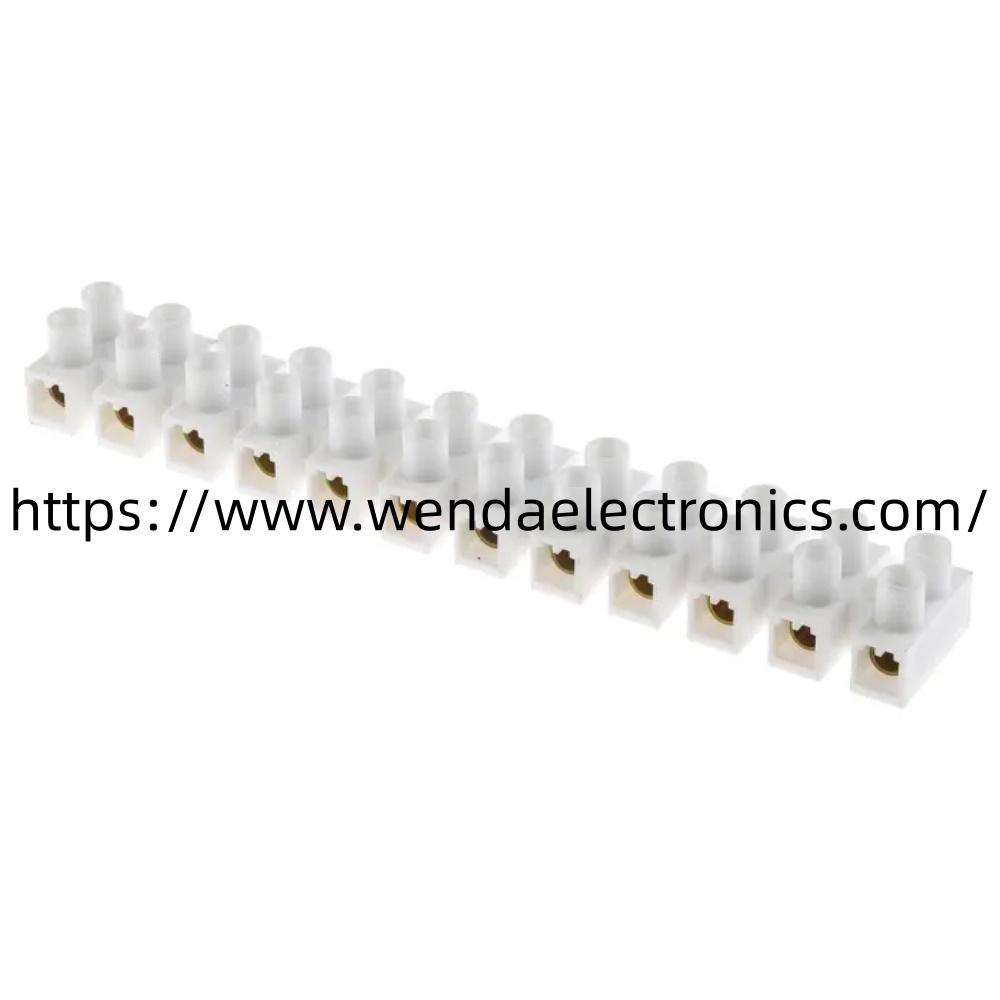
Cable Strip Connectors are practical electrical components designed to join individual conductors within a wiring arrangement. Their basic structure usually combines an insulating body with conductive terminals and a clamping mechanism. When a conductor is inserted and secured, the metal contact creates an electrical path between connected wires. This approach can make circuit assembly easier to organize while providing a convenient method for installation and later maintenance. Wendaelectronics supplies connection solutions for manufacturers working with different electrical equipment and wiring applications.
Basic Structure And Working Principle
A typical strip style connection component contains several terminal positions arranged in a row. Each position can hold a conductor through a mechanical clamping method.
Depending on the design, the clamping mechanism may use a screw or another retention structure. When tightened or engaged, the mechanism presses the conductor against a conductive contact surface.
Electricity can then travel through the metal section between the connected conductors.
The insulating housing separates adjacent circuits and helps reduce the possibility of unintended contact between neighboring terminals.
How Installation Usually Works
Installation begins with preparing the conductor according to the connection components requirements.
The appropriate section of insulation is removed so that the conductive portion can enter the terminal area without exposing unnecessary conductor length.
The conductor is then inserted into the designated position. A screw or clamping mechanism is tightened to hold it in place.
After installation, the connection should be checked according to the applicable electrical installation procedure.
The exact preparation method depends on the product design, conductor type, and intended application.
Why Mechanical Clamping Matters
A mechanical connection needs to maintain contact between the conductor and conductive terminal during normal operation.
If the conductor is not positioned correctly, the contact condition may change. Loose connections can increase electrical resistance and may contribute to localized heating.
For this reason, installation requires attention to conductor preparation, insertion depth, tightening method, and mechanical stability.
Manufacturers should also consider the applicable electrical requirements when designing or assembling a wiring system.
Organizing Multiple Conductors
One useful feature of a strip arrangement is that several connection points can be placed together.
This can make wiring layouts easier to understand because different conductors can be grouped within one defined area.
For control panels, appliances, lighting equipment, and other electrical assemblies, organized connection points can simplify the arrangement of incoming and outgoing wires.
Clear identification can also help technicians understand which circuit each terminal belongs to during installation or maintenance.
Choosing According To Conductor Requirements
Not every connection component is suitable for every conductor.
Selection can depend on conductor size, conductor construction, electrical load, insulation conditions, connection method, and installation environment.
Solid and stranded conductors may have different termination requirements, so buyers should check the applicable product instructions before installation.
The number of terminals is another consideration. A larger wiring project may require several connection positions, while a smaller assembly may only need a limited number.
Applications In Electrical Equipment
Strip style connection components can be used across various wiring environments.
Potential applications include lighting equipment, household appliances, control cabinets, electrical distribution assemblies, industrial equipment, machinery, and other systems where separate conductors need to be joined.
The suitable design depends on the electrical and mechanical conditions of the application.
For example, an indoor control assembly may have different requirements from equipment exposed to vibration, moisture, dust, or temperature changes.
Supporting Maintenance Work
Electrical systems sometimes need inspection or component replacement.
An organized terminal arrangement can make it easier for technicians to identify individual conductors before performing maintenance.
After the appropriate power isolation procedure has been completed, technicians can inspect the connection and verify whether conductors remain properly positioned.
This can be useful for equipment that requires periodic service or troubleshooting.
Maintenance procedures should always follow the applicable equipment instructions and electrical safety requirements.
Reducing Wiring Confusion
Poorly organized wiring can make installation and maintenance more difficult.
A structured terminal arrangement provides defined positions for different conductors. This gives designers and installers another way to separate circuits and maintain a clearer internal layout.
Labels, circuit diagrams, and consistent wire identification can further support this process.
The connection component itself is only one part of good wiring organization. The complete system still requires appropriate design and installation practices.
Mechanical And Environmental Considerations
The operating environment can influence connection selection.
Equipment exposed to vibration may require attention to mechanical retention. Installations located near moisture or contaminants may require suitable protection and enclosure arrangements.
Temperature can also affect electrical components and surrounding materials.
For this reason, buyers should provide the supplier with information about the intended environment when discussing a connection solution.
This allows the product selection process to consider actual operating conditions rather than only basic electrical requirements.
Why Manufacturers Consider Connection Design Early
Connection components can influence enclosure dimensions, internal layout, assembly procedures, and maintenance access.
Considering them early in product development allows engineers to reserve suitable installation space and plan conductor routing before the final structure is completed.
This can also help manufacturers coordinate the connection method with their production process.
Wendaelectronics works with businesses that need electrical connection products for different equipment structures and manufacturing applications.
What Buyers Should Check Before Ordering
Commercial buyers can prepare several details before contacting a supplier.
These may include conductor type, conductor size, number of connection positions, intended electrical application, mounting method, installation environment, packaging requirements, and expected purchasing quantity.
If the product is intended for a specific equipment project, providing drawings or application information can also make communication more precise.
For repeat purchasing, consistent product identification and packaging records can help simplify future order discussions.
Building An Organized Wiring System
A well planned wiring arrangement involves more than selecting individual components. Conductors, terminal structures, insulation, enclosure design, circuit protection, installation procedures, and maintenance access all work together.
A suitable strip style connection component can provide a practical interface for joining conductors while keeping wiring points organized.
For manufacturers evaluating connection solutions for electrical equipment, control systems, appliances, lighting products, and other applications, the product information at https://www.wendaelectronics.com/product/ can be naturally considered alongside conductor requirements, installation conditions, circuit layouts, and purchasing plans.

 English
 Arabic
 French
 Spanish
 Portuguese
 Deutsch
 Turkish
 Dutch
Dutch
 Italiano
 Russian
 Romaian
 Portuguese (Brazil)