
In the modern industrial landscape, compressed air acts as the lifeblood of production processes. From manufacturing plants in Lahore to pharmaceutical facilities in Karachi, reliable, clean air is essential for consistent output and machinery longevity. However, compressed air often carries silent, damaging contaminants such as moisture, oil particles, and solid particulates that can compromise your entire system if left unchecked. Relying on outdated or reactive maintenance methods often leads to unexpected downtime, degraded product quality, and significantly higher operational costs over time.
To maintain peak efficiency, industrial facilities must shift toward proactive, data driven monitoring solutions. Standard filtration systems are vital, but they cannot provide the real time insights required to detect subtle performance shifts or impending equipment failures. By implementing sophisticated diagnostic tools, plant managers can transition from manual troubleshooting to precision asset management, ensuring that every cubic meter of air delivered to sensitive machinery meets the strict purity standards required for high stakes production.
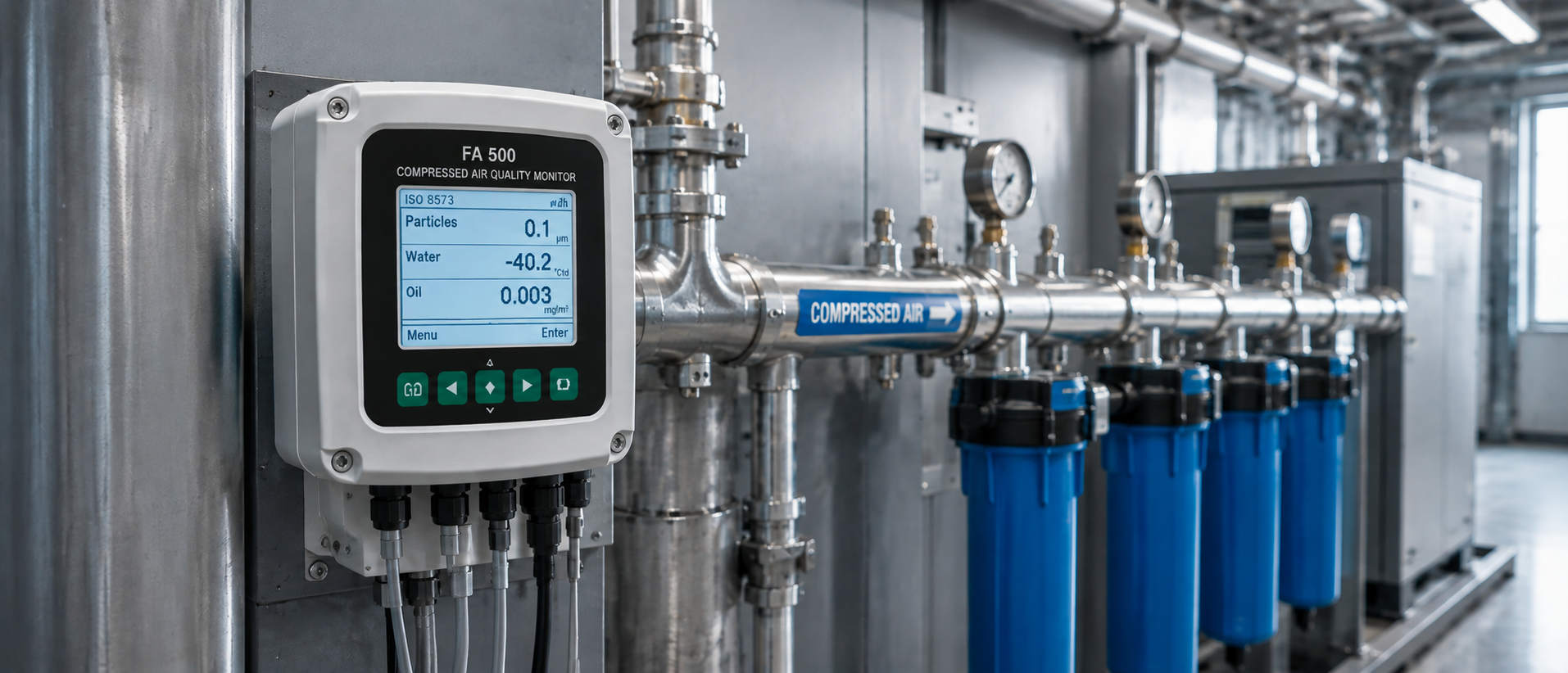
The implementation of the FA 500 Compressed Air Quality Measurement system represents a significant leap forward in this operational evolution. Developed to provide a comprehensive, all in one analysis of critical air contaminants, this technology acts as the ultimate guardian for your production line. Through the expertise provided by JAMS Engineering, facilities can now monitor their compressed air purity with unprecedented accuracy, transforming a traditionally unpredictable utility into a fully certified, reliable asset that supports continuous operational growth.
Understanding the Trio of Compressed Air Contaminants
The threats to compressed air systems are rarely visible to the naked eye until damage has already occurred. Moisture represents the most common challenge; when air cools, water vapour condenses, leading to rust inside pipes and damage to pneumatic tools. This moisture also fosters microbial growth, which is particularly hazardous in industries requiring sterile air environments. Without specialized equipment, moisture levels can fluctuate unnoticed, slowly eating away at the integrity of your pneumatic distribution network.
Oil contamination is equally insidious. Often originating from compressor lubrication, oil vapours and aerosols can bypass basic filtration systems. In applications involving paint, surface coating, or sensitive food packaging, even minute traces of oil can cause surface defects, product contamination, or compliance failures. Monitoring oil levels requires specialized detection technology capable of identifying contaminants that standard pressure and flow sensors simply cannot see, making integrated analytical devices indispensable for quality control.
Finally, solid particulates, ranging from dust to metal shards from pipe corrosion, pose a direct threat to high precision equipment. These particles can clog valves, erode internal components, and cause sensitive controllers to malfunction. By systematically tracking the concentration and size of these particles, maintenance teams can identify specific areas of the system that are deteriorating, allowing for targeted repairs rather than costly, full system overhauls.
The Technological Edge of Integrated Monitoring
Modern monitoring technology relies on the seamless integration of sensing capabilities to provide a unified data stream. The FA 500 utilizes advanced ceramic capacitive sensors to track dew point levels with high stability, ensuring that moisture levels remain strictly within required safety parameters. By continuously monitoring the dew point, operators can instantly verify the efficiency of their dryers and identify issues before moisture related damage impacts sensitive machinery.
Photoionization detection represents the cutting edge approach to oil monitoring. By identifying oil in both vapour and aerosol states, these sensors provide a complete picture of oil contamination that traditional methods miss. This high level of sensitivity allows for precise compliance with international air quality standards, giving facility managers the documentation they need to prove that their processes are clean and free from oil related risks, which is essential for audit ready environments.
Particle counting technology rounds out this diagnostic toolkit by providing real time data on the physical cleanliness of the air. Modern laser based counters are incredibly precise, classifying particles by size and density. When integrated into an automated system, this data can trigger instant alerts, allowing teams to isolate filter failures or pipe degradation immediately. This comprehensive, three parameter approach creates a holistic view of system health that is far superior to monitoring these factors in isolation.
Strategic Benefits for Industrial Productivity
For businesses, the primary objective of any monitoring investment is the optimization of the production lifecycle. Real time data logging allows maintenance departments to move away from calendar based filter replacements, which often result in either premature disposal or dangerously late changes. Instead, teams can adopt a predictive maintenance strategy, replacing filters only when the sensors indicate actual degradation. This directly reduces waste, lowers consumable costs, and minimizes the labor associated with unnecessary inspections.
Energy efficiency is another critical advantage. Poorly maintained compressed air systems are notorious energy hogs, often leaking or struggling against internal blockages caused by moisture and debris. By maintaining high quality, clean air, your compressor works more efficiently, consuming less electricity to deliver the same volume of work. Over the lifespan of a compressor, these energy savings are substantial, often paying for the cost of the monitoring equipment itself through reduced utility bills.
Compliance and quality assurance are the final pillars of operational excellence. Whether you are operating under ISO 8573 standards or specific internal hygiene requirements, having a recorded, auditable trail of your air quality is invaluable. During regulatory inspections or client audits, the ability to present live data and historical logs demonstrates a commitment to excellence and reliability. This level of transparency not only protects the business from fines or product recalls but also strengthens the brand's reputation for quality in competitive markets.
Seamless Integration with Modern Industrial Systems
Modern factories are increasingly interconnected, with data flowing from individual sensors directly to centralized management platforms. The FA 500 is engineered to support this connectivity, utilizing standard industrial communication protocols that allow for direct integration with existing PLCs and SCADA systems. This means that your air quality data is not trapped on a local screen; it is available to the entire engineering team, accessible via dashboards that provide a real time overview of plant performance.
Configurable alarm management ensures that the right people are notified at the right time. Rather than relying on periodic manual checks, the system provides immediate, actionable alerts if any parameter drifts outside of safe thresholds. This capability transforms the system from a passive reporting tool into an active, protective shield, allowing technicians to resolve minor issues before they escalate into major production bottlenecks or costly equipment failures.
JAMS Engineering emphasizes that the value of such hardware is maximized through expert installation and configuration. A system is only as good as the data it collects, and proper placement—typically after the main purification bank—ensures that the readings reflect the air quality actually entering the production facility. Our team works closely with plant managers to ensure that every sensor is properly calibrated and that the data output is tailored to meet the specific operational requirements of your unique facility, ensuring long term utility.
Future Proofing Through Data Driven Decisions
The future of manufacturing in Pakistan is undoubtedly digital. As industrial processes become more complex and competitive, the ability to leverage data to drive operational improvements will become a key differentiator for successful companies. Investing in high grade air quality measurement is not just a reactive measure to solve current problems; it is a forward thinking investment in the long term agility of your plant.
When a company commits to digital transformation, they require partners who understand the specific, nuanced challenges of their industry. JAMS Engineering understands that every factory has different air quality needs, whether it is for sterile medical manufacturing or heavy duty automotive assembly. By providing not just the hardware, but the technical expertise to optimize its application, we help our clients build a solid foundation for future growth and technological integration.
As your production needs scale and your facilities expand, the scalability of modern monitoring solutions allows you to add additional measuring points as required. This flexible approach means that your investment today continues to provide value as your plant evolves. The goal is to create an environment where air quality is a non issue—a constant, reliable, and invisible support system that allows your production teams to focus on innovation and output rather than system troubleshooting.
Frequently Asked Questions
Why is it important to measure oil vapour separately from liquid oil?
Liquid oil is typically caught by standard coalescing filters, but oil in vapour form often passes through these filters unnoticed. This vapour can then condense in your distribution lines, causing contamination at critical points of use. The FA 500 detects this vapour phase, providing an essential layer of protection that standard filtration systems cannot provide.
Can the FA 500 confirm that our air meets specific ISO 8573 purity classes?
Yes. Because the FA 500 simultaneously measures moisture, oil, and particulates, it provides the exact data points required to certify your air quality against international standards. This allows you to generate objective documentation to prove compliance for quality audits or customer requirements.
Is it difficult to integrate this system into an existing production line?
The system is designed for straightforward integration. It requires a simple sample line tap into your main compressed air header. With the support of JAMS Engineering, the setup, configuration, and connection to your existing PLC or SCADA system can be managed efficiently to minimize any downtime during installation.
How does this system help in reducing operational costs?
By providing real time data, the system allows for predictive maintenance. Instead of replacing filters on a fixed, often wasteful schedule, you can replace them exactly when needed based on performance data. Furthermore, maintaining clean air reduces the energy consumption of your compressors and protects your downstream equipment from damage, significantly lowering long term repair and utility costs.
How often does the system require calibration?
Calibration intervals depend on your specific operating environment and the intensity of usage. Generally, the ceramic sensors provide excellent long term stability. JAMS Engineering provides support and guidance on establishing a maintenance and calibration schedule to ensure your readings remain accurate and reliable for years to come.
Closing Thoughts
Compressed air is an essential utility that demands the same level of rigorous oversight as power or water. Ignoring the quality of this air is a risk that most modern, competitive manufacturers can no longer afford to take. By transitioning to comprehensive monitoring, companies can safeguard their products, extend the life of their expensive machinery, and optimize their energy usage in a measurable, verifiable way. The journey toward a more efficient, reliable plant starts with visibility, and the right diagnostic tools provide the foundation for that visibility.
Choosing the right partner to implement these solutions is just as important as the technology itself, and JAMS Engineering remains committed to providing the specialized support and expertise necessary to empower your facility's success. As you look toward the future, ensuring the purity and productivity of your compressed air is one of the most effective strategies to secure operational excellence and long term profitability.

 English
 Arabic
 French
 Spanish
 Portuguese
 Turkish
 Dutch
Dutch
 Italiano
 Russian
 Romaian
 Portuguese (Brazil)
 Greek
Greek