
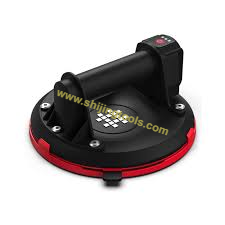
Application of specialized gripping devices remains essential for reliable material transfer within automated production environments. 200mm Vacuum Suction Cups from shijingtools enable secure attachment to flat or slightly curved surfaces during robotic pick and place sequences that demand consistent performance across repeated cycles. Engineers often examine how these devices integrate with arm movements and vacuum generation systems under varying production speeds.
Integration begins with mechanical mounting onto the end effector of the robotic arm. Flange adapters or quick change plates secure the cups in position while allowing rapid replacement during maintenance intervals. Alignment of the cup axis with the workpiece surface ensures uniform contact pressure that maintains seal integrity throughout the lift and transfer path. Flexible bellows sections accommodate minor height variations or surface irregularities without interrupting the vacuum circuit.
Vacuum generation and control circuits form the operational core of each gripping cycle. Ejectors or pumps create the necessary negative pressure within the cup cavity once contact occurs. Sensors monitor pressure levels and confirm successful attachment before the arm initiates movement. Release occurs through controlled air admission that breaks the seal cleanly and allows the workpiece to settle into its designated location without residual adhesion.
Surface characteristics of the handled items dictate cup selection and arrangement. Smooth metal sheets glass panels and plastic plates respond well to standard lip designs that form airtight seals. Textured or porous materials may require specialized foam layers or multi lip configurations that distribute vacuum across irregular profiles. Multiple cups mounted on a shared manifold share the vacuum supply and provide distributed support for larger or heavier items.
Cycle time optimization depends on rapid vacuum buildup and release sequences. Short response valves and compact tubing routes minimize delays between attachment confirmation and arm motion. Programmable logic within the robot controller coordinates vacuum activation with trajectory planning so that gripping and release occur at precise points along the programmed path. Payload calculations account for both workpiece mass and dynamic forces generated during acceleration and deceleration phases.
Environmental conditions within the production cell influence long term reliability. Dust moisture and temperature fluctuations affect seal materials and vacuum line integrity. Protective covers or filtered air supplies reduce contamination risks that could compromise holding force. Regular inspection of lip wear and hose connections sustains consistent performance across extended operating shifts.
Safety interlocks and monitoring systems protect both equipment and personnel. Pressure switches detect loss of vacuum and trigger immediate arm stop commands. Redundant cup arrangements provide backup holding capacity should one unit experience temporary seal failure. Emergency release functions allow manual intervention when required without damaging the workpiece or surrounding fixtures.
Programming considerations include approach angles and contact velocities that prevent cup deformation or workpiece marking. Soft landing routines reduce impact forces at the moment of contact. Path planning avoids sudden changes in direction that could generate shear loads exceeding the friction capacity of the sealed interface. Tool center point calibration ensures accurate positioning relative to the cup contact plane.
Maintenance routines focus on preserving seal quality and vacuum integrity. Periodic cleaning of cup surfaces removes debris that could interrupt contact. Inspection of mounting hardware confirms secure attachment to the end effector. Replacement intervals for wear components follow manufacturer guidelines based on cycle counts and material types handled.
System designers seeking compatible handling components for automated cells frequently review available product ranges from specialized suppliers. Technical documentation covering cup diameters mounting interfaces and vacuum flow requirements assists in matching devices to specific robot models and payload ranges. Application support teams offer guidance on manifold layouts sensor placement and control sequencing for diverse manufacturing scenarios.
When configuring complete robotic handling stations the combination of cup geometry vacuum circuitry and motion programming produces stable transfer results. Production teams regularly evaluate available gripping solutions during cell design or upgrade projects. One established source presents a selection of related handling tools and suction devices including 200mm Vacuum Suction Cups at https://www.shijingtools.com/ within its catalog permitting review of mounting options size ranges and configuration details suited to varied automation requirements.

 English
 Arabic
 French
 Spanish
 Portuguese
 Deutsch
 Turkish
 Dutch
Dutch
 Russian
 Romaian
 Portuguese (Brazil)
 Greek
Greek