
Introduction
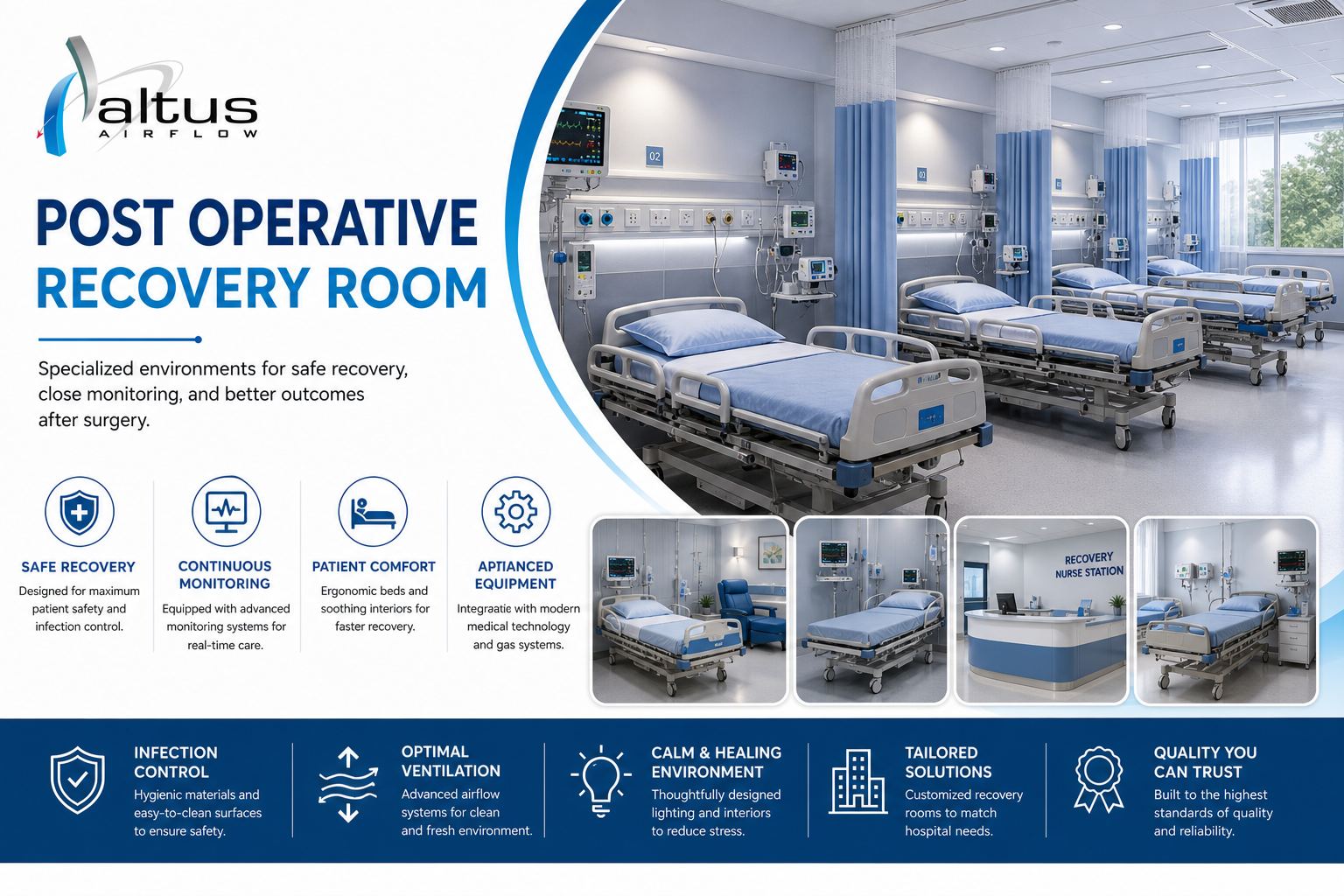
A Post Operative Recovery Room is designed to provide specialized care to patients immediately after surgical procedures. It offers a controlled environment where healthcare professionals can monitor vital signs, manage recovery conditions, and provide immediate medical support when required. A well-planned recovery area includes advanced medical equipment, reliable infrastructure, and patient-focused features that improve safety and recovery outcomes. Proper recovery room design helps hospitals deliver efficient post-surgical care while ensuring smooth patient transition after surgery.
Multi-Parameter Patient Monitoring Systems
Continuous monitoring is one of the most important features of post-operative care.
Recovery rooms should include multi-parameter patient monitors that track heart rate, blood pressure, oxygen saturation, respiratory rate, ECG, and body temperature to help healthcare professionals evaluate patient recovery.
Real-time monitoring supports early identification of complications.
Adjustable Patient Beds
Comfortable and flexible beds improve patient care after surgery.
Adjustable hospital beds allow proper positioning according to medical requirements while providing easier access for healthcare professionals during observation and treatment.
Functional beds improve patient comfort and workflow efficiency.
Essential Medical Equipment
Medical equipment supports effective post-operative management.
A recovery room should include ventilators, infusion pumps, syringe pumps, suction units, ECG machines, oxygen delivery devices, and emergency care equipment to support patient treatment.
Proper equipment availability enables faster medical response.
Oxygen Delivery Systems
Oxygen support is an essential feature of recovery areas.
Post-operative recovery rooms should include oxygen outlets, oxygen masks, nasal cannulas, flow meters, humidifiers, and regulators to provide respiratory assistance whenever required.
Reliable oxygen systems support stable patient recovery.
Medical Gas Pipeline Systems
Medical gas infrastructure ensures continuous support.
Recovery rooms should include oxygen pipelines, vacuum systems, compressed air outlets, medical gas terminal units, pressure regulators, and alarm systems for uninterrupted medical gas availability.
Efficient gas systems improve patient care reliability.
Emergency Care Equipment
Emergency preparedness is essential after surgical procedures.
Recovery rooms should have crash carts, defibrillators, airway management devices, emergency medications, suction equipment, and resuscitation tools to handle unexpected medical situations.
Quick access to emergency equipment improves patient safety.
Infection Control Systems
A clean environment helps reduce infection risks.
Post-operative recovery rooms should include proper ventilation, HEPA filtration systems, controlled airflow, antimicrobial surfaces, hand hygiene facilities, and easy-to-clean materials.
Effective infection control creates safer recovery conditions.
Nurse Call and Communication Systems
Communication systems improve patient assistance.
Recovery rooms should include nurse call systems, intercom facilities, and communication networks that allow patients to request help and enable healthcare teams to respond quickly.
Reliable communication supports efficient care delivery.
Electrical Infrastructure and Backup Power
Continuous electricity is required for medical operations.
Recovery rooms should include medical-grade electrical outlets, UPS systems, emergency lighting, grounding protection, isolated power systems, and backup generators to maintain equipment operation.
Reliable power infrastructure protects patient safety.
Patient Comfort Features
Comfort is an important part of recovery care.
Recovery rooms should provide proper lighting, temperature control, privacy curtains, noise reduction, and comfortable surroundings that help patients recover peacefully after surgery.
Patient-focused environments improve recovery experiences.
Efficient Staff Workflow
An organized layout improves healthcare efficiency.
Recovery room designs should include nursing stations, accessible equipment placement, clear pathways, and organized work areas to help healthcare professionals provide timely patient care.
Efficient workflow improves overall treatment quality.
Compliance With Healthcare Standards
Following healthcare standards ensures safe recovery environments.
Post-operative recovery room planning should comply with healthcare regulations, safety guidelines, engineering practices, and hospital operational requirements.
Compliance supports reliable healthcare performance.
Conclusion
The key features of a Post Operative Recovery Room include advanced patient monitoring systems, adjustable beds, essential medical equipment, oxygen support, medical gas infrastructure, emergency care facilities, infection control solutions, communication systems, reliable power supply, patient comfort features, and efficient workflow planning. These elements help hospitals provide safe, effective, and high-quality post-surgical recovery care.
FAQs
1. What are the key features of a Post Operative Recovery Room?
A Post Operative Recovery Room includes patient monitoring systems, adjustable beds, medical equipment, oxygen delivery systems, emergency care facilities, medical gas pipelines, infection control systems, communication solutions, and patient comfort features.
2. Why is patient monitoring important after surgery?
Patient monitoring helps healthcare professionals track vital signs and identify possible complications during the recovery period.
3. What medical equipment is required in a post-operative recovery room?
It should include patient monitors, ventilators, infusion pumps, syringe pumps, suction units, ECG machines, oxygen delivery devices, and emergency equipment.
4. How do infection control systems improve recovery care?
They reduce infection risks through proper ventilation, controlled airflow, hygienic surfaces, and effective environmental management.
5. Why are emergency facilities important in post-operative recovery rooms?
Emergency equipment allows healthcare professionals to respond quickly to unexpected complications and improve patient safety.
Read Our Previous Blog----------->Why Is a Hospital Recovery Room Important After Surgery?

 English
 French
 Spanish
 Portuguese
 Deutsch
 Turkish
 Dutch
Dutch
 Italiano
 Russian
 Romaian
 Portuguese (Brazil)
 Greek
Greek