
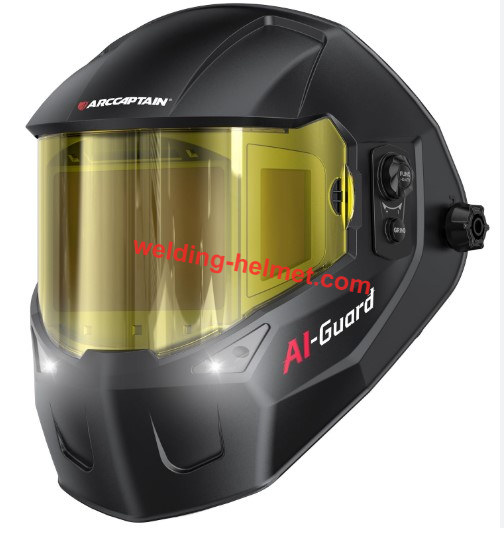
The reliability of an auto arc helmet stands as a cornerstone of workshop safety, yet these sophisticated devices occasionally exhibit performance issues that leave welders questioning their equipment. Among the most frequent complaints are failures to darken, persistent darkening, or erratic flickering during welding operations. These symptoms often trace back to the helmet's sensor system, a network of photodetectors responsible for detecting the arc and triggering the liquid crystal filter. When these sensors falter, the consequences extend beyond mere inconvenience, potentially exposing the operator to harmful radiation and disrupting workflow. A thorough understanding of potential failure modes, combined with systematic troubleshooting, can restore functionality without immediate replacement. Welding-helmet provides comprehensive resources and quality solutions for addressing these common challenges, ensuring welders maintain both safety and productivity on the job. How can you effectively diagnose and resolve sensor-related issues when your helmet starts behaving unpredictably?
The most common sensor failure scenario involves an Auto Arc Helmet that simply refuses to darken when an arc is struck. This problem frequently originates from a mode selection error, as many modern helmets feature a grind mode that disables the auto-darkening function to allow clear visibility for grinding tasks. When left in this setting, the helmet remains permanently light, offering no protection from the welding arc. Beyond operator error, a lack of sufficient power represents another primary cause. Helmets relying on replaceable batteries may experience weak or depleted cells, while solar-assisted models can suffer from inadequate charge after extended storage in dark environments. The remedy requires verifying the mode selection and either replacing batteries or exposing the solar panel to bright light to restore charge.
Sensor obstruction stands as the second major category of failure, where the helmet's photodetectors cannot clearly see the arc light due to physical interference. A scratched or spatter-covered outer cover lens significantly reduces the light reaching the sensors, mimicking a sensor failure when the electronics themselves function perfectly. Similarly, welding spatter, dust, or even a protective film left on the lens from the factory can block the sensor windows. The sensors themselves require a direct line of sight to the arc; angles exceeding 45 degrees may prevent the arc light from reaching the detectors. Resolving this issue involves cleaning or replacing the cover lens, wiping the sensor windows with appropriate materials, and adjusting head position to ensure the sensors face the welding area directly.
Erratic behavior like flickering or inconsistent darkening introduces additional complexity, often pointing to sensitivity or delay settings rather than a complete component failure. Sensitivity adjustments determine how readily the sensors trigger the darkening response. For low-amperage TIG welding, where the arc produces less light, insufficient sensitivity may cause the helmet to flicker or fail to darken consistently. Conversely, excessively high sensitivity in bright ambient light or when welding near other operators can cause the helmet to darken from surrounding light sources. The delay setting controls how long the lens stays dark after the arc extinguishes; a delay set too long can make the helmet seem stuck dark between tack welds, while too short a delay may produce a flickering sensation. Fine-tuning these controls often resolves performance issues without requiring hardware replacement.
Hardware failure, though less common, does occur and requires specific intervention. Physical damage to the auto-darkening filter cartridge, such as cracks from impact or thermal shock from weld spatter, can cause sections of the lens to remain light or dark, separated by distinct lines. In such cases, the filter cartridge itself needs replacement, a process that varies by helmet model. Sensor degradation over time, while rare, can compromise detection sensitivity, though cleaning and adjustment usually restore function before replacement becomes necessary. Temperature extremes represent an overlooked factor; many helmets have specified operating temperature ranges, and performance can degrade outside these limits, particularly in cold environments where the liquid crystal response slows.
Battery and power management requires particular attention in troubleshooting. Many users incorrectly assume that solar-assisted helmets operate without batteries, but most incorporate rechargeable cells that eventually need replacement. A declining battery manifests as slow switching, intermittent flicker, or failure to darken, symptoms that may be mistakenly attributed to sensor failure. Checking and cleaning battery contacts, ensuring proper installation, and replacing with fresh cells of the correct type often resolves these issues. The interaction between power supply and sensor performance emphasizes the importance of considering the entire electronic system rather than isolating sensor components prematurely.
The preventative aspect of maintaining sensor functionality reduces the frequency of troubleshooting encounters. Regular cleaning of both the outer cover lens and the sensor windows with appropriate materials prevents the gradual accumulation of debris that degrades performance. Replacing the outer cover lens when scratches or spatter accumulate ensures optimal light transmission to the sensors. Proper storage in a protective case when not in use prevents physical damage and exposure to contaminants. Following the manufacturer's guidelines for battery care and replacement extends the service life of the electronic components. For those seeking reliable replacement parts or guidance, a comprehensive resource for troubleshooting and acquiring quality components is available at https://www.welding-helmet.com/product, where dedicated support assists with diagnosis and sourcing the correct parts for specific helmet models.
Systematic troubleshooting saves both time and expense, preventing unnecessary replacement of expensive components. The recommended sequence begins with checking the mode setting and ensuring the power source functions correctly. Next, a thorough cleaning of the cover lens and sensor windows addresses most obstruction-related failures. Adjusting sensitivity and delay settings according to the specific welding process and environmental conditions often resolves flickering and response time issues. If problems persist after these steps, inspecting for physical damage or considering battery replacement offers the next level of intervention. Only when all these measures fail should filter cartridge replacement be considered, and even then, consulting manufacturer resources or professional support prevents costly misdiagnosis. A working sensor system ensures continuous protection and consistent welding performance, making the effort invested in understanding and maintaining these components a fundamental aspect of responsible workshop practice.

 English
 Arabic
 French
 Spanish
 Portuguese
 Deutsch
 Turkish
 Dutch
Dutch
 Italiano
 Russian
 Portuguese (Brazil)
 Greek
Greek