
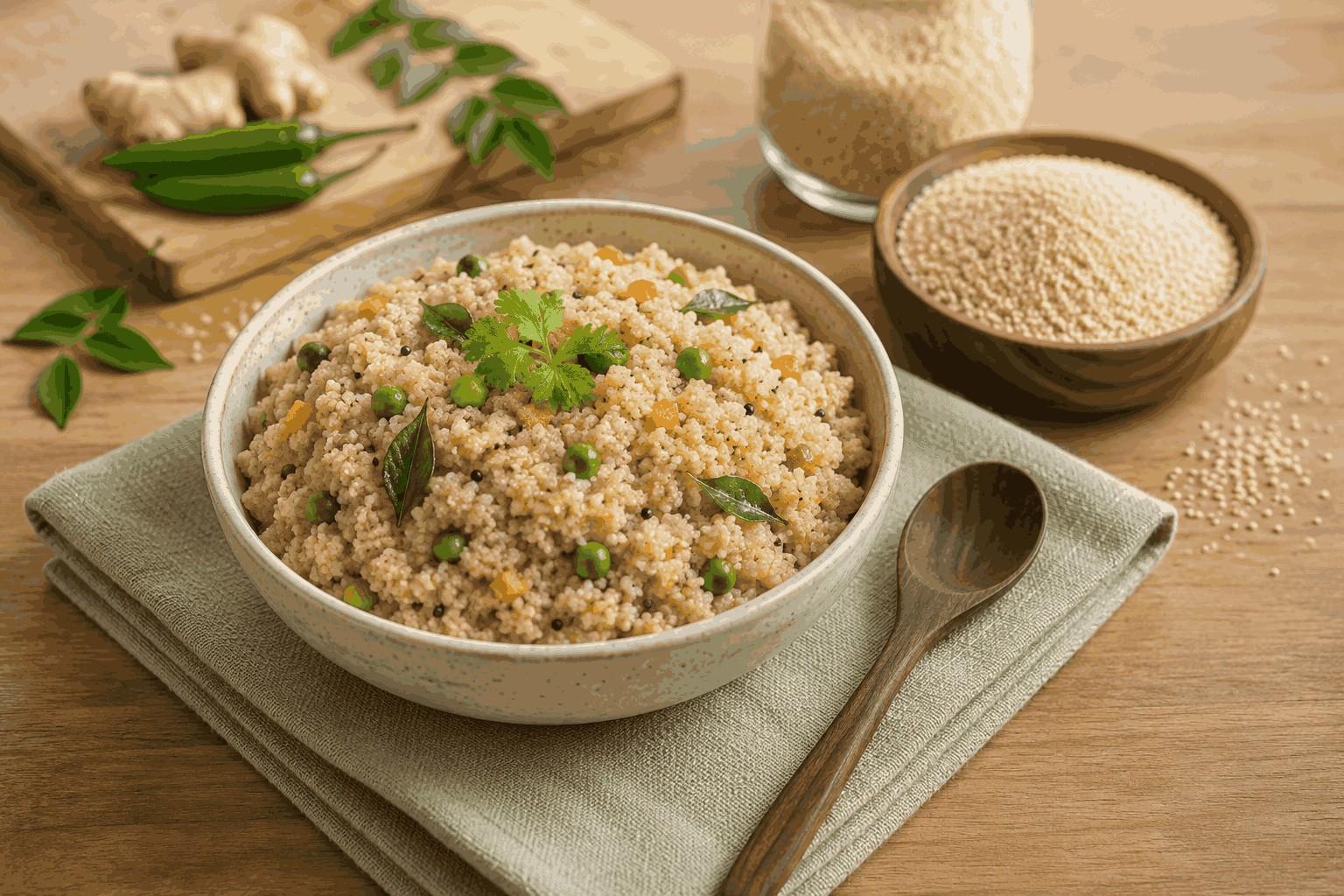
Jowar Rava Benefits for Women's Health – What Every Indian Woman Should Know
Women's nutritional needs change significantly across different life stages, and the grains that form the foundation of daily meals play a bigger role in meeting those needs than most people actively consider. Jowar rava benefits are particularly relevant for women — not because it's a specialty health supplement, but because the grain addresses several nutritional gaps that commonly affect Indian women across age groups, from adolescence through menopause.
Understanding these specific advantages from a women's health perspective helps explain why this traditional grain, long used in South and West Indian cooking, is increasingly finding its way into health-conscious kitchens across the country.
Iron — The Most Consistent Nutritional Gap for Indian Women
Iron deficiency anaemia affects a disproportionate share of Indian women, with data consistently showing prevalence rates significantly above the global average. The causes are multiple — menstruation creates regular iron losses that dietary intake needs to compensate for, and most Indian women's diets don't consistently provide the iron required to maintain healthy haemoglobin levels across the monthly cycle.
The iron content in sorghum is meaningful. For women who don't consume red meat — the animal-based food most reliably associated with high-absorption iron — jowar rava benefits represent one of the most accessible plant-based dietary contributions to iron intake available within traditional Indian cooking patterns.
The practical advantage of this approach over iron supplements for many women is compliance — a grain used in regular breakfast preparations is consumed consistently rather than remembered occasionally, producing more reliable nutritional impact over weeks and months than intermittent supplementation.
Bone Health and Calcium — Where Jowar Rava Benefits Stand Out
Calcium inadequacy is a long-term health risk for Indian women, with consequences that become more visible after menopause as oestrogen levels decline and bone density maintenance requires greater dietary support. Most Indian dietary calcium comes from dairy — which helps in households that consume dairy consistently but creates gaps in those that don't.
Among grain-based foods, this traditional grain includes a calcium contribution that's notable compared to other cereals. Sorghum's calcium content, retained in the minimally processed rava form, adds meaningful supplementary calcium to a diet built around regular consumption. For women who rely primarily on dietary sources for calcium rather than supplements, jowar rava benefits contribute to the daily total in a format that requires no additional habit formation.
Blood Sugar Stability — Jowar Rava Benefits for Hormonal Health
The connection between blood sugar management and hormonal health is well established but less widely communicated than either topic individually. Insulin resistance — the condition where cells respond less efficiently to insulin — is associated with hormonal disruptions including PCOS, irregular menstrual cycles, and the metabolic changes of perimenopause. Stable blood sugar throughout the day supports more consistent hormonal signalling.
Jowar rava benefits include a lower glycemic index than refined semolina, meaning that meals prepared with jowar rava produce a more gradual blood sugar response. This glycemic advantage, accumulated across regular daily consumption, contributes to the blood sugar stability that supports hormonal health — particularly for women managing PCOS or other insulin-sensitivity-related conditions.
Fibre and Digestive Health — Jowar Rava Benefits Women Rarely Discuss
Digestive irregularity affects women disproportionately relative to men, with hormonal fluctuations across the menstrual cycle contributing to changes in gut motility that many women manage chronically without connecting them to their dietary fibre intake.
The dietary fibre in sorghum rava benefits digestive regularity by providing the substrate that gut bacteria require to maintain healthy motility patterns. Regular consumption of this grain contributes to the fibre intake that supports digestive consistency — reducing the bloating, irregularity, and discomfort that many women experience particularly in the premenstrual and menstrual phases of the cycle.
Pregnancy and Nursing — Jowar Rava Benefits for Elevated Nutritional Requirements
Jowar rava benefits extend naturally to pregnancy and nursing, when nutritional requirements increase significantly across multiple dimensions simultaneously. The iron content supports the elevated haemoglobin requirements of pregnancy. The calcium contributes to foetal skeletal development. The fibre supports digestive health during pregnancy, when hormonal changes often reduce gut motility. And the low glycemic profile supports blood sugar management during a period when gestational diabetes risk is heightened for a significant proportion of Indian women.
The practical advantage of incorporating this grain during pregnancy and nursing is the format — it integrates into existing breakfast preparations without requiring new recipes, additional preparation effort, or foods that pregnancy-related taste aversions might make unappealing.
How to Incorporate Jowar Rava Into a Women's Daily Routine
The most straightforward application of jowar rava benefits in daily life is through breakfast — upma, soft porridge, or idli batter incorporating jowar rava in place of or alongside semolina. The transition from semolina-based breakfast preparations to jowar rava requires minimal culinary adjustment and delivers these nutritional advantages consistently from the first week of adoption.
For women who want to understand the full range of jowar rava benefits beyond the women's health context discussed here — including nutritional data, common uses, and broader health applications — The comprehensive jowar rava benefits at 10on10foods covers the grain's complete nutritional profile and practical kitchen applications in detail.
The Grain That Earns Its Place in Every Woman's Kitchen
Jowar rava benefits address nutritional gaps that are genuinely common among Indian women — iron, calcium, blood sugar stability, digestive health, and elevated pregnancy nutrition — through a single grain that works within existing cooking habits rather than requiring dietary overhaul.

 English
 Arabic
 French
 Spanish
 Portuguese
 Deutsch
 Turkish
 Dutch
Dutch
 Italiano
 Russian
 Portuguese (Brazil)
 Greek
Greek