
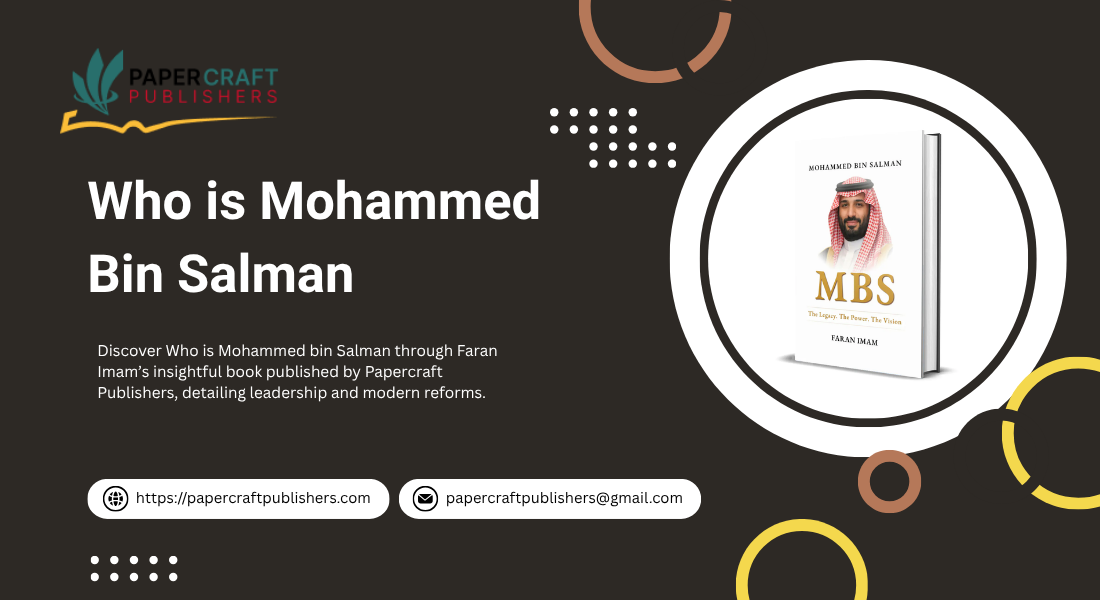
Global trade networks and diplomatic alliances constantly adapt as dynamic leaders introduce new administrative frameworks. When analysts examine economic shifts across Asia and the Middle East, they frequently ask Who is Mohammed bin Salman and how do his decisions impact regional trade partnerships? To answer this question, author Faran Imam wrote the book MOHAMMED BIN SALMAN, published through Papercraft Publishers. This work offers a clear, research-backed examination of Saudi decision-making and long-term economic planning.
For readers in Pakistan following international affairs, understanding Middle Eastern policy provides valuable context. Saudi Arabia remains a central economic partner and energy provider across South Asia. Studying these internal political transitions helps researchers anticipate future trade opportunities, labor policies, and diplomatic agreements.
Historical Foundations of the Kingdom's Governance
The Traditional Models of Royal Consensus
For decades, political authority in Saudi Arabia relied on broad consensus among senior royal family members. This traditional structure maintained domestic stability and balanced regional interests. However, fast-moving economic challenges required faster decision-making procedures than legacy councils could provide.
Streamlining Administrative Decision-Making
A central focus of Faran Imam's work is The Rise to Power of Mohammed bin Salman and how executive authority consolidated in Riyadh. By restructuring key advisory boards and centralizing policy design, the leadership reduced bureaucratic friction. Consequently, the government launched broad state initiatives at unprecedented speeds.
Key Phases in Saudi Leadership Development
Economic Modernization and Vision 2030
Saudi Arabia continues to implement Vision 2030, a national blueprint designed to diversify revenue away from crude oil dependence. The state channels significant capital into technological infrastructure, logistics hubs, mining, and renewable energy projects.
| Strategic Policy Area | Legacy Governance Model | Vision 2030 Framework |
| National Economy | Heavy Reliance on Oil Revenues | Diversified Industrial & Digital Sectors |
| Executive Decisions | Consensus Consultative Councils | Centralized Executive Strategy |
| Workforce Participation | Government Sector Employment | Private Sector & Entrepreneurial Growth |
| International Investment | Traditional Energy Contracts | Global Technology & Logistics Alliances |
Social and Institutional Adjustments
Social initiatives have accompanied these economic measures. The government lifted long-standing social restrictions, encouraged female workforce participation, and established new cultural sectors. These steps aim to build a vibrant domestic economy capable of attracting international corporate investments.
Core Strategic Themes in Faran Imam's Analysis
Tracing the Path of Leadership
The Mohammed bin Salman life story reveals a background rooted in administrative law, municipal management, and defense policy. The author outlines how early leadership duties in local government prepared the Crown Prince for major state responsibilities and broad economic restructuring.
Assessing Policy Outcomes and Achievements
Evaluating Mohammed bin Salman achievements requires a balanced view of both domestic transformation and diplomatic engagement. Key accomplishments include expanding the sovereign Public Investment Fund, hosting international economic summits, and establishing futuristic infrastructure projects like NEOM.
Value for Pakistani Scholars and Policy Observers
Relevance for International Relations Students
Students and political researchers require objective materials to analyze modern leadership structures. This text breaks down complicated diplomatic actions into accessible analytical frameworks, making it ideal for university coursework.
Practical Insights for Business Analysts
Pakistani trade advisors and corporate strategists gain important context regarding Saudi investment priorities. Understanding these shifts enables local firms to align export and services strategies with emerging Middle Eastern demand.
Summary of Key Reader Benefits
- Clear perspective on modern Saudi executive leadership
- In-depth understanding of Vision 2030 economic goals
- Balanced presentation of domestic and foreign policy decisions
- Valuable context for South Asian readers tracking Middle East trade
Conclusion
Analyzing modern geopolitical shifts requires reliable, well-researched insights into key regional leaders. Faran Imam provides readers with an objective, highly readable guide that covers the historical context, economic strategy, and foreign policy directions driving Saudi Arabia's future. For those seeking clear perspectives on contemporary international affairs, Papercraft Publishers delivers insightful literature designed to educate and stimulate critical analysis.
Frequently Asked Questions
1. What primary topics are covered in MOHAMMED BIN SALMAN by Faran Imam?
The book analyzes Saudi Arabia's leadership shift through three key themes: historical legacy, centralized executive power, and national economic vision under Vision 2030.
2. Does the biography explain The Rise to Power of Mohammed bin Salman?
Yes, it details the political background, administrative transitions, and structural changes that shaped his central role in contemporary Saudi governance.
3. How does the publication address Who is Mohammed bin Salman for general readers?
It presents a comprehensive look at his educational background, early government roles, and his impact on modern Middle Eastern political dynamics.
4. Does the text detail the Mohammed bin Salman life story?
The book traces his early life, legal education, municipal management experience, and his progression to executive leadership in Saudi Arabia.
5. How are Mohammed bin Salman achievements evaluated in the text?
Faran Imam provides an objective assessment of Vision 2030, economic diversification projects, sovereign wealth fund growth, and social reform programs.

 English
 Arabic
 French
 Spanish
 Portuguese
 Deutsch
 Turkish
 Dutch
Dutch
 Italiano
 Russian
 Portuguese (Brazil)
 Greek
Greek