
National success relies heavily on strong legal institutions and effective leadership. Every thriving society depends on clear rules, stable institutions, and active civic participation. When we examine governance and public policy, we look at how power operates across democratic structures. Why do some nations build lasting legal systems while others face constant political instability? This question drives modern legal, social, and political studies across the globe.
A constitution serves as the primary engine for state administration. It dictates how leaders exercise authority and how laws protect individual rights. When political systems balance power properly, citizens enjoy economic growth, justice, and lasting social peace. However, when constitutional frameworks crumble, governance collapses as well. Understanding these dynamics helps citizens, legal experts, and scholars actively shape a better future.
The Crucial Role of Constitutional Design in Modern Nations
Constitutions do not exist in a vacuum. They grow, adapt, and respond to the social pressures of their time. A solid framework ensures that democratic institutions remain resilient during times of national crisis.
Protecting Judicial Autonomy
A healthy legal system requires an independent judiciary. Judges must interpret constitutional principles without fear of political pressure. When the judiciary remains autonomous, it safeguards public trust and prevents executive overreach.
Ensuring Democratic Accountability
Accountability keeps public officials responsible to the people they serve. Free elections, transparent administration, and open debate prevent corruption. These mechanism ensure that leadership serves the public interest rather than private gain.
Fostering Active Public Participation
Democracy flourishes when citizens engage directly in civic affairs. Public participation brings diverse voices into national decision-making. When citizens understand their rights, they actively demand better public administration and legal integrity.
Insights from Key Literature on Legal Frameworks
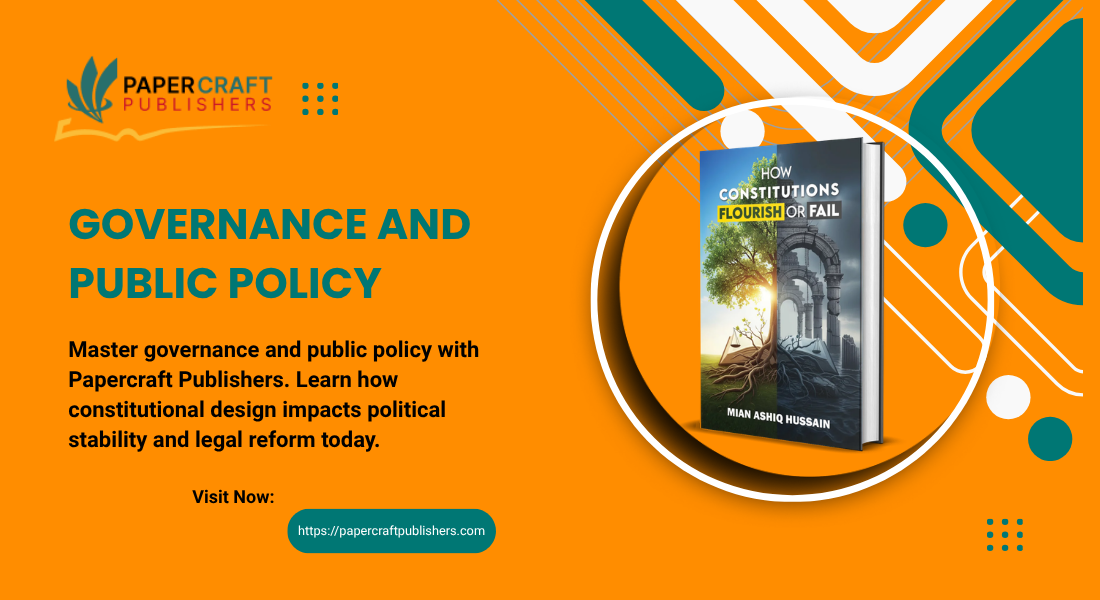
Scholars often turn to insightful literature to understand political development. Among recent contributions, Mian Ashiq Hussain provides a masterful analysis in his book How Constitutions Flourish or Fail. Published by Papercraft Publishers, this text explores why state institutions succeed or founder under pressure.
The book explores how legal designs influence practical administration. It addresses institutional health, democratic accountability, and practical legal reform. Through clear examples, the author demonstrates how constitutional design directly affects long-term national progress.
Key Takeaways for Students and Professionals
- Learn how historical contexts shape modern legal systems.
- Analyze real-world examples of institutional success and structural failure.
- Explore actionable strategies for constitutional reform and democratic resilience.
- Gain practical knowledge applicable to competitive exams and public service roles.
Specifications of How Constitutions Flourish or Fail
For readers interested in expanding their legal library, here are the essential publication details for this landmark work:
| Specification Detail | Publication Information |
| Book Title | How Constitutions Flourish or Fail |
| Author | Mian Ashiq Hussain |
| Publisher | Papercraft Publishers |
| Format | Paperback |
| Primary Category | Law / Political Science |
| ISBN | 978-969-7493-41-8 |
| Target Audience | Law students, researchers, policy advisors, competitive exam aspirants |
Why Studying Comparative Politics Matters for Today's Leaders
To build effective state institutions, one must look beyond national borders. Engaging with a comparative politics book allows scholars and policymakers to evaluate diverse governance models. By analyzing foreign legal systems, researchers identify structural strengths and vulnerabilities within their own domestic frameworks.
Learning from Global Governance Models
Different nations approach administrative challenges in unique ways. Studying international constitutional experiences reveals which institutional designs foster long-term stability. It helps scholars recognize early signs of systemic weakness before crises erupt.
Strengthening Local Public Policy
Comparative analysis offers practical solutions for local legal reform. Policymakers can adapt proven international strategies to resolve domestic administrative bottlenecks, improve public service delivery, and uphold constitutional rights.
Applying Governance and Public Policy Principles in Pakistan
Understanding legal history holds special importance for readers in South Asia. Anyone searching for a reliable Pakistan constitution book will find immense value in examining systemic governance challenges.
Pakistan has navigated numerous constitutional transitions, legal reforms, and institutional realignments. Analyzing these historic shifts helps readers grasp the complex forces shaping modern public administration. The study of legal principles clarifies how judicial decisions and legislative actions directly influence national stability.
For students preparing for competitive civil service examinations, mastering these concepts is essential. It provides the analytical tools needed to critique policy, propose meaningful administrative reforms, and support state-building efforts.
Practical Benefits of Deepening Your Legal Knowledge
Investing time in studying books on constitutional law yields tangible benefits for academics, practitioners, and informed citizens alike:
Sharper Analytical and Critical Thinking Skills
Reading comprehensive legal texts sharpens your ability to analyze complex political situations objectively. You learn to evaluate legal policy through structured, evidence-based reasoning.
Practical Preparation for Public Service and Law
A thorough understanding of state frameworks prepares law students and public policy researchers for impactful careers in public service, legislative drafting, and legal consultancy.
Empowerment Through Civic Awareness
Knowledgeable citizens hold institutions accountable. Understanding constitutional rights enables individuals to advocate effectively for administrative transparency, social justice, and community development.
Building Stronger Institutions Through Continued Education
Sustainable national growth requires continuous intellectual engagement. States thrive when leaders, legal experts, and citizens dedicate themselves to understanding institutional design. Reading rigorous scholarly analysis helps society avoid historical pitfalls and construct resilient administrative frameworks.
By analyzing how constitutions survive and adapt, modern researchers gain the knowledge needed to drive progressive legal reforms. Continuous study ensures that public policy remains dynamic, inclusive, and capable of addressing modern global challenges.
Conclusion
Building stable democratic institutions requires dedicated study, civic commitment, and informed leadership. Exploring the principles behind legal resilience helps society create fairer, more effective administrative structures. Reliable academic publications provide the foundation for this intellectual growth. To expand your personal library with authoritative titles on law, politics, and social sciences, explore the full selection at Papercraft Publishers. Equipping yourself with rigorous scholarly resources is the first step toward advancing sound democratic governance and institutional progress.
Frequently Asked Questions
Who is the author of How Constitutions Flourish or Fail?
Mian Ashiq Hussain wrote this comprehensive legal volume. He presents a detailed analysis of constitutional evolution, institutional stability, and democratic development for modern readers.
Why is this title considered one of the leading books on constitutional law?
The text offers a balanced, accessible exploration of democratic accountability, legal design, and institutional reform. It bridges abstract legal theory with practical political reality across modern states.
How does this work serve as a practical Pakistan constitution book?
It delivers essential historical and structural context regarding national legal development. Readers gain deep insights into state institutions, judicial dynamics, and ongoing governance challenges in Pakistan.
Can this text function effectively as a comparative politics book for students?
Yes, the author examines legal frameworks across multiple global jurisdictions. This comparative framework helps students contrast different political models and evaluate factors driving long-term constitutional stability.
How does reading this publication enhance knowledge of governance and public policy?
The publication breaks down complex administrative concepts into clear, actionable ideas. It explains how institutional design, public engagement, and legal autonomy directly influence national stability and policy success.

 Arabic
 French
 Spanish
 Portuguese
 Deutsch
 Turkish
 Dutch
Dutch
 Italiano
 Russian
 Romaian
 Portuguese (Brazil)
 Greek
Greek