
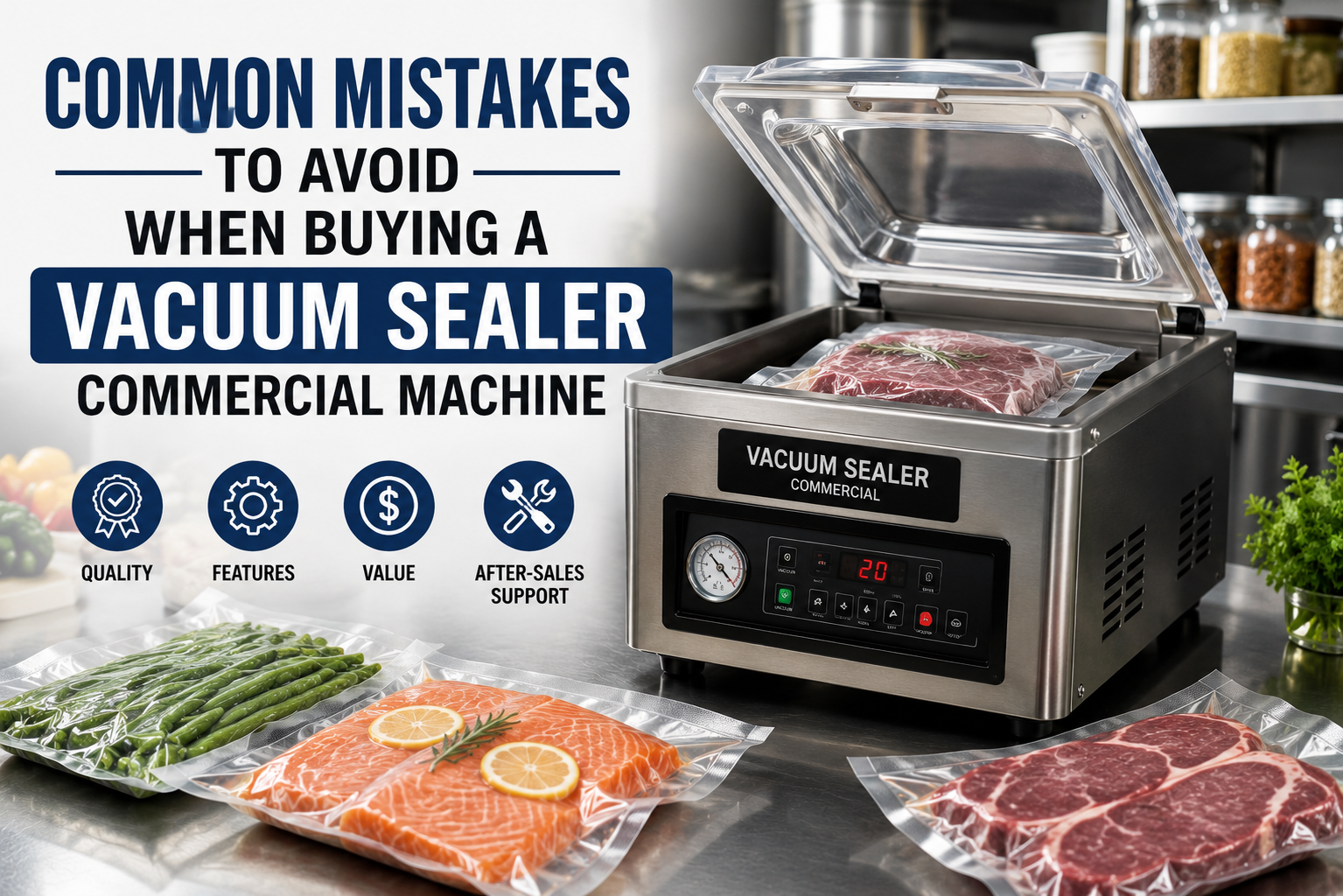
Ever found yourself staring at a broken vacuum sealer during the busiest service of the week? Or perhaps you've discovered that your "bargain" machine simply can't keep up with your production demands? What if the consumables are costing you more than the machine itself? These are the frustrating realities many Australian business owners face after making a hasty purchasing decision.
Choosing the right commercial vacuum sealer isn't just about picking the shiniest model or the one with the lowest price tag. It's about finding equipment that genuinely matches your operational needs, stands up to daily use, and delivers value over the long haul. The wrong choice can lead to downtime, wasted product, and mounting expenses that quickly eat into your profits.
Not Assessing Your Business Needs First
One of the biggest blunders businesses make is jumping straight into browsing machines without first understanding their actual requirements. It's a bit like buying a car without knowing how many passengers you'll be carrying or how far you'll be driving daily.
Understanding Your Daily Sealing Volume
Start by honestly evaluating how many items you'll be sealing each day. Are we talking about fifty bags during a quiet shift, or hundreds during peak production? Your daily volume directly impacts which machine category you should be considering. A café sealing marinated meats a few times daily has vastly different needs compared to a wholesale food supplier processing thousands of portions.
Matching Machine Capacity to Your Production Demands
Think about your busiest periods, not just your average day. If your machine can handle typical Tuesday volumes but struggles during Friday rushes, you'll quickly run into problems. Consider future growth too—will your needs increase over the next two to three years? Investing in slightly higher capacity now often makes more financial sense than upgrading prematurely down the track.
Overlooking Chamber vs External Vacuum Sealers
Here's where many buyers come unstuck. Not all commercial vacuum sealers work the same way, and picking the wrong type can seriously impact your efficiency.
What Is the Difference Between Chamber and External Vacuum Sealers?
External vacuum sealers draw air out through the open end of specially textured bags. The bag sits outside the machine with just the opening inserted. Chamber vacuum sealers, on the other hand, place the entire bag inside a sealed chamber. The machine removes air from the whole chamber before sealing.
Which Type Suits Commercial Kitchens and Food Processing?
For low to moderate volumes, external sealers can work well. They're generally more affordable upfront and take up less bench space. However, for high-volume operations, chamber vacuum sealers are typically the smarter choice. They're faster, work with cheaper smooth bags, and can seal liquids without the mess. Plus, they tend to achieve stronger, more consistent vacuums.
Ignoring Build Quality and Durability
It's tempting to save money on equipment, but commercial vacuum sealers need to withstand serious daily punishment. Cheap construction simply won't survive a demanding commercial environment.
Spotting Cheap Construction Before You Buy
Look closely at the housing materials. Stainless steel construction handles commercial kitchen conditions far better than plastic alternatives. Check the seal bar quality—flimsy components will fail quickly under heavy use. Examine the hinges, latches, and buttons too. If they feel wobbly in the showroom, imagine how they'll perform after thousands of cycles.
Key Materials and Features That Indicate Longevity
Quality machines feature industrial-grade pumps, reinforced seal bars, and robust casings designed for commercial use. Don't be swayed by flashy digital displays on otherwise poorly built units. The internal components matter far more than the external aesthetics. Reading reviews from other Australian businesses in similar industries can provide valuable real-world insights into durabiUnderestimating the Importance of Seal Bar LengtThis might seem like a minor detail, but seal bar length significantly affects your packaging efficiency and flexibility.
How Does Seal Bar Length Affect Packaging Efficiency?
A longer seal bar allows you to seal wider bags or multiple smaller bags simultaneously. If you're packaging large cuts of meat or bulky items, a short seal bar will force you to wrestle with awkward folding or limit your bag sizes. This slows production and can compromise seal quality.
Common Sizing Mistakes Australian Businesses Make
Many businesses purchase machines with adequate seal bars for current products but fail to consider variety. If you later want to package larger items or different formats, you're stuck. Measure your largest anticipated products and add some margin. It's far better to have excess capacity than to be constantly constrained.

Failing to Consider Vacuum Strength and Pump Quality
The pump is essentially the heart of your vacuum sealer. Skimping here means compromising on the very function you're paying for.
What Vacuum Pressure Do I Need for Commercial Food Sealing?
Most commercial food sealing applications require vacuum pressures of at least 99% for optimal shelf-life extension. However, delicate items like soft cheeses or pastries might need adjustable pressure settings to prevent crushing. Make sure the machine offers the control you need for your specific products.
Oil Pump vs Dry Pump: Which Is Better for Your Application?
Oil pumps generally deliver stronger, more consistent vacuums and handle continuous operation better. They do require regular oil changes, though. Dry pumps need less maintenance but may struggle with high-volume continuous use. Consider your operating environment too—oil pumps work better in temperature-controlled settings.
Forgetting About Bag Compatibility and Ongoing Costs
The machine is just the beginning. Bags are ongoing consumables, and their cost adds up considerably over time.
Can I Use Any Bags with My Commercial Vacuum Sealer?
External sealers require textured or embossed bags, which cost more than smooth alternatives. Chamber sealers work with cheaper smooth bags, which can deliver significant savings at high volumes. Some machines are locked into proprietary bags—avoid these if possible, as they limit your purchasing flexibility.
Calculating the True Cost of Consumables Over Time
Work out your monthly bag consumption and multiply by annual usage. A machine that saves you even ten cents per bag can mean thousands in savings yearly for high-volume operations. Factor consumable costs into your total cost of ownership when comparing machines.
Making a Confident, Informed Purchase Decision
So, what have we learned? Buying a commercial vacuum sealer machine requires thoughtful consideration of your actual needs, not just your budget. From matching machine capacity to your production volume, to understanding the differences between chamber and external models, every decision impacts your daily operations.
Ultimately, the right commercial vacuum sealer is an investment that pays dividends through improved efficiency, reduced waste, and extended product shelf life. Do your homework, ask plenty of questions, and choose a machine that will serve your Australian business reliably for years to come. Your future self will thank you for taking the time to get it right.

 Arabic
 French
 Spanish
 Portuguese
 Deutsch
 Turkish
 Dutch
Dutch
 Italiano
 Russian
 Romaian
 Portuguese (Brazil)
 Greek
Greek