
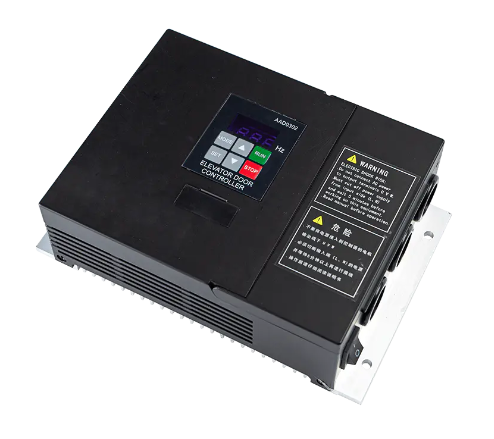
In the vertical transportation industry, the reliability of elevator door operations directly impacts building efficiency, passenger safety, and long-term maintenance costs. Among the critical components that govern this daily cycle, the AC Asynchronous Elevator Door Controller stands out as a benchmark of precision engineering and robust performance. This article explores the defining features, operational benefits, and technical advantages that make this controller the preferred choice for modern elevator systems.
Core Technology: Asynchronous Precision
At the heart of this controller lies advanced AC asynchronous drive technology. Unlike synchronous systems that require complex rotor position sensors, the asynchronous design leverages a simpler, more rugged motor structure. This translates to inherent durability in high-cycle environments. The controller meticulously manages torque and speed profiles, ensuring that door opening and closing actions are smooth, silent, and jerk-free—even under variable load conditions caused by air pressure differentials in high-rise buildings.
The intelligent frequency conversion algorithm adapts in real time to resistance, automatically adjusting force to prevent sudden stops or reversals. This results in a passenger experience defined by comfort and safety, while simultaneously reducing mechanical stress on door hangers and belts.
Safety Architecture: Multi-Layered Protection
Safety is non-negotiable in elevator applications. This controller integrates a comprehensive safety logic suite that includes:
-
Overcurrent and Overvoltage Protection: Instantaneous shutdown mechanisms prevent damage from grid fluctuations.
-
Stall Detection: If an obstruction is detected during closure, the controller immediately initiates a reverse opening sequence, complying with global safety standards for entrapment prevention.
-
Thermal Management: Built-in temperature monitoring ensures the drive operates within optimal ranges, preventing overheating in intensive-use scenarios.
-
Door Zone Encoder Feedback: High-resolution encoder inputs allow for precise position mapping, enabling accurate slow-down and final positioning to within millimeter tolerances.
Operational Efficiency and Energy Savings
The AC asynchronous topology is inherently energy-efficient. By utilizing regenerative braking and optimized switching frequencies, the controller minimizes reactive power loss. During stand-by periods, the system enters a low-power "sleep" mode while maintaining instantaneous response readiness. This dual focus on performance and economy reduces the total cost of ownership, making it an eco-conscious choice for building owners aiming to lower their carbon footprint without compromising on service quality.
Adaptability and Configuration Flexibility
Modern building requirements are diverse, ranging from high-speed commercial towers to low-rise residential complexes. The AC Asynchronous Elevator Door Controller is engineered for versatility:
-
Wide Voltage Range: Accommodates global power grids with stable operation across a broad input spectrum.
-
Adjustable Parameter Sets: Installers can fine-tune acceleration curves, open/close speeds, and holding torque via a user-friendly digital interface, allowing the controller to be matched perfectly to door weight, width, and operating environment.
-
Diagnostic Port: An integrated communication port provides real-time fault logging and performance data, streamlining troubleshooting and predictive maintenance schedules.
Durability for the Long Haul
Constructed with industrial-grade components and conformal-coated circuit boards, the controller excels in challenging environments, including high humidity, dust, and temperature extremes. Its solid-state design eliminates mechanical wear points common in older relay-based systems, offering a mean time between failures (MTBF) that significantly exceeds industry averages. For facility managers, this means fewer service calls and reduced elevator downtime—critical factors in maintaining tenant satisfaction.
Conclusion
The AC Asynchronous Elevator Door Controller is more than a component; it is a strategic investment in safety, efficiency, and longevity. By combining asynchronous motor robustness with intelligent digital control, it delivers door operations that are whisper-quiet, lightning-fast, and exceptionally reliable. Whether you are upgrading an existing fleet or specifying equipment for new construction, this controller provides the technical foundation for a world-class vertical transportation system—one that passengers trust and maintenance teams appreciate.

 English
 Arabic
 French
 Spanish
 Portuguese
 Deutsch
 Turkish
 Dutch
Dutch
 Russian
 Romaian
 Portuguese (Brazil)
 Greek
Greek