
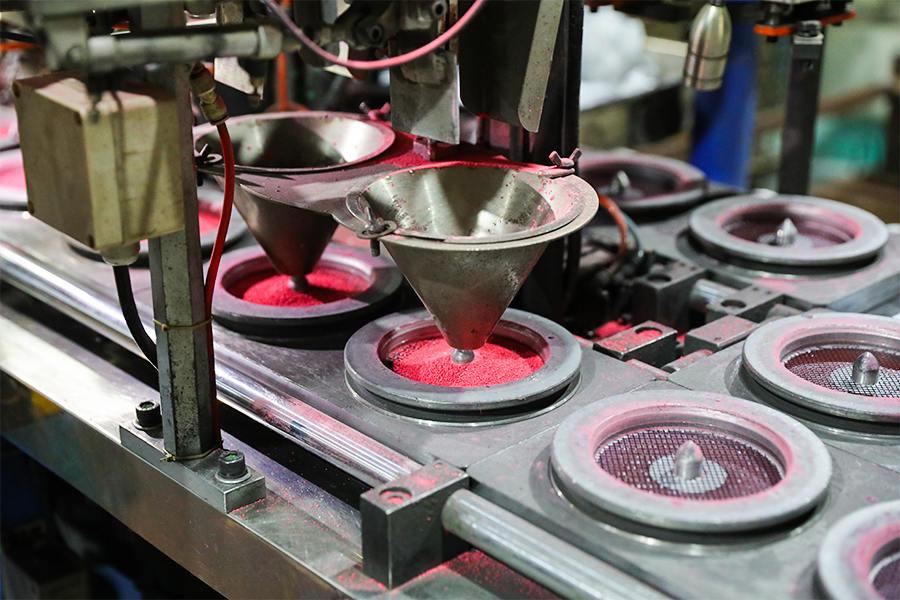
Metal processing industries rely heavily on abrasive tools for shaping, smoothing, and finishing metal surfaces. Among these tools, the Metal Grinding Disc Grinding Wheel plays a central role in achieving stable material removal and controlled surface quality. Its structure, composition, and operating parameters determine how efficiently it performs in different working environments.
A grinding disc is typically a bonded abrasive tool made from abrasive grains such as aluminum oxide, silicon carbide, or zirconia alumina, held together by resin or vitrified bonds. According to industrial application standards, these abrasives are selected based on hardness, toughness, and thermal resistance requirements of the workpiece .
Material Composition and Structure
The Metal Grinding Disc Grinding Wheel is generally constructed with multiple layers:
Abrasive grains (Al₂O₃ or zirconia alumina commonly used for steel)
Bonding matrix (resin bond for portable tools)
Reinforcement fiber layers for safety and stability
Typical grit sizes range from 24 to 120:
24–36 grit: aggressive stock removal
40–60 grit: general metal grinding
80–120 grit: fine finishing work
Bond hardness also plays a role. A softer bond releases worn grains faster, exposing fresh cutting edges, while a harder bond provides longer wheel life under lighter pressure conditions.
Operating Speed and Safety Parameters
Most Metal Grinding Disc Grinding Wheel products are rated for angle grinders with operating speeds between 6,500 RPM and 13,300 RPM. The maximum operating speed must never be exceeded to avoid structural failure. Depressed-center Type 27 discs are commonly used for angle grinders, allowing low-angle grinding between 5°–15° contact angles.
Disc thickness also varies depending on application:
1.0–1.6 mm: cutting discs (not for grinding)
3.0–6.0 mm: standard grinding discs
6.0–8.0 mm: heavy-duty stock removal
Application Areas in Metal Processing
The Metal Grinding Disc Grinding Wheel is widely used in:
Weld seam removal on steel structures
Rust and coating stripping before painting
Edge beveling for pipe fabrication
Surface leveling on carbon steel plates
Deburring after machining processes
Different industries apply different abrasive combinations. For stainless steel, zirconia alumina is preferred due to its self-sharpening property and heat resistance. For mild steel, aluminum oxide is more cost-efficient and stable in cutting performance.
Heat Management and Performance Stability
Grinding generates high frictional heat, which can affect surface integrity. A well-designed Metal Grinding Disc Grinding Wheel incorporates porosity within the structure to improve airflow and reduce thermal load. This prevents discoloration and reduces the risk of material deformation.
Coolant is not always used in portable grinding operations, so wheel structure becomes critical for heat dissipation. Open structure wheels allow chip clearance and reduce clogging during continuous grinding.
Wear Behavior and Service Life
Wheel wear depends on:
Applied pressure
Material hardness
Grit size
Bond strength
Coarser grits wear faster but remove material quickly, while finer grits provide smoother finishes but slower stock removal. Balanced selection is essential for stable performance in production environments.
Summary
The Metal Grinding Disc Grinding Wheel is not just a consumable tool but a precision-engineered component for metal fabrication workflows. Proper selection of abrasive type, grit size, and bonding structure directly impacts grinding efficiency, surface quality, and operational safety. Understanding its technical parameters allows operators to achieve consistent results across different metalworking applications.

 English
 Arabic
 French
 Spanish
 Portuguese
 Turkish
 Dutch
Dutch
 Italiano
 Russian
 Romaian
 Portuguese (Brazil)
 Greek
Greek