
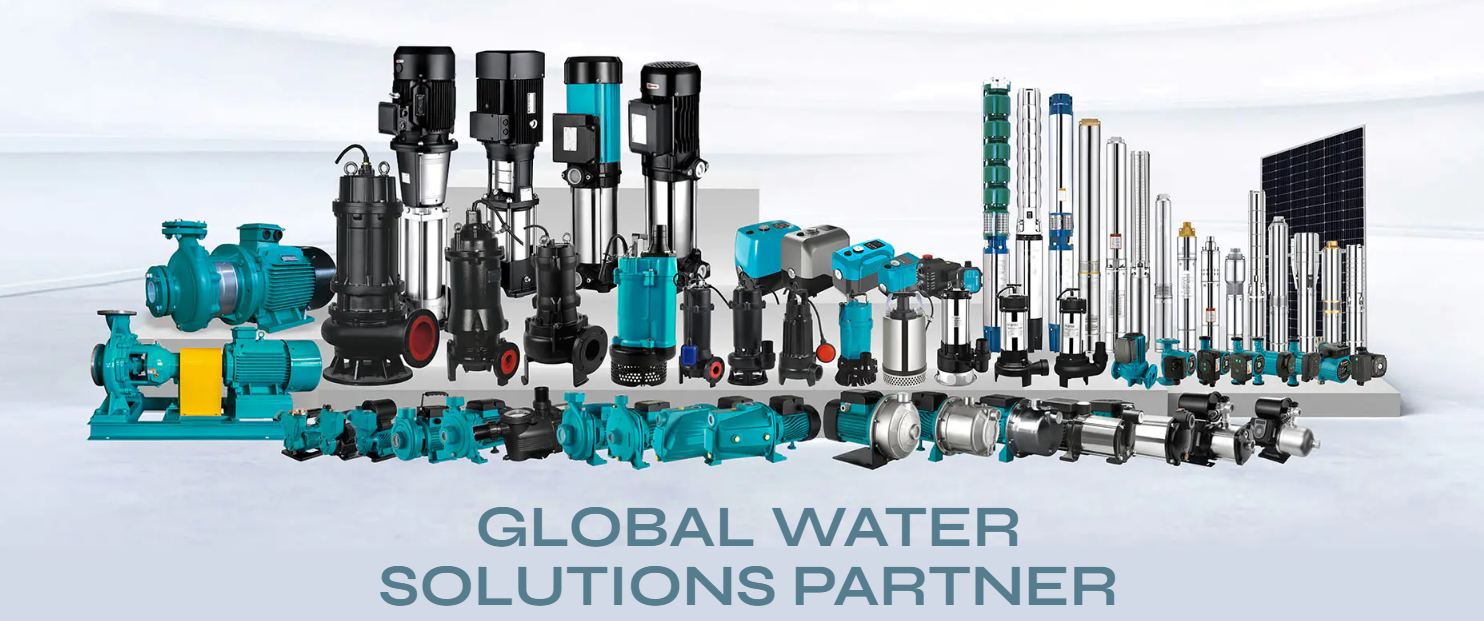
Modern heating and fluid transport systems increasingly depend on adaptive control technologies. Among these, the Intelligent Circulation Pump has become a core component in residential heating, hot water circulation, and light industrial fluid loops. Unlike traditional fixed-speed pumps, this system continuously adjusts operation based on real-time hydraulic demand.
An Intelligent Circulation Pump typically integrates a permanent magnet synchronous motor (PMSM), variable frequency drive (VFD), and embedded microcontroller logic. These components work together to regulate flow rate and pressure dynamically. In practical operation, flow capacity often ranges from 0.5 m³/h to 4.5 m³/h, while head pressure can be designed between 4 m and 8 m depending on system configuration.
One of the major technical advantages is adaptive pressure control. The pump can operate under proportional pressure mode, where output pressure decreases at lower flow demand and increases when system resistance rises. This helps reduce unnecessary energy consumption in partial-load conditions, which often represent more than 60% of real-world operating time in heating systems.
Motor efficiency is another important parameter. Many Intelligent Circulation Pump designs adopt ECM (Electronically Commutated Motor) technology, achieving efficiency levels above 80%. Power consumption typically ranges from 22W to 75W depending on load conditions and hydraulic head requirements. Compared with conventional asynchronous pumps, this can significantly reduce electrical losses.
Thermal systems such as radiator loops or underfloor heating circuits benefit greatly from stable flow control. When water temperature drops below set thresholds, the pump increases circulation speed to restore balance. Conversely, during stable conditions, it automatically reduces RPM to maintain constant thermal distribution without unnecessary energy waste.
Noise control is also a key design factor. Advanced hydraulic balancing impellers and magnetic suspension rotors reduce vibration levels, with operating noise often below 40–45 dB. This makes the system suitable for indoor installation in residential environments where acoustic comfort is critical.
Protection features are integrated into the control logic. Typical safety functions include dry-run protection, overcurrent shutdown, voltage fluctuation compensation, and anti-blocking restart cycles. These ensure long-term reliability even in unstable power conditions.
From a system integration perspective, Intelligent Circulation Pump units can interface with external controllers using PWM signals or LIN bus communication protocols. This enables connection to smart home systems, building automation platforms, or industrial PLCs.
In conclusion, Intelligent Circulation Pump technology represents a shift from static hydraulic output to adaptive fluid management. By combining electronic control, efficient motor design, and real-time feedback loops, it improves both system stability and energy efficiency across a wide range of applications.

 English
 Arabic
 French
 Spanish
 Portuguese
 Deutsch
 Turkish
 Dutch
Dutch
 Italiano
 Russian
 Portuguese (Brazil)
 Greek
Greek