
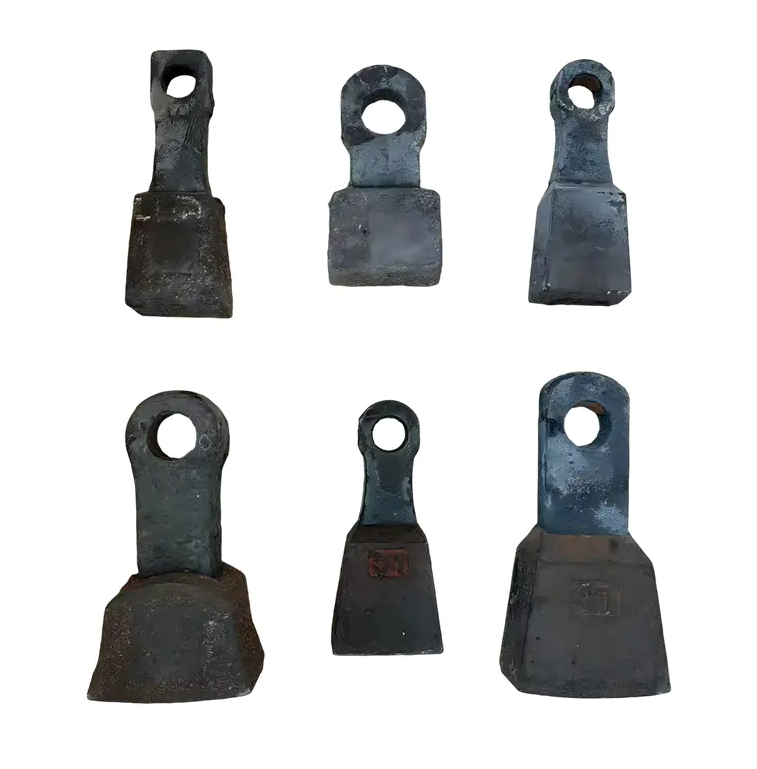
Industrial equipment operating under continuous abrasion, impact, and slurry conditions often requires materials that maintain structure under severe surface attack. Metallurgical engineering has widely adopted iron-based alloys containing elevated chromium content to address this challenge. Among them, High Chromium Cast Iron Fittings have become a critical solution for wear-prone systems in mining, cement production, power generation, and slurry transportation pipelines.
High chromium cast iron typically contains 12%–30% chromium and 2.0%–3.0% carbon, forming a microstructure dominated by eutectic M7C3 carbides embedded in a martensitic or tempered martensitic matrix. These carbides are extremely hard, often reaching HV 1500–2200, providing a rigid barrier against abrasive particles such as silica sand or ore slurry.
The performance of High Chromium Cast Iron Fittings depends heavily on carbide distribution. Uniform dispersion reduces weak zones where cracks may initiate, while controlled solidification processes improve carbide morphology from coarse rod-like structures to finer interconnected networks. Foundry processes such as sand casting and centrifugal casting are commonly applied to achieve stable density and reduce shrinkage defects.
Mechanical characteristics typically include:
Surface hardness: HRC 55–65 depending on heat treatment
Matrix hardness: around HRC 40–50 after tempering
Compressive strength: high resistance due to carbide reinforcement
Impact resistance: moderate, improved through Mo and Ni alloying
Heat treatment plays a central role in optimizing performance. A common process involves heating to 950–1050°C, followed by air or oil quenching, then tempering at 200–400°C. This promotes secondary carbide precipitation, increasing matrix hardness while maintaining controlled toughness.
Applications of High Chromium Cast Iron Fittings include slurry elbows, pump housings, crusher liners, and wear-resistant pipe connectors. In slurry transport systems, particles repeatedly strike internal surfaces, causing micro-cutting and fatigue wear. Carbide phases act as protective shields, while the metallic matrix absorbs energy and prevents catastrophic fracture propagation.
Corrosion resistance is another advantage. Chromium forms a stable oxide film on the surface, reducing oxidation in acidic or alkaline environments. This makes these fittings suitable for mixed wear–corrosion conditions found in chemical and mining pipelines.
Engineering considerations must balance hardness and toughness. Higher chromium content increases wear resistance but can reduce impact strength. Alloying additions such as molybdenum (0.5%–2.5%) and nickel (0.5%–3%) improve matrix stability and reduce brittleness, extending service reliability under dynamic loading.
Manufacturing consistency is essential. Cooling rate control during casting influences carbide size, while post-casting heat treatment ensures microstructural uniformity. Non-destructive testing methods such as ultrasonic inspection and hardness mapping are commonly applied to ensure quality stability in production batches.
Overall, High Chromium Cast Iron Fittings provide a robust material solution where abrasion dominates operational failure modes. Their combination of carbide hardness, controlled toughness, and corrosion tolerance makes them suitable for demanding industrial environments where conventional steels experience rapid degradation.
Conclusion
High chromium cast iron technology continues to evolve through improved alloy design and heat treatment optimization. Its use in fittings ensures extended operational cycles in abrasive systems, reducing maintenance frequency and improving equipment stability in heavy-duty industries.

 English
 Arabic
 French
 Spanish
 Deutsch
 Turkish
 Dutch
Dutch
 Italiano
 Russian
 Romaian
 Portuguese (Brazil)
 Greek
Greek