
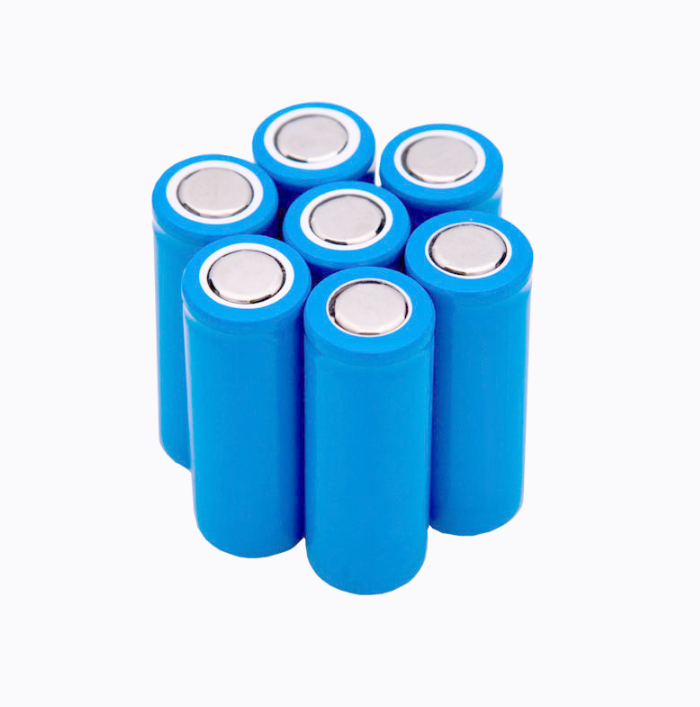
Cylindrical lithium-ion batteries have become a stable foundation in energy storage systems, electric mobility, and high-drain electronic applications. Demand for consistent electrochemical performance has increased attention toward reliable Cylindrical Cells Supply, especially for formats such as 18650, 21700, and emerging large-format designs.
A cylindrical cell typically uses a rolled electrode structure known as a “jelly roll,” where cathode, separator, and anode layers are tightly wound and inserted into a steel casing. This structure improves mechanical stability and supports consistent pressure distribution during charge and discharge cycles. Most commercial cells operate within a nominal voltage range of 3.6V–3.7V, with full charge reaching 4.2V depending on chemistry such as NMC, LFP, or NCA.
Structural Characteristics Behind Supply Stability
One key reason cylindrical formats remain widely used is manufacturing consistency. Production lines rely on automated winding systems that ensure uniform electrode alignment. This reduces internal resistance variation, often controlled within 20–35 mΩ for 18650 cells and slightly lower for advanced 21700 cells.
Heat dissipation is another advantage. The circular geometry allows radial heat flow, and battery packs can include airflow or liquid cooling channels between cells. Thermal stability is often maintained below 60°C during continuous discharge at 1C–2C rates, depending on design.
Common Technical Parameters in Supply Chains
A stable Cylindrical Cells Supply usually defines cells with:
Capacity range: 2500mAh–5000mAh (typical 18650/21700)
Charge rate: 0.5C to 1C standard charging
Discharge rate: up to 10C for high-drain variants
Cycle life: 500–1500 cycles depending on chemistry
Energy density: 180–260 Wh/kg for NMC-based cells
These parameters influence how cylindrical cells are selected across industries such as power tools, e-bikes, and backup energy systems.
Application Integration and System Design
Battery pack engineers prefer cylindrical formats because they allow modular configuration. Cells are connected in series and parallel structures such as 10S4P or 13S6P, depending on voltage and capacity requirements.
In electric mobility systems, cylindrical cells are often paired with a battery management system (BMS) that monitors:
Cell balancing
Over-voltage protection (typically >4.25V cutoff)
Under-voltage protection (around 2.5V–3.0V threshold)
Supply Chain Considerations
The Cylindrical Cells Supply chain depends heavily on:
Nickel, cobalt, and manganese availability
Precision steel casing manufacturing
Electrolyte purity control (≤50 ppm moisture level)
Quality sorting after formation cycles
Even small variations in internal impedance can lead to performance differences, making grading and testing a critical stage in supply consistency.
Conclusion
Cylindrical battery technology continues to serve as a core architecture in lithium-ion energy systems. Its mechanical durability, standardized dimensions, and stable electrochemical behavior make it an essential part of global battery production. A well-managed Cylindrical Cells Supply ensures predictable performance across both consumer electronics and industrial energy storage applications.

 English
 Arabic
 French
 Spanish
 Portuguese
 Deutsch
 Turkish
 Dutch
Dutch
 Russian
 Romaian
 Portuguese (Brazil)
 Greek
Greek