
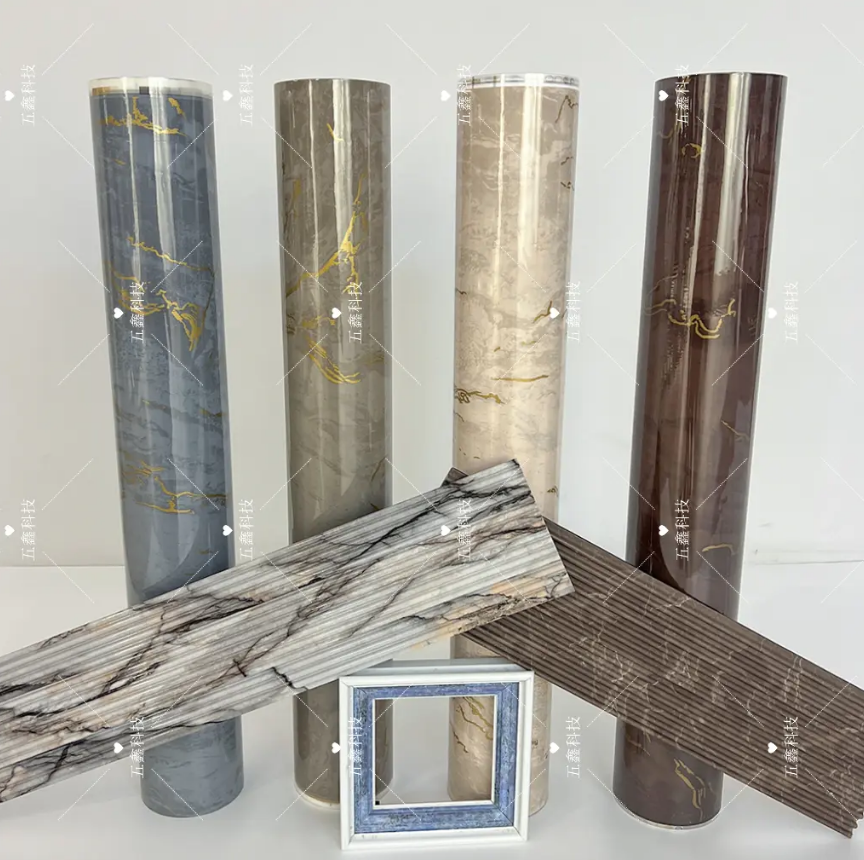
Textile decoration technology has shifted toward higher detail reproduction and more realistic surface effects. One material gaining attention in garment customization and branding workflows is Fabric-textured heat transfer film, which is designed to replicate woven or textile-like surface structures while transferring graphics onto fabric substrates.
Unlike glossy or flat transfer layers, this film introduces a tactile finish that visually blends with the garment structure. The goal is not only visual decoration but also surface integration that feels closer to woven or printed textile patterns rather than plastic-like overlays.
This article explains technical characteristics, processing conditions, and real-world application parameters used in production environments.
1. Material Construction and Layer Structure
Fabric-textured heat transfer film typically uses a multi-layer architecture:
Base carrier film: PET film, thickness around 75–100 microns
Textured PU layer: 60–120 microns with embossed fabric-like pattern
Hot-melt adhesive layer: 25–50 microns activation coating
Release liner: silicone-coated PET or paper
The embossed texture is produced through controlled roller pressing, forming micro-patterns that simulate twill, canvas, or knit structures. This structure improves both aesthetic depth and surface friction.
Typical surface roughness (Ra): 8–18 µm depending on grade
Elastic elongation: 120%–180%
Adhesion strength: 2.5–4.0 N/cm after curing
2. Heat Press Application Parameters
Processing conditions vary depending on fabric type and thickness.
Common industrial parameters:
Temperature: 150°C – 165°C
Pressure: 3–5 bar
Dwell time: 10–15 seconds
Peel type: warm peel or cold peel depending on adhesive system
Post-press cycle: 5–8 seconds for durability improvement
These parameters ensure that the adhesive layer flows into textile fibers while preserving the embossed surface pattern.
A deviation of more than ±10°C may affect texture clarity or cause flattening of the fabric pattern.
3. Fabric Compatibility Range
This film is generally compatible with:
Cotton fabrics (180–350 gsm)
Polyester blends (50/50 or 65/35)
Canvas and denim substrates
Softshell synthetic textiles
For high-stretch sports fabrics, a lower pressure setting is often used to avoid deformation of the embossed texture.
Polyester-based materials may require dye migration blocking layers when exposed to high-temperature pressing cycles.
4. Performance Characteristics
Key functional features include:
Wash resistance: 30–50 cycles under ISO 6330 standard
Flex endurance: >20,000 bending cycles without cracking
UV stability: moderate resistance for outdoor garments
Color retention: stable under 40°C washing conditions
The fabric-like surface helps reduce gloss reflection under strong lighting, improving visual consistency in photography and retail display environments.
5. Application Scenarios
This material is widely used in:
Sportswear branding patches
Workwear logos with textured identity
Fashion garment surface decoration
Promotional textile packaging items
The tactile effect provides a visual bridge between print technology and textile manufacturing.
Conclusion
Fabric-textured heat transfer film offers a hybrid solution between printing and woven aesthetics. With controlled temperature, pressure, and adhesive selection, it delivers stable bonding performance while maintaining a fabric-integrated surface effect suitable for multiple apparel categories.

 English
 Arabic
 French
 Spanish
 Portuguese
 Deutsch
 Turkish
 Dutch
Dutch
 Italiano
 Russian
 Romaian
 Greek
Greek