
Brand Authority vs Domain Authority: What Is the Real Difference?
In the world of search engine optimization, two terms are often discussed together but misunderstood separately: brand authority and domain authority. While they sound similar, they represent two very different concepts. One is rooted in perception and trust. The other is rooted in measurable link signals and technical evaluation.
Understanding the difference between brand authority and domain authority is essential for building a long term digital presence. Many businesses focus heavily on improving domain metrics without investing enough in brand strength. Others build a recognizable brand but ignore technical SEO foundations. The most successful strategies balance both.
This article explains how each works, how they influence rankings, and why treating them as interchangeable can limit growth.
What Is Domain Authority?
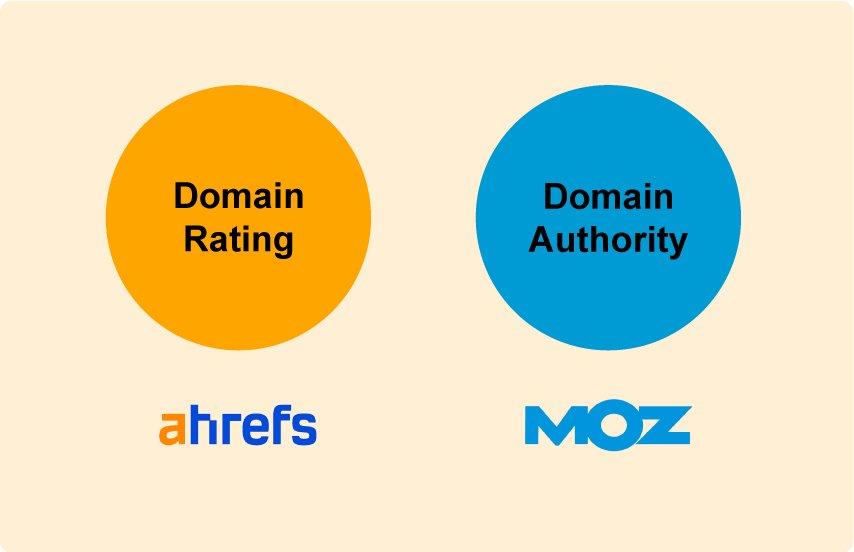
Domain authority is a predictive metric created by SEO software companies to estimate how likely a website is to rank in search engine results. It is not an official ranking factor used directly by search engines. Instead, it is a third party score that evaluates backlink quality, link quantity, and other off page signals.
For example, tools developed by companies like Moz calculate domain authority on a scale that reflects the strength of a website’s backlink profile compared to others in the index.
Domain authority is primarily influenced by:
Number of referring domains
Quality and relevance of backlinks
Link diversity
Historical link growth patterns
Because backlinks remain an important ranking signal, domain authority can be a helpful benchmark. However, it is still a comparative metric, not a direct measurement used by search engines.
What Is Brand Authority?
Brand authority refers to the trust, recognition, and credibility a brand holds in the minds of users. It goes beyond backlinks and technical metrics. It reflects how people perceive your expertise, reliability, and reputation.
Brand authority is built through consistent messaging, quality content, positive customer experiences, social proof, and thought leadership. When users actively search for your brand by name, recommend it to others, or engage repeatedly with your content, that signals strong brand authority.
Search engines increasingly evaluate brand signals such as:
Branded search queries
User engagement behavior
Mentions across reputable websites
Consistent expertise in a niche
While brand authority is harder to quantify than domain authority, its impact on long term visibility can be significant.
The Core Difference: Metric vs Perception
The fundamental difference lies in what each concept measures.
Domain authority is a numerical estimate created by SEO tools. It reflects backlink strength and relative ranking potential.
Brand authority is a broader concept. It reflects user trust, reputation, and recognition within a specific market.
Domain authority can increase through focused link building campaigns. Brand authority grows through sustained value creation and audience connection.
You can improve domain authority relatively quickly with strategic backlink acquisition. Building brand authority usually takes longer because it depends on consistent quality and credibility.
How Domain Authority Impacts Rankings
Although search engines do not directly use third party scores, they do evaluate backlink signals. Websites with stronger link profiles often rank higher for competitive keywords.
A high domain authority typically indicates:
Strong backlink quality
Wider content distribution
Better link earning potential
This can make it easier to compete for broader search terms.
However, domain authority alone does not guarantee rankings. If content quality is weak or user experience is poor, rankings may not improve despite strong link metrics.
How Brand Authority Influences Search Performance
Brand authority affects search performance in more indirect but powerful ways.
When users trust a brand, they are more likely to click its listings in search results. Higher click through rates can signal relevance.
When users spend more time on a website and explore multiple pages, that engagement indicates value. Search engines analyze behavioral signals to refine results.
When journalists, bloggers, and industry experts mention your brand naturally, it creates organic backlinks and citations. These strengthen overall authority.
Over time, strong brand authority can lead to more stable rankings because visibility is supported by real user demand, not just link metrics.
Short Term Gains vs Long Term Stability
Domain authority improvements can sometimes deliver faster ranking improvements, especially in competitive niches. Link acquisition strategies can elevate a site’s comparative strength in a relatively short time.
Brand authority tends to deliver more sustainable growth. Once a brand is recognized and trusted, it becomes less dependent on constant link acquisition. Users actively seek it out.
For example, well-known brands often rank new content faster because search engines already recognize their established trust signals. This trust is built gradually through consistent performance, credibility, and reputation. Leading SEO Agency typically advise treating domain authority as a technical reference, while focusing more on brand authority for lasting visibility and long-term impact.
Measurement Differences
Domain authority is measurable through SEO tools. You can track the score, compare it with competitors, and monitor link growth.
Brand authority is measured differently. Indicators include:
Growth in branded search volume
Direct traffic increases
Media mentions
Customer reviews
Social engagement
Industry recognition
While domain authority is expressed as a number, brand authority is reflected in audience behavior and perception.
Both require monitoring, but the metrics differ significantly.
Can One Exist Without the Other?
It is possible to have moderate domain authority but strong brand authority. For example, a niche expert with a loyal audience may generate significant branded searches and engagement without an aggressive link building strategy.
It is also possible to have high domain authority but weak brand authority. Some websites accumulate backlinks through partnerships or technical strategies but lack strong brand recognition.
The ideal scenario combines both. Strong backlinks enhance ranking potential. Strong brand authority enhances user trust and engagement.
The Role of Content in Building Both
High quality content plays a central role in strengthening both domain authority and brand authority.
Content that provides unique insights and practical value naturally earns backlinks. This improves domain authority.
The same content, when consistently aligned with audience needs, strengthens brand credibility.
Depth, clarity, and originality are essential. Repetitive or thin content may increase page count but does little for authority.
A focused content strategy that covers core topics comprehensively builds topical relevance. This reinforces brand expertise and increases link earning potential.
Backlinks vs Brand Mentions
Traditional SEO emphasized backlinks as the primary signal of authority. Modern search evaluation considers broader signals.
Brand mentions without direct links can still contribute to recognition. When reputable websites reference a brand, it strengthens perceived authority even if a hyperlink is absent.
Backlinks remain important, but they work best when supported by genuine brand recognition.
Search engines such as Google increasingly evaluate content context, relevance, and entity associations rather than relying solely on raw link counts.
Common Misconceptions
One common misconception is that increasing domain authority automatically builds brand authority. In reality, users rarely know or care about domain authority scores. They care about trust, clarity, and usefulness.
Another misconception is that brand authority alone eliminates the need for technical SEO. Even well known brands can struggle if their websites are poorly optimized or difficult to crawl.
Authority in digital marketing is multidimensional. Ignoring one dimension limits growth potential.
Strategic Approach for Businesses
Businesses should avoid obsessing over single metrics. Instead, they should build a balanced strategy.
Invest in technical SEO and high quality backlinks to strengthen domain authority.
Invest in consistent messaging, helpful content, and customer experience to build brand authority.
Track domain metrics to benchmark competitive position.
Track branded search growth and engagement metrics to evaluate brand strength.
When both move upward together, sustainable growth becomes more likely.
Why Brand Authority Is Becoming More Important
Search algorithms are evolving toward understanding entities and real world credibility. As artificial link schemes become easier to detect, genuine reputation becomes more valuable.
Brand authority protects against volatility. When users actively search for your brand, you are less vulnerable to fluctuations in non branded keyword rankings.
Strong brands also enjoy higher trust during algorithm updates. Search engines aim to prioritize sources that demonstrate reliability and expertise.
This shift does not reduce the importance of domain authority. It simply highlights that backlinks alone are no longer sufficient.
Final Perspective
Brand authority and domain authority serve different but complementary purposes.
Domain authority reflects the technical and backlink strength of a website.
Brand authority reflects trust, recognition, and credibility in the eyes of users.
One is measurable through SEO tools. The other is built through consistent value delivery and audience connection.
The most resilient digital strategies integrate both. Focusing only on metrics can lead to short term improvements without lasting trust. Focusing only on branding without technical optimization can limit discoverability.
True authority is built when strong technical foundations support genuine brand credibility. When these elements align, search visibility becomes more stable, engagement improves, and long term growth becomes achievable.
FAQs
Is domain authority a direct ranking factor?
No, domain authority is not a direct ranking factor used by search engines. It is a third party metric created by SEO tools to estimate ranking potential based on backlink profiles.
Can a website rank well with low domain authority?
Yes, especially in less competitive niches. High quality content and strong topical relevance can help smaller websites rank even if their domain authority score is modest.
How long does it take to build brand authority?
Building brand authority usually takes time. It depends on consistent content quality, audience trust, positive experiences, and industry recognition. It cannot be achieved quickly through shortcuts.
Which is more important for long term growth?
Brand authority often drives more sustainable long term growth because it builds trust and loyalty. However, domain authority supports competitiveness in search results.
Do backlinks automatically improve brand authority?
Not necessarily. Backlinks improve link strength and domain metrics, but brand authority depends on user perception, credibility, and consistent value delivery.
How can small businesses improve brand authority?
Small businesses can focus on niche expertise, publish helpful content, gather genuine reviews, and maintain consistent messaging to strengthen brand authority.
Should businesses track both metrics?
Yes, tracking both provides a balanced view. Domain authority reflects technical competitiveness, while brand authority indicators show audience trust and engagement.
Does brand authority influence click through rates?
Yes, users are more likely to click on brands they recognize and trust, which can improve organic performance over time.
Can high domain authority guarantee top rankings?
No, high domain authority improves competitive potential but does not guarantee rankings. Content relevance and user satisfaction remain critical factors.
Why are both concepts often confused?
They are confused because both relate to authority and rankings. However, one measures backlink strength while the other reflects overall brand credibility and trust.

 English
 French
 Spanish
 Portuguese
 Deutsch
 Turkish
 Dutch
Dutch
 Italiano
 Russian
 Romaian
 Portuguese (Brazil)
 Greek
Greek