
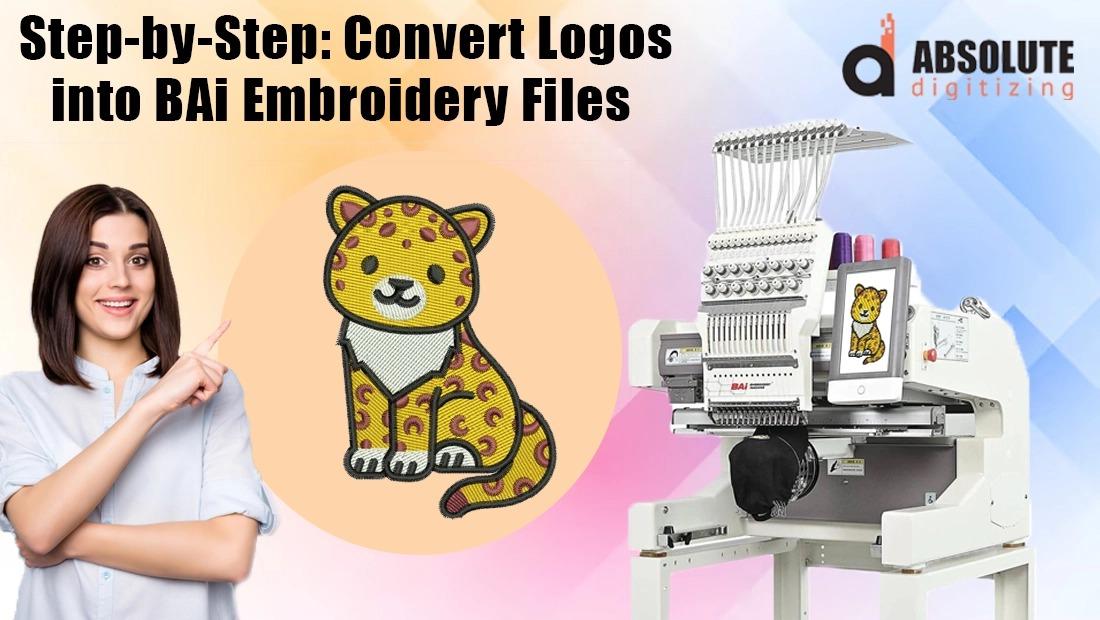
Let’s talk about your brand’s identity. You’ve poured time, thought, and probably a decent chunk of change into that perfect logo. It’s on your website, your business cards, your packaging. But there’s a whole other, tactile dimension where it could be living: stitched onto hats, polos, bags, and jackets. That’s where the magic of digitization comes in, and specifically, the ability to convert logos into BAi embroidery files with absolute precision.
Think of your logo as a beautiful, complex digital painting. An embroidery machine, however, doesn’t understand paintings. It understands a very specific set of instructions: where to place each stitch, what color thread to use, and in what order. An embroidery file, like the BAi format used by Brother commercial machines, is that instruction manual. Converting a logo isn’t just about changing a file extension; it’s about translating your 2D design into a 3D, thread-based language.
Why Precision in Digitization Isn't Optional
A sloppy digitization job is instantly recognizable. You’ve seen it before: logos where fine text becomes a blurry blob, curves look jagged like staircases, or colors bleed into one another. This doesn’t just look unprofessional; it actively hurts your brand’s reputation. Precision digitization is the invisible art that prevents all that.
It means analyzing your logo’s components and making a thousand tiny, informed decisions. How should this thin line be stitched so it doesn’t sink into the fabric? What stitch type—satin for a smooth sheen, or fill for broad areas—best represents this section? In what sequence should the colors be layered to avoid pulling or distortion? Getting this right ensures your logo is reproduced with crisp lines, vibrant color separation, and a clean, professional finish every single time it’s stitched out.
The Nuts and Bolts of the Conversion Process
So, how does a graphic file become an embroidery masterpiece? It’s a blend of specialized software and, more importantly, human expertise.
First, the digitizer looks at your logo with an embroiderer’s eye. They’ll assess elements like size, complexity, and color count. Extremely tiny details might need subtle simplification to remain stitchable. Then, using professional-grade software, they begin the mapping process.
Every shape in your logo is manually traced and assigned specific stitch properties. Text is particularly tricky; each letterform needs careful planning to maintain readability. The digitizer sets the stitch direction, which dramatically affects how light reflects off the finished piece, and establishes the correct density—too many stitches and the fabric becomes stiff; too few and it looks sparse. They also program in necessary stabilizers (like underlay stitches) that act as a foundation, ensuring the top stitches look perfect and the design holds its shape on the chosen material.
The output of this meticulous process is your BAi file, a format packed with the precise coordinates and commands a Brother embroidery machine needs to bring your brand to life in thread.
Choosing the Right Partner for the Job
You could type “logo to embroidery file” into a search engine and find a dozen auto-conversion websites for ten bucks. This is, almost always, a mistake. Automated software makes guesses. It doesn’t understand fabric types, thread tension, or the physics of how thread lays on a cap versus a polo.
Your best bet is to work with a professional digitizing service or an experienced embroiderer. Look for a partner who asks questions: What garment will this be stitched on? What’s the approximate size? They should provide a sample stitch-out of your design (often for a small fee that’s worth every penny) before finalizing the file. This proofing stage is crucial. It’s the final quality check where you can see the translation from screen to stitch and ensure every element is perfect.
A true professional views digitizing not as a commodity, but as the essential first step in creating a flawless embroidered product. They are the bridge between your digital brand and its physical, wearable expression.
The Tangible Benefits of Getting It Right
Investing in a precision BAi file pays dividends long after the initial conversion. For starters, you get consistency. Whether you’re ordering 50 uniforms now or 500 promotional hats next year, the file remains the same, guaranteeing identical results every single time. This protects your brand integrity across all materials and orders.
It also saves you money and frustration in the long run. A poorly digitized file leads to production headaches: thread breaks, puckering fabric, and unhappy embroidery machine operators. This wastes time, thread, and fabric. A clean, professional file runs smoothly, reducing machine wear, operator intervention, and ultimately, your per-unit cost.
Most importantly, it elevates your brand’s perceived value. A crisp, detailed, and beautifully textured embroidered logo communicates quality and attention to detail. It turns a simple piece of apparel into a walking billboard you’re proud to have represent your company.
Bringing Your Brand to Stitched Life
Your logo is more than just a graphic; it’s the visual heartbeat of your business. Extending its presence into the embroidered world opens up incredible avenues for team unity, marketing, and brand loyalty. But that transition from pixel to thread is a specialized craft.
By understanding the importance of precision digitization and partnering with a skilled professional to handle the technical conversion, you ensure that your brand’s identity is translated not just accurately, but brilliantly. The goal is for someone to see your embroidered logo and not just recognize it, but to appreciate the quality of its execution. That silent, textured testament to your standards is the real power of a perfectly converted embroidery file. It’s where your digital identity gets a tangible, lasting form.

 English
 Arabic
 French
 Spanish
 Portuguese
 Deutsch
 Turkish
 Dutch
Dutch
 Russian
 Romaian
 Portuguese (Brazil)
 Greek
Greek