
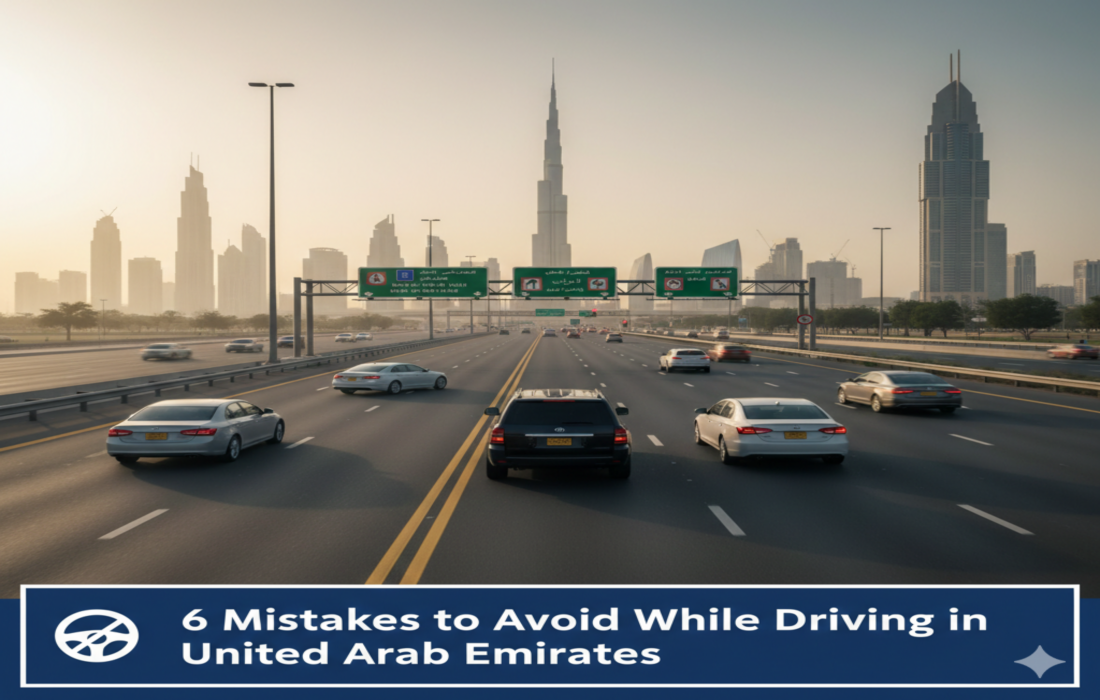
The United Arab Emirates offers some of the most modern and well maintained road networks in the world. Driving here can be a pleasure due to the wide highways and clear signage. However, the traffic environment is fast paced and strictly regulated to ensure safety for everyone.
For new and even experienced motorists, navigating these roads requires high levels of awareness. The authorities have implemented strict laws to manage the high volume of traffic effectively. Making simple driving mistakes in UAE roads can lead to hefty fines or dangerous situations.
Understanding local driving culture and regulations is essential before you get behind the wheel. Many accidents and violations occur simply because drivers are unaware of specific rules. Avoiding these common errors ensures a safer journey and protects your wallet from penalties.
Common Driving Mistakes That Put UAE Drivers at Risk
The mix of driving styles in the UAE is unique because residents come from all over the globe. This diversity means that drivers must be extra vigilant and predictable on the road. Errors often stem from a lack of knowledge or a momentary lapse in concentration.
Recognizing these potential pitfalls is the first step toward becoming a better driver in the region. Whether you are commuting in Sharjah or cruising through Dubai, the risks remain similar. We have identified six critical errors that every driver should strive to eliminate from their habits.
-
Ignoring Speed Limits and Camera Zones
Speeding is one of the most common causes of traffic fines in the Emirates. The roads are monitored by an extensive network of radars and smart cameras. Drivers often misunderstand how speed limits and buffer zones work across different emirates.
In Dubai and Sharjah, there is typically a 20 km/h buffer over the posted speed limit. This means if the sign says 100 km/h, the radar usually flashes at 121 km/h. However, this is not a rule to rely on blindly as exceptions exist in construction zones.
It is crucial to note that Abu Dhabi operates differently and has removed the buffer zone entirely. In the capital, if the sign says 140 km/h, the radar triggers exactly above that speed. Failing to adjust your speed when crossing borders is a frequent error.
Always pay close attention to the road signs rather than relying on habit. Speed limits can change frequently depending on road conditions and urban density. Staying within the limit is the simplest way to ensure safety and avoid tickets.
-
Not Using Indicators or Following Lane Discipline
Lane discipline is vital for maintaining smooth traffic flow on multi lane highways. A common mistake is weaving between lanes without using indicators. This unpredictable behaviour forces other drivers to brake suddenly and increases collision risks.
Indicators are the primary way to communicate your intentions to other motorists. Failing to signal before changing lanes or turning is a violation of traffic laws. It creates confusion and is often seen as aggressive driving by others.
Another aspect of lane discipline is knowing which lane to use. The far left lane is strictly for overtaking and faster traffic. Hogging this lane when you are not overtaking frustrates other drivers and disrupts the flow.
Always return to the right lanes once you have completed an overtaking manoeuvre. This courtesy keeps the highway efficient and reduces the risk of tailgating incidents. Proper lane usage is a hallmark of a responsible and skilled driver.
-
Driving With Poor Vehicle or Tyre Readiness
Vehicle maintenance is often overlooked until a breakdown occurs. In the UAE, the extreme summer heat puts immense stress on your vehicle components. Ignoring the condition of your car is a mistake that can leave you stranded.
Tyres are particularly vulnerable to the hot asphalt and long driving distances. Driving on worn or underinflated tyres significantly increases the risk of a blowout. Regular checks are necessary to ensure your vehicle can handle the road conditions safely.
You must ensure that your tyres meet the specific requirements for your vehicle type. For example, ensuring you have the correct specifications like 215/55r17 tyres allows your vehicle to handle the heat and road texture effectively. Using the correct size and load rating is non negotiable for safety.
Checking tyre pressure monthly and inspecting for cracks or bulges is a simple habit. It prevents accidents caused by mechanical failure. A well maintained vehicle is safer for you and everyone else on the road.
-
Distracted Driving and Mobile Phone Usage
Distraction is a leading cause of accidents worldwide and the UAE is no exception. Using a mobile phone without a hands free system is strictly prohibited. Despite this, many drivers still text or check social media while moving.
Smart cameras across Dubai and Abu Dhabi can now detect mobile phone usage inside the car. The fines for this violation are high and include black points on your licence. The financial cost is significant, but the safety risk is even higher.
Taking your eyes off the road for just a few seconds can have disastrous consequences. Traffic can stop suddenly, and a distracted driver will not have time to react. This often leads to rear end collisions that could easily be avoided.
Set your playlist and navigation before you start your journey to minimize screen interaction. If you must take a call, ensure your phone is connected to the car's Bluetooth. Keeping your focus on the road is the single best way to prevent accidents.
-
Misunderstanding Right of Way and Roundabouts
Roundabouts are common in the UAE and can be confusing for new drivers. A frequent mistake is entering a roundabout without yielding to traffic already inside. The rule is simple, vehicles inside the roundabout have the right of way.
Choosing the correct lane before entering the roundabout is also critical. If you intend to turn left or make a U turn, you must be in the left lane. If you are going straight or right, you should stick to the right or middle lanes.
Exiting the roundabout requires checking your blind spots and signaling. Cutting across lanes to exit at the last second is dangerous and illegal. Plan your route in advance to avoid panic maneuvers.
Intersections and merging lanes also require a clear understanding of right of way. Aggressively forcing your way into a lane is a violation. Patience and adherence to the yield rules prevent side impact collisions.
-
Overconfidence on Highways and Fast Lanes
The wide and straight highways of the UAE can induce a false sense of security. Drivers often underestimate their speed because the roads are so smooth. This overconfidence leads to reduced reaction times and tailgating.
Tailgating, or driving too close to the vehicle in front, is a major issue. Drivers often pressure others to move out of the fast lane by flashing lights. This is considered aggressive behavior and is punishable by law.
You must maintain a safe following distance of at least two seconds. This gap gives you enough time to brake if the traffic ahead slows down. At high speeds, this distance needs to be even larger.
Never assume that other drivers see you or will move out of your way. Defensive driving means anticipating the mistakes of others. Overconfidence reduces your ability to react to sudden hazards on the road.
Conclusion
Driving in the Emirates is a safe and efficient experience when rules are followed. Avoiding these common driving mistakes in UAE protects you and your fellow motorists. It transforms the road from a place of stress into a place of order.
From respecting speed limits to maintaining your vehicle, every action counts. Being aware of your surroundings and the specific laws of each emirate is vital. It saves you from costly fines and the trauma of accidents.
Take the time to learn the nuances of local driving culture. Be patient, use your indicators, and keep your focus on the road. Responsible driving ensures that everyone arrives at their destination safely.
FAQ Section
Are traffic fines strict in the UAE?
Yes, fines are strictly enforced with cameras and patrols.
Is distracted driving heavily penalised?
Yes, mobile phone use can result in fines and black points.
Do road rules differ between Dubai and Sharjah?
Rules are similar, but enforcement levels may vary slightly.
Can small mistakes lead to serious accidents?
Yes, minor errors can escalate quickly at high speeds.

 Arabic
 French
 Spanish
 Portuguese
 Deutsch
 Turkish
 Dutch
Dutch
 Italiano
 Russian
 Romaian
 Portuguese (Brazil)
 Greek
Greek