
In optical systems, light must be directed with high precision. Whether in imaging devices, laser modules, or measurement systems, even a small alignment error can reduce performance.
Traditional mirror-based solutions often cause reflection loss, mechanical instability, or large system size. Manufacturers need compact and stable components that control light accurately without increasing complexity.
What Is an Optical Prism and How It Works
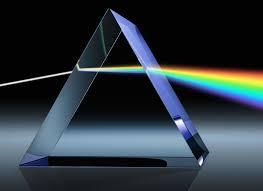
A prism is a transparent optical element with flat, polished surfaces that refract or reflect light. It is typically made from optical glass such as BK7, fused silica, or other precision materials.
Unlike mirrors, prisms use refraction and total internal reflection to redirect light. This reduces reflection loss and improves alignment stability.
Manufacturers use Prism components in systems where beam control, image rotation, or light dispersion is required.
Problems with Traditional Beam Steering Methods
1. Mirror-Based Systems
-
Sensitive to vibration
-
Coating degradation over time
-
Alignment drift
2. Mechanical Adjustment Systems
-
Larger system footprint
-
Increased assembly complexity
-
Higher maintenance cost
3. Basic Glass Blocks
-
No precision angles
-
Poor surface flatness
-
Light loss and distortion
In precision applications, these weaknesses reduce long-term reliability.
How Optical Prisms Solve These Issues
Optical prisms offer stable and accurate light redirection without moving parts. Total internal reflection provides high efficiency without reflective coatings.
Key benefits include:
-
Precise beam deviation
-
Stable image orientation
-
Reduced alignment sensitivity
-
Compact optical path design
High-quality Prism components are manufactured with tight angular tolerance and surface accuracy, ensuring consistent optical performance.
Key Features That Matter to Engineers
1. High Surface Precision
Ensures minimal wavefront distortion in imaging systems.
2. Accurate Angle Tolerance
Maintains beam direction stability.
3. Optical Material Options
Available in BK7, fused silica, sapphire, and more.
4. Coating Compatibility
Supports anti-reflection, dielectric, or protective coatings.
5. Thermal Stability
Maintains performance in changing temperatures.
Prism vs Mirror vs Beam Splitter
| Feature | Prism | Mirror | Beam Splitter |
|---|---|---|---|
| Beam Steering | Excellent | Good | Limited |
| Stability | High | Moderate | Moderate |
| Reflection Loss | Low (TIR) | Coating Dependent | Medium |
| Mechanical Complexity | Low | Medium | Medium |
| Alignment Sensitivity | Low | High | High |
For compact and durable systems, prisms often provide better long-term reliability than mirror assemblies.
Real Applications in Industry
Optical prisms are widely used in:
-
Laser systems
-
Medical imaging devices
-
Surveying instruments
-
Periscopes and binoculars
-
AR and VR optical engines
-
Scientific measurement tools
In imaging systems, prisms can rotate, invert, or displace images without adding electronic correction.
Why Manufacturers Prefer Optical Prisms
Manufacturers choose prisms because they:
-
Improve optical efficiency
-
Reduce mechanical complexity
-
Increase system stability
-
Lower long-term maintenance costs
-
Support compact device design
As optical devices become smaller and more precise, stable light control becomes essential.
How to Choose the Right Prism
When selecting a prism, consider:
Prism Type
Right-angle, penta, dove, or roof prism based on application.
Material
Choose based on wavelength range and environmental conditions.
Surface Quality
Check scratch/dig specifications for imaging clarity.
Coating Requirements
Select anti-reflective or dielectric coatings as needed.
Angular Accuracy
Ensure tolerance matches system alignment requirements.
Working with experienced optical manufacturers ensures the correct geometry and performance for your system.
Conclusion
Accurate light control is critical in modern optical systems. Traditional mirror-based solutions often introduce instability, reflection loss, and mechanical complexity.
Optical prisms provide precise beam steering, stable image correction, and high efficiency through total internal reflection. Their compact design and long-term reliability make them ideal for laser systems, imaging devices, and AR optical engines.
By selecting the right material, geometry, and surface quality, manufacturers can improve system accuracy, durability, and overall optical performance.

 English
 Arabic
 French
 Spanish
 Portuguese
 Deutsch
 Turkish
 Dutch
Dutch
 Russian
 Romaian
 Portuguese (Brazil)
 Greek
Greek