
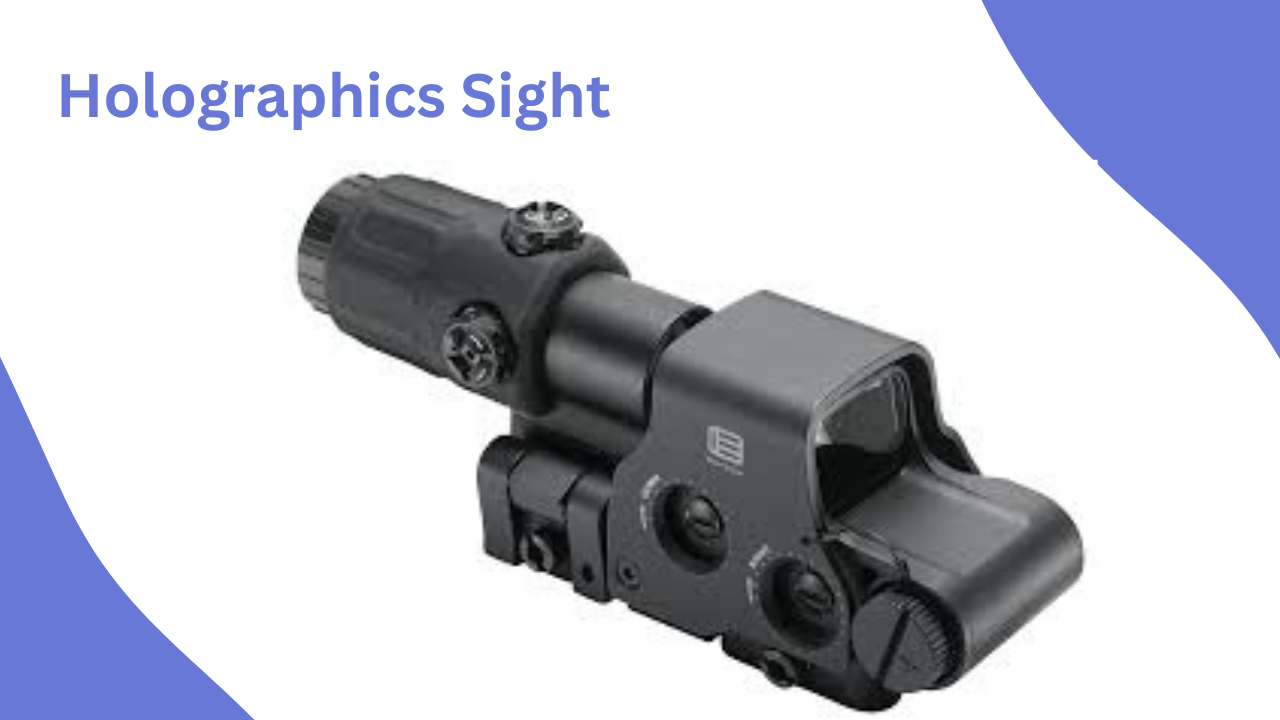
In the advanced world of tactical optics, the holographic sight stands out for its ability to provide a massive field of view and a parallax-free reticle. Unlike a standard red dot, which reflects an LED off a curved lens, a holographic sight uses a laser to reconstruct a recorded 3D image. However, for B2B manufacturers, achieving a crisp, stable reticle is a significant technical hurdle. From managing laser diode fluctuations to ensuring precise optical alignment, solving these reconstruction challenges is essential for delivering professional-grade sighting systems that perform reliably in the field.
The Physics of Laser Diode Stability and Clarity
The heart of any holographic sight is the laser diode. The most common problem in manufacturing is "spectral drift," where the laser's wavelength shifts due to power fluctuations or environmental changes. This shift can cause the reticle to become blurry or lose its sharp edges. To solve this, engineers must use high-quality, temperature-stabilized diodes and precision-matched holographic gratings. By controlling the light source with advanced driver circuitry, manufacturers ensure that the reticle remains sharp and bright, providing the clear aiming point that tactical users and defense contractors demand.
Managing Thermal Drift and Boresight Alignment
Tactical optics are often exposed to extreme heat and rapid cooling during field use. Because the holographic image is reconstructed using a series of mirrors and gratings, even a microscopic expansion of the housing can cause the reticle to shift. This "thermal drift" ruins the sight's zero and compromises accuracy. Addressing this requires using low-expansion structural alloys and specialized optical bonding agents. Ensuring that the internal components remain mechanically locked, even under thermal stress, is a key factor in building a sight that maintains its point of impact across diverse climates.
Optimizing Light Path for Parallax-Free Performance
The primary advantage of a holographic sight is its ability to remain parallax-free, allowing the shooter to stay on target regardless of their head position. However, if the internal light path is not perfectly collimated, parallax errors can creep back into the system. This usually happens during the final assembly of the optical module. Using high-precision active alignment tools during production ensures that the reconstructed laser light is perfectly parallel. This level of manufacturing precision is vital for providing the fast target acquisition and edge-to-edge clarity that modern military and law enforcement professionals require.
Conclusion
Mastering laser reconstruction and thermal stability is the only way to build a world-class holographic sight. Addressing these technical bottlenecks early in the design phase ensures your sighting systems deliver peak performance under the most demanding conditions.
ARVR Optical is a premier manufacturer of high-precision holographic sights and optoelectronic modules. We provide customized B2B solutions to help you achieve superior reticle clarity and unmatched tactical durability. Visit arvroptical.com.

 English
 Arabic
 French
 Spanish
 Portuguese
 Deutsch
 Dutch
Dutch
 Italiano
 Russian
 Romaian
 Portuguese (Brazil)
 Greek
Greek