
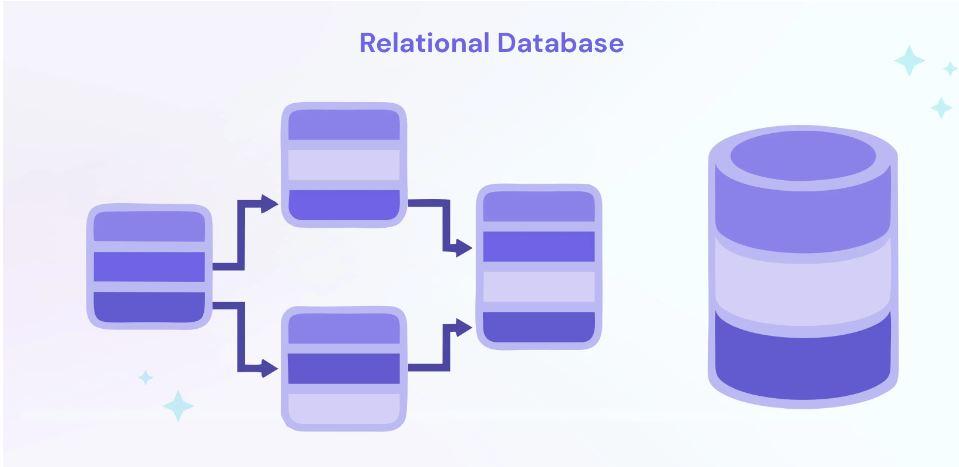
The global Relational Database Market Share is a fascinating and highly competitive arena where long-reigning kings are defending their thrones against powerful new challengers, particularly in the cloud. The market has historically been an oligopoly, with a few commercial software giants dominating the lucrative large enterprise segment. However, the rise of powerful open-source alternatives and the paradigm shift to cloud computing have fundamentally reshaped the competitive dynamics. Today, market share is no longer just a measure of on-premise software licenses sold; it is a complex calculation that includes revenue from cloud-based managed services, enterprise support contracts for open-source databases, and the underlying database usage on the world's largest cloud platforms. This has created a multi-faceted battlefield where commercial vendors, open-source communities, and cloud hyperscalers are all vying for control of the world's most critical data workloads.
At the pinnacle of the commercial market, Oracle has long held the largest market share, with its flagship Oracle Database being the system of record for a vast number of the world's largest corporations, particularly in finance and enterprise applications. Its market share is built on a foundation of technological sophistication, extreme performance, and incredibly high switching costs due to its deep integration into mission-critical systems. Microsoft is another heavyweight, holding a substantial market share with its SQL Server database. Microsoft has leveraged its dominance in the Windows Server operating system and its strong enterprise sales channels to make SQL Server a ubiquitous presence in the corporate world. Its Azure SQL Database offerings are a core part of its successful cloud strategy. IBM, with its Db2 database, also maintains a significant share, especially within large enterprises that have a long history of using its mainframe and server technologies. These incumbents continue to generate massive revenue from their on-premise installed base but are now in a fierce battle to transition those customers to their respective cloud offerings.
The most significant disruptive force in the market share equation has been the rise of open-source relational databases. MySQL, now owned by Oracle but still available under a dual-license model, holds a massive market share, especially in the web application space, being a core component of the original LAMP stack. Its ease of use and widespread adoption have made it a default choice for countless developers. PostgreSQL has also seen a meteoric rise in popularity and market share, celebrated for its advanced features, extensibility, and strict adherence to SQL standards. It is often seen as the most powerful open-source alternative to commercial databases and is experiencing rapid adoption in the enterprise. The success of these open-source databases has shifted the market share dynamics, as a huge portion of the world's databases now run on free software, with revenue being generated through optional enterprise support, consulting, and, most importantly, managed cloud services.
The cloud hyperscalers—Amazon Web Services (AWS), Microsoft Azure, and Google Cloud—have become the new kingmakers and major market share holders in the relational database world. They hold share in two ways. First, they run the infrastructure that hosts a vast number of self-managed commercial and open-source databases. Second, and more importantly, they offer fully managed Database-as-a-Service (DBaaS) offerings that have captured a huge portion of the market's growth. AWS, with its Amazon Relational Database Service (RDS), holds a commanding lead in the cloud database market, offering managed versions of MySQL, PostgreSQL, MariaDB, SQL Server, and Oracle, as well as its own high-performance, cloud-native database, Amazon Aurora. Microsoft Azure has a dominant share with Azure SQL Database, and Google Cloud is a strong competitor with Cloud SQL and its globally distributed Spanner database. These cloud providers are now arguably the largest relational database vendors in the world by revenue and usage, fundamentally reshaping the traditional market share landscape.
Explore More Like This in Our Regional Reports:
India Cluster Computing Market

 English
 Arabic
 French
 Spanish
 Deutsch
 Turkish
 Dutch
Dutch
 Italiano
 Russian
 Romaian
 Portuguese (Brazil)
 Greek
Greek