
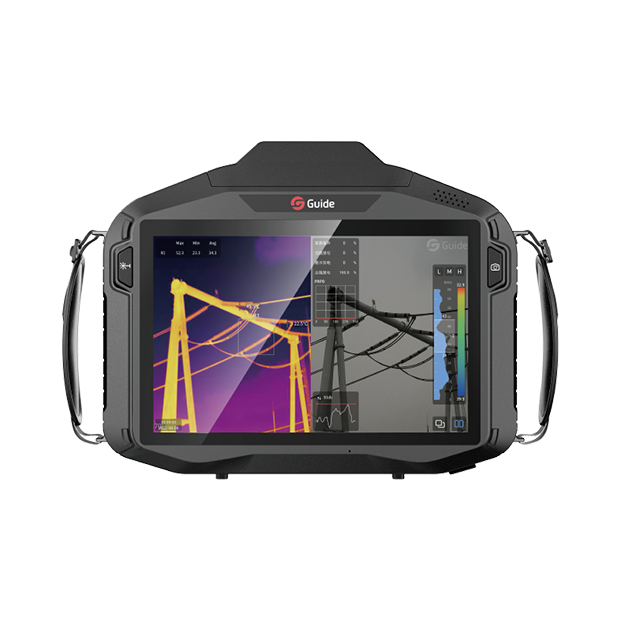
The landscape of personal technology has shifted from simple digital communication to high-level environmental sensing. By integrating a portable thermal camera for mobile phone, users can instantly unlock a hidden spectrum of information, allowing them to see heat as a vibrant, high-contrast visual map. This capability is not merely a novelty but a functional evolution that provides clarity in total darkness and identifies thermal anomalies in structural, mechanical, and electrical systems. As sensor resolutions continue to climb and physical footprints shrink, the ability to carry a laboratory-grade heat sensor in a pocket has become a reality for millions of users worldwide, offering a non-invasive look at the world’s thermal health.
The Mechanical Precision of Modern Infrared Sensors
At the heart of mobile thermal technology is the microbolometer, a specialized type of sensor that detects long-wave infrared radiation. Unlike standard cameras that capture reflected light, these sensors measure the heat energy emitted by every object in their field of view. When the hardware is connected to a mobile device, the data is processed through high-speed algorithms and displayed as a thermogram—a color-coded map where different hues represent specific temperature ranges.
Modern mobile-connected units are designed to be entirely passive, meaning they do not emit any radiation themselves. Instead, they act as sensitive receivers, capable of picking up minute temperature differences as small as 0.05 degrees Celsius. This level of precision is essential for technical tasks, such as identifying a single overheating component on a dense circuit board or finding the exact point where insulation has settled inside a finished wall without having to tear down the drywall.
Empowering the Modern Workforce with Instant Data
In the professional sector, the shift toward mobile-integrated tools has significantly increased operational efficiency. Maintenance crews and facility managers no longer need to carry bulky standalone thermal imagers for routine checks. By using a thermal imaging camera for cell phones, these experts can perform rapid inspections of electrical panels, looking for hot spots that signal loose connections or overloaded circuits. The ability to document these findings with a device already in their pocket simplifies the workflow, allowing for immediate photo evidence and data logging.
In the automotive industry, technicians use these sensors to diagnose engine misfires, cooling system blockages, and brake rotor inconsistencies. By visualizing how heat is distributed across a mechanical system, a technician can pinpoint the exact location of a malfunction without time-consuming teardowns. This leads to faster turnaround times and more accurate repairs, as the thermal data provides objective proof of the mechanical issue that can be easily shared with a customer to explain necessary repairs.
Proactive Home Maintenance and Energy Conservation
For many homeowners, the primary draw of mobile thermal imaging is the ability to conduct comprehensive energy audits without hiring a consultant. By scanning the home's envelope during different seasons, owners can identify exactly where air leaks are occurring around windows, doors, and attic hatches. This visual evidence allows for targeted weatherstripping and insulation efforts, leading to significant savings on utility bills and a more comfortable living environment year-round.
Beyond energy savings, infrared technology is a powerful ally in the fight against water damage. Because damp materials change temperature at a different rate than dry ones, a thermal scan can reveal the signature of a leak behind a shower wall or under a kitchen sink long before a visible drip or mold growth occurs. This early detection is a critical factor in maintaining the structural integrity and value of a residential property, preventing thousands of dollars in potential restoration costs.
Safety and Situational Awareness for Outdoor Exploration
When the sun sets, the infrared spectrum becomes an essential source of information for hikers, campers, and security-conscious property owners. A smartphone-compatible thermal imaging camera provides a level of situational awareness that traditional flashlights cannot match. Since body heat is a constant emission, animals and people stand out in high contrast against the cooler background of the night, regardless of how well they are camouflaged or hidden by thick foliage or brush.
This capability is also invaluable for perimeter security. Property owners can quickly scan large, unlit areas for intruders or lost pets, even in conditions of light fog or smoke. Unlike standard night vision, which requires a small amount of ambient light to function, thermal imaging works in absolute darkness, providing a reliable and consistent view of the surroundings at all times. This makes it an essential tool for situational awareness in both rural and urban settings where lighting may be inconsistent or non-existent.
Advanced Image Processing and Software Synergy
The true innovation of mobile infrared sensing lies in the marriage of hardware and software. Modern apps take advantage of the smartphone’s high-resolution display and powerful GPU to offer features like multispectral imaging. This technology overlays the edges and details from the phone’s standard visual camera onto the thermal map, providing a hybrid view that makes it much easier to identify exactly which part of a machine or wall is showing a temperature anomaly.
Furthermore, the connectivity of the smartphone allows for instant reporting and data management. Users can capture radiometric photos—which contain temperature data for every single pixel—and email them directly to a supervisor or a contractor. Many apps also include time-lapse features and video recording, allowing for the long-term monitoring of a system as it heats up or cools down under load, which is vital for stress-testing industrial components.
The Engineering Behind Miniaturization and Durability
Achieving this level of performance in a device that weighs less than an ounce is a triumph of modern engineering. Manufacturers use specialized lenses made of germanium, a material that is opaque to visible light but transparent to the infrared spectrum. These lenses focus heat energy onto a focal plane array that has been miniaturized to fit within a compact housing that plugs directly into a USB-C or Lightning port.
Despite their small size, these devices are built for the rigors of field use. Most are encased in rugged, shock-resistant materials and draw very little power from the smartphone’s battery, ensuring they can be used for extended inspection sessions without significantly draining the host device. This combination of durability and efficiency makes the mobile thermal sensor a reliable companion for both professional tool kits and emergency preparedness bags.
A New Era of Thermal Awareness in the Digital Age
As we look toward the future, infrared sensing is poised to become a standard feature of the smart lifestyle. We are seeing the rise of AI-driven apps that can automatically interpret thermal data, such as identifying a potential roof leak or suggesting that a computer’s cooling fan needs cleaning based on heat accumulation patterns. The democratization of this technology means that the visual power once reserved for elite specialists is now available to anyone with a smartphone.
The transition to a thermally aware society promises better resource management, safer infrastructure, and more successful DIY projects. By making the invisible visible, mobile-connected thermal cameras are providing us with a deeper understanding of our environment and the systems we rely on every day. Whether used for professional maintenance, home protection, or midnight exploration, the power of infrared vision is now a permanent and highly accessible part of the mobile experience.

 English
 Arabic
 French
 Spanish
 Portuguese
 Deutsch
 Turkish
 Dutch
Dutch
 Russian
 Romaian
 Portuguese (Brazil)
 Greek
Greek