
Updated April 2026
Cosmetic acupuncture has gone fully mainstream in San Francisco. Equinox members are asking about it. Dermatology clinics in the Marina and the Mission are now offering it alongside microneedling and PRP. Patients who would have booked Botox five years ago are looking for something that fits a more measured approach to aging.
The challenge is that not every California licensed acupuncturist has the specialized training to do facial work well. A standard L.Ac. license does not require facial protocol training, and the gap between a generalist who needles faces occasionally and a trained cosmetic acupuncture specialist is significant. This guide walks through how to vet a specialist in San Francisco, what training actually matters, what realistic results look like, and the questions to ask before booking.
What Cosmetic Acupuncture Actually Is
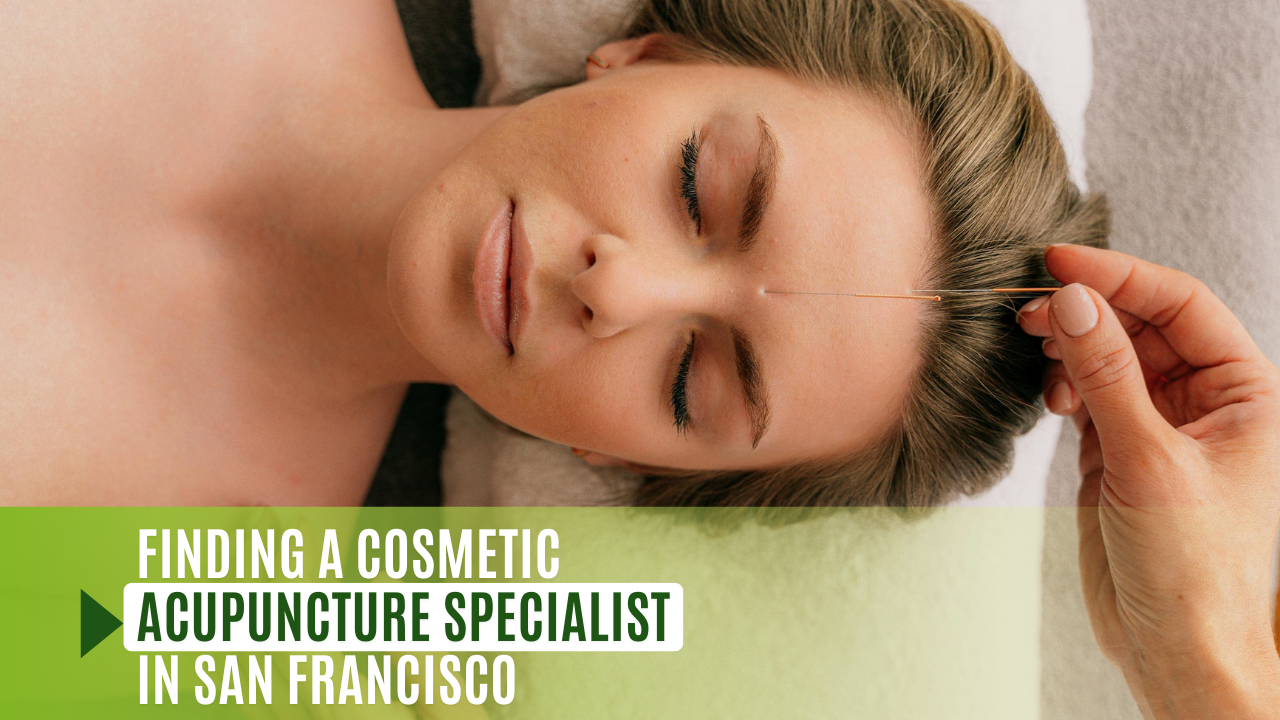
Cosmetic acupuncture, also called facial acupuncture or facial rejuvenation acupuncture, is a series of treatments combining body acupuncture points selected based on TCM constitutional diagnosis with very fine needles inserted superficially in specific patterns across the face.
Recognized Protocols
Most experienced cosmetic acupuncturists work within a named protocol. The most common in the U.S. include Mei Zen Cosmetic Acupuncture, developed by Martha Lucas, and Constitutional Facial Acupuncture, developed by Mary Elizabeth Wakefield. Both involve formal post-graduate training, defined needling patterns, and a treatment series structure. There are several other recognized protocols. What matters is that the practitioner has completed formal post-graduate training in one of them.
How It Differs From Microneedling, Dermarolling, and Botox
Microneedling and dermarolling cause controlled microtrauma to the skin to stimulate collagen, often paired with topical serums. Cosmetic acupuncture inserts very fine needles to specific points and follows a different mechanism focused on local circulation, micro-injury healing response, and the broader TCM picture of the patient.
Botox temporarily paralyzes specific facial muscles to soften dynamic wrinkles. Cosmetic acupuncture does not paralyze muscles. The visible results, when they happen, come from improved skin tone, reduced puffiness, and slow remodeling of fine lines over a series of sessions.
The right comparison is not which one is better, but which one fits what you are actually trying to address.
What It Can and Can't Do
Cosmetic acupuncture has reasonable evidence and clinical experience supporting improvements in fine lines, skin tone and brightness, jaw tension and bruxism patterns, mild facial puffiness, acne and post-acne marks, and overall skin appearance over a series of treatments.
It will not match the immediate, predictable wrinkle reduction of Botox for deep dynamic wrinkles. It will not replace a surgical facelift for significant skin laxity. Most experienced practitioners will tell you both of these facts directly during the consultation, which is part of how you know you are working with someone trustworthy.
Why Specialized Training Matters
A standard California L.Ac. license signals 3,000-plus hours of training in acupuncture and Chinese medicine. It does not signal any particular training in facial protocols.
Recognized Cosmetic Acupuncture Certifications
Look for completion of one or more of the following: Mei Zen Cosmetic Acupuncture System, Constitutional Facial Acupuncture (Wakefield method), AcuFacial training, or an equivalent formal post-graduate program. These programs run several days to several weeks of dedicated training, with hands-on facial mapping and needling practice. A weekend introduction or a single workshop is not the same thing.
Hands-On Facial Mapping Experience
The face has dense vascular and neural anatomy. Needle placement that is fine for body acupuncture is not automatically fine for cheekbones, around the eyes, or along the jaw. A cosmetic acupuncturist needs hands-on experience with facial mapping, depth and angle of insertion in different facial zones, and management of bruising risk.
The right number of facial cases performed before a practitioner should be doing this work without supervision is not formally defined, but it is in the hundreds, not dozens.
Credentials to Look For in a Cosmetic Acupuncture Specialist in SF
A short list of what should be true of any practitioner you book with for facial work:
-
Active California L.Ac. license, verifiable on the California Department of Consumer Affairs license search
-
Documented post-graduate cosmetic acupuncture certification (Mei Zen, Constitutional Facial, or equivalent)
-
Several years of dedicated cosmetic acupuncture practice, not just a few months of adding it to a general practice
-
Clear before-and-after photo documentation, ideally of the practitioner's own patients
-
Familiarity with skin physiology, basic dermatology, and contraindications
-
Comfort discussing realistic results, not promising dramatic transformation
If a clinic offers cosmetic acupuncture but the practitioner cannot answer specifically what protocol they trained in or how long ago, that is the answer to your question.
What a Good Cosmetic Acupuncture Treatment Looks Like
A serious first cosmetic acupuncture session in San Francisco should run 75 to 90 minutes.
Intake
A proper intake covers your skin history (acne, sensitivity, recent treatments), current skincare regimen, recent injectables or surgical procedures, medications including blood thinners and hormonal treatments, lifestyle factors that affect skin (sleep, hydration, stress, sun exposure), aesthetic goals and what specifically you are hoping to improve, and overall health and TCM constitutional picture.
A Constitutional Approach
Strong cosmetic acupuncture is not just about face needling. The TCM perspective is that the face reflects the rest of the body, so your treatment should include body points based on your constitutional picture. A treatment that goes straight to face needles without addressing the body is missing half the work.
Adjunct Tools
Many cosmetic acupuncture sessions include gua sha facial massage, jade rolling, LED light therapy, herbal masks or topical applications, and lymphatic drainage techniques. These complement the needling and accelerate visible results for many patients.
Series-Based Treatment Plans
Cosmetic acupuncture results build over a series. Most protocols call for 10 to 12 sessions, typically twice a week for the first four to six weeks, then weekly. Maintenance is usually one session every four to six weeks after the initial series. A practitioner who recommends a single session to try it out is not setting realistic expectations. One session can feel relaxing, but it will not produce visible results.
Realistic Expectations and Timeline
When Most Patients Notice Results
Subtle changes in skin tone and brightness often show up within three to four sessions. Improvements in fine lines, jaw tension, and puffiness usually take six to eight sessions to become clearly visible. The full effect of an initial series is generally evaluated at the 10 to 12 session mark.
How Long Results Last
With monthly maintenance, results from an initial series typically hold for six to twelve months and continue to improve gradually. Without maintenance, results typically begin to fade after three to four months. This is similar to the maintenance pattern for many aesthetic treatments.
Comparing the Timeline to Injectables and Microneedling
Botox produces visible results in 3 to 14 days and lasts three to four months. Microneedling produces results over four to six weekly sessions, with maintenance every three to six months. Cosmetic acupuncture is on the longer end of timelines and the more gradual end of changes. That fits some patients well. For others, a different modality is a better match.
Safety and Bruising Risk
Bruising is the most common cosmetic acupuncture side effect. Facial vascular anatomy is dense, and even excellent technique produces occasional bruises, particularly around the eyes and along the cheekbones. Most are minor and resolve within a few days.
Pre-Treatment Guidance
Most clinics ask patients to avoid for 48 to 72 hours before a session: blood-thinning medications when medically reasonable to pause, alcohol, high-dose fish oil, vitamin E, and aspirin (when not medically required), and recent retinoid use immediately before the session.
Post-Treatment Care
Avoid intense workouts and saunas for the rest of the day, drink water, avoid putting heavy makeup over needled points for several hours, and follow your usual skincare with extra hydration. If you have any planned events or photographs within 72 hours of a session, tell your practitioner so they can adjust technique to minimize bruising risk.
Eight Questions to Ask Before Booking
-
What cosmetic acupuncture protocol are you trained in, and where did you complete the training?
-
How many years have you been doing facial work specifically?
-
Approximately how many cosmetic cases have you treated?
-
Will you address my body and constitutional picture, or just face points?
-
What does a typical treatment series look like?
-
How do you minimize bruising risk?
-
What results are realistic for someone with my concerns?
-
Do you have before-and-after photos of your own patients?
How Akara Integrative Approaches Cosmetic Acupuncture
At Akara Integrative on Valencia Street, cosmetic acupuncture is part of a broader integrative practice rather than a standalone aesthetic add-on. Both Yen Man, L.Ac. and Lauren Dunn, L.Ac. work within constitutional facial protocols, combining body points based on TCM diagnosis with facial needling, gua sha, and adjunct techniques.
New cosmetic patients begin with a 90 minute consultation and first treatment that includes a full health and skin intake, body constitutional treatment, and the first facial session. Series are structured around a standard 10 to 12 session protocol with reassessment at session six. We coordinate with patients pursuing complementary aesthetic treatments such as Botox, microneedling, or laser care, with appropriate spacing between modalities.
Find directions, hours, and patient feedback on our Google Business Profile, or book a cosmetic acupuncture consultation directly through our website.
Frequently Asked Questions
1. How much does cosmetic acupuncture cost in San Francisco?
Initial cosmetic acupuncture sessions in San Francisco typically run $200 to $325 depending on session length and what is included. Follow-up sessions usually range from $175 to $250. A full series of 10 to 12 sessions usually lands somewhere between $1,800 and $2,800 total, often packaged at a modest discount when paid as a series.
2. How many sessions do I need for visible results?
Most patients see early changes in skin tone and brightness within three to four sessions. Clearer improvements in fine lines and facial puffiness usually take six to eight. The full effect of an initial series is evaluated at 10 to 12 sessions. Maintenance is typically monthly.
3. Does cosmetic acupuncture hurt?
Most patients report minimal sensation. Facial needles are very fine, roughly the diameter of a human hair, and inserted superficially. Some areas, such as the space between the brows, are more sensitive than others. Sharp ongoing pain is not normal, and you should tell your practitioner.
4. Is there downtime after a session?
No formal downtime. Mild redness at needle sites usually resolves within an hour. Bruising, when it occurs, takes a few days. Most patients return to normal activity immediately, though intense workouts and saunas are usually avoided for the rest of the treatment day.
5. Can I combine cosmetic acupuncture with Botox, fillers, or microneedling?
Yes, with appropriate spacing. Most practitioners recommend at least two weeks between Botox or filler injections and cosmetic acupuncture. Microneedling is typically scheduled at least one to two weeks apart from facial acupuncture. Coordination with your aesthetic provider matters. Share what you are doing across modalities.
6. Who shouldn't get cosmetic acupuncture?
Patients on certain blood-thinning medications, those with active facial skin infections or inflammatory dermatologic conditions, patients during pregnancy when certain points are contraindicated, and patients with bleeding disorders should discuss the treatment with both their L.Ac. and primary care provider before booking. A thorough intake should screen for these.
About the author: Yen Man, L.Ac., Dipl. O.M., is a California licensed acupuncturist and NCCAOM Diplomate of Oriental Medicine practicing at Akara Integrative on Valencia Street in San Francisco's Mission District. Read more on Yen's bio page, learn about Lauren Dunn, L.Ac., or find us on our Google Business Profile.

 English
 Arabic
 French
 Spanish
 Portuguese
 Deutsch
 Turkish
 Dutch
Dutch
 Italiano
 Russian
 Romaian
 Greek
Greek