
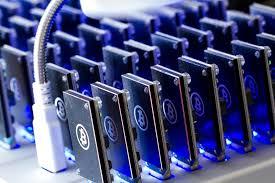
Cryptocurrency mining has become increasingly competitive, pushing investors to adopt more efficient and specialized technologies. As network difficulty rises, outdated hardware quickly becomes unprofitable. This shift has made ASIC-based systems the standard for serious mining operations worldwide.
In 2026, mining is no longer about experimentation. It requires structured planning, optimized equipment, and clear financial projections. Investors who understand performance metrics and operational efficiency are better positioned to generate sustainable returns.
Why ASIC Mining Dominates the Bitcoin Industry
ASIC mining refers to the use of Application-Specific Integrated Circuit devices designed exclusively for solving Bitcoin’s SHA-256 algorithm. Unlike CPUs or GPUs, ASIC machines perform one single task at extremely high efficiency. This focused capability gives them a major performance advantage.
Because ASIC hardware is purpose-built, it eliminates unnecessary computing processes. All energy and processing power are dedicated to mining calculations. This results in higher hash rates and improved energy efficiency compared to general-purpose devices.
As global competition increases, efficiency becomes critical. Older technologies struggle to keep up with network difficulty adjustments. ASIC-based operations, therefore, dominate industrial mining farms across the world.
Professional investors choose ASIC systems because they provide predictable performance metrics. Hash rate, energy consumption, and output efficiency can be measured clearly, making financial forecasting more accurate.
How ASIC-Based Systems Work in Practice
Mining involves validating cryptocurrency transactions and adding them to the blockchain. Machines compete to solve complex mathematical puzzles. The first to find the correct hash earns the block reward.
ASIC hardware continuously generates hashes at extremely high speeds. Hash rate, measured in terahashes per second, indicates how many calculations a device performs. Higher hash rates improve the probability of earning rewards.
Energy consumption is measured in watts. Profitability depends on balancing the hash rate with the electricity usage. Efficient ASIC devices produce more hashes per watt, which improves margins over time.
Most operators join mining pools instead of mining independently. Pools combine computing power from multiple participants and distribute rewards proportionally. This reduces income volatility and stabilizes revenue streams.
Key Metrics to Evaluate Before Investing
When analyzing ASIC mining equipment, hash rate is the first performance indicator to review. A higher hash rate increases earning potential, but it must be evaluated alongside energy efficiency.
Efficiency is commonly expressed as watts per terahash. Lower values indicate better performance relative to energy consumption. Investors should calculate long-term electricity costs before purchasing hardware.
Initial capital expenditure is another important factor. High-performance ASIC devices can require significant upfront investment. A detailed break-even analysis helps determine realistic timelines for recovering capital.
Cost Structure and Operational Planning
ASIC mining involves both fixed and variable costs. Fixed costs include hardware purchase, facility setup, electrical upgrades, and cooling infrastructure. These investments determine operational capacity.
Electricity remains the most significant ongoing expense. Even minor fluctuations in energy pricing can impact profitability projections. Careful location selection and energy management improve financial outcomes.
Maintenance is often underestimated. Machines operate 24 hours a day under heavy computational load. Preventive servicing reduces downtime and prevents costly hardware failures.
Profitability Factors in 2026
Bitcoin price remains a major variable influencing mining revenue. Rising prices increase the value of block rewards, while price declines can temporarily reduce profitability. Strategic financial planning helps manage volatility.
The Bitcoin halving event reduces block rewards approximately every four years. Each halving increases competition and emphasizes efficiency. Investors must account for reward reductions in long-term forecasts.
Network difficulty automatically adjusts based on total global hash power. As more miners join, puzzles become harder to solve. Continuous hardware upgrades may be necessary to remain competitive.
Risks and Challenges of ASIC Mining
Market volatility presents ongoing uncertainty. Sudden price corrections can affect revenue projections. Maintaining financial reserves protects operations during challenging periods. Hardware obsolescence is another risk. Rapid technological advancements can reduce the competitiveness of older devices. Planning for periodic upgrades ensures sustainable performance.
Operational risks include overheating, dust accumulation, and electrical instability. Environmental controls and structured maintenance minimize downtime and extend equipment lifespan.
Strategic Approaches for Long-Term Success
Successful ASIC mining operations focus on efficiency and disciplined management. Investors who treat mining as a structured business rather than speculation are more likely to achieve stable results.
Diversification strategies can reduce overall risk. Some operators reinvest profits into expanding hash power, while others hold a portion of earnings as long-term digital assets. Balanced allocation strengthens financial security.
Continuous industry monitoring is essential. Tracking network difficulty, hardware innovations, and market trends allows quick adaptation. Agility becomes a competitive advantage in a rapidly evolving sector.
Conclusion
ASIC mining continues to define the professional standard for Bitcoin mining operations. Its specialized design, high efficiency, and measurable performance metrics make it essential for serious investors.
However, success depends on careful cost analysis, risk management, and long-term planning. Electricity pricing, hardware efficiency, and market volatility must all be evaluated before committing capital.

 English
 Arabic
 French
 Spanish
 Portuguese
 Deutsch
 Turkish
 Dutch
Dutch
 Italiano
 Russian
 Romaian
 Greek
Greek