
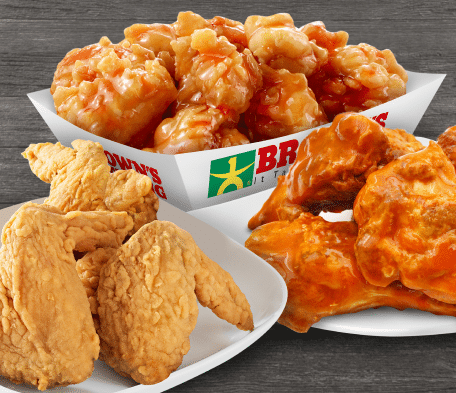
There are sounds that define a city. The rumble of elevated trains. The crack of a bat at Wrigley. And then there is a sound less obvious but equally embedded in Chicago's collective consciousness: a simple musical phrase, barely five seconds long, that has accompanied millions of meals across three generations. "Brown's Chicken, It Tastes Better." The jingle that emerged from a Bridgeview trailer in 1949 has become as iconic as the buttermilk-cottonseed oil recipe it celebrates . For over 74 years, this melody has played in the background of family dinners, Little League celebrations, and Saturday night take-out runs—all in pursuit of the best fried chicken in chicago .
The Jingle's Humble Beginnings
The Brown's Chicken jingle emerged from an era when advertising relied on memorability rather than complexity. No elaborate production. No celebrity endorsements (at least initially). Just a handful of notes arranged to carry a simple message: the chicken tastes better. The phrase itself functions on multiple levels—declarative statement, comparative claim, and invitation to verification all compressed into three words.
The melody's interval structure made it easy to hum. The words formed a complete grammatical sentence, eliminating confusion about the message. And the claim—"It Tastes Better"—invited personal validation rather than mere acceptance. Customers who ate Brown's chicken could confirm or deny the statement themselves, making them active participants in the brand's promise.
The Second City Connection
The jingle's story intersects with Chicago's legendary comedy scene in ways that add layers to its cultural significance. In 1989, a young improviser from Second City named Steve Carell landed his first television commercial—for Brown's Chicken . Fresh from college and newly arrived in Chicago, Carell joined the comedy troupe that had launched generations of comic talent. The commercial represented his screen debut.
In the spot, Carell appears in a white shirt, brown tie, and Brown's Chicken trucker hat, balanced on a ladder after adjusting signage for "cholesterol free cooking." He explains that Brown's has always used cholesterol-free cottonseed oil, but now the batter is also cholesterol-free. Wind blows away some lettering until the sign simply reads "free," prompting crowds to descend upon the restaurant. Throughout the chaos, Carell remains blissfully unaware of a near-motorcycle crash in the parking lot.
The commercial showcased the deadpan humor that would later define Carell's career. Brown's remains proud of the connection, featuring an image from the commercial on its Tender Truck, with updated signage reading "have the boss order tenders for the office" .
Why Jingles Matter
Marketing experts have analyzed why simple jingles prove so durable. The answer lies in how human memory works. Melodies activate multiple brain regions simultaneously, creating more durable memory traces than words alone. The Brown's jingle, with its simple ascending-descending phrase, provides ideal mnemonic structure. Chicagoans who haven't heard it for decades can reproduce it accurately because the melody has embedded itself in neural pathways.
This auditory encoding explains why the jingle functions as memory trigger for broader Brown's experiences. The sound evokes not merely the slogan but entire complexes of association: family dinners, post-game gatherings, childhood celebrations. One customer's Yelp review captured this phenomenon indirectly: "Brown's Chicken has a classic, nostalgic feel to it." That nostalgia derives partly from the jingle's persistent presence across decades.
Chicken Pieces: The Sound of Satisfaction
The bone-in chicken pieces that form Brown's foundation have their own auditory signature. The 12-piece assortment—three legs, three thighs, three wings, and three of the larger white meat cuts—arrives with a sound: the rustle of the box, the crackle of crust as pieces shift . The jingle prepares customers for that sound, and that sound confirms the jingle. The auditory experience is complete.
Wings: The Rhythm of Sharing
Brown's Jumbo Buffalo Wings have their own soundtrack. Described as "mighty meaty and mighty good," these wings create the sounds of sharing—the clatter of bones on plates, the laughter between bites, the hum of conversation . The jingle plays in the background of these sounds, connecting the product to the experience.
Chicken & Jumbo Tenders: The Dip and Bite
Jumbo tenders, cut from whole all-white meat, produce the sound of dipping—the soft splash of sauce, the crisp snap of crust . The approximately dozen dipping sauces available add variety to the experience, but the foundational sound remains. The jingle, remembered from childhood, accompanies each bite.
Sandwich: The Dare in Sound
The Original Jumbo Chicken Sandwich carries a menu dare that echoes in the mind: "we dare to say ours tastes better!" . The dare, like the jingle, invites verification. Customers who accept the dare hear the jingle as they bite, confirming or challenging the claim with every crunch.
Bowls: New Sounds, Old Melody
Brown's Bowl collection creates new auditory experiences. The Homestyle Chicken Bowl layers boneless chunks over mashed potatoes with gravy and corn. The Buffalo Mac & Cheese combines Buffalo-sauced chicken with creamy macaroni . These compositions produce different sounds—the scrape of a spoon, the soft release of sauce—but the jingle remains, connecting new formats to old traditions.
Express Catering: The Jingle at Scale
Brown's Express Catering operation extends the jingle's reach to gatherings of any size. Serving from 20 to 2,000 guests, catering carries the melody into celebrations where food becomes the centerpiece . The Express Party Pack, feeding 8-10, includes 24 pieces, two Family Pasta Bowls, two Family Sides, and biscuits . The Chicken Party Pack, serving 10-15, offers 30 pieces with slider buns . The jingle plays in the minds of hosts and guests alike.
The Professional Detailing Parallel
The power of the jingle to create lasting memory parallels the satisfaction of professional car detailing where the result is immediately visible and memorable. A detailed vehicle does not need a slogan; the gleaming finish speaks for itself. Yet the reputation that precedes the detailer functions like a jingle—a promise that the result will satisfy.
Mobile car detailing services extend this reputation to client locations, proving that quality need not require inconvenience . The detailer who arrives at a driveway carries not only equipment but a reputation built through consistent results. Brown's jingle operates on identical principles: a promise of quality that customers can verify with every experience.
The 1993 Test of the Jingle
On January 8, 1993, the Brown's Chicken massacre at the Palatine location tested the jingle's power as few events ever test a brand. Seven people were murdered—owners Richard and Lynn Ehlenfeldt and five employees . Sales dropped 35 percent systemwide, and the company eventually closed 100 locations.
Yet the jingle survived. Over 21 locations remain in operation today . Customers who returned after the tragedy carried the jingle with them, humming it as they approached counters, teaching it to their children. The melody that had accompanied family dinners for decades proved resilient enough to survive even this profound violation.
The Joliet Return: The Jingle Returns
The January 2026 reopening of Brown's Chicken at 410 South Chicago Street in Joliet brought the jingle back to a community that had missed it . Brown's had previously operated on Jefferson Street and South Larkin Avenue. Their closure left residents without the chicken that had anchored their gatherings—and without the jingle that had accompanied them.
The new location's enthusiastic reception confirmed that the jingle still resonates. Customers who remembered previous locations returned, humming the melody, sharing it with children and grandchildren. The jingle that emerged from a Bridgeview trailer in 1949 had returned to Joliet.
The Mushrooms That Sing
No account of Brown's jingle would be complete without acknowledging the mushrooms. The menu admits: "our mushrooms are as legendary as browns chicken itself." Hand-breaded and fried to golden perfection, these mushrooms have their own following. Customers who order them hear the jingle in their minds, connecting the legendary sides to the legendary chicken.
The 1949 Foundation
The jingle that emerged from that Bridgeview trailer was not written in 1949. It came later, as the brand grew. Yet its message—"It Tastes Better"—was true from the first day John and Belva Brown opened their doors. The buttermilk batter, the cottonseed oil, the hand-breading—all were chosen because they made the chicken taste better. The jingle simply stated what the recipe had already proven.
Conclusion
The fried chicken that comes with its own jingle is more than a marketing curiosity. It is a cultural artifact, a memory trigger, a promise delivered in melody. For over 74 years, the Brown's Chicken jingle has accompanied family dinners, Little League celebrations, and Saturday night take-out across Chicagoland. It survived tragedy and closure, returning to communities that had missed it. And through it all, the message remained true: the chicken tastes better. The buttermilk batter has not changed. The cottonseed oil remains pure. The hand-breading continues. The pursuit of the best fried chicken in chicago has always been accompanied by this simple melody—a soundtrack to satisfaction that has played for three generations and will continue for generations to come. That is why the jingle matters. That is why it endures.
Frequently Asked Questions
What is the Brown's Chicken jingle?
The jingle consists of the phrase "Brown's Chicken, It Tastes Better" set to a simple, memorable melody that has accompanied the brand for decades .
Who appeared in a Brown's Chicken commercial in 1989?
A young Steve Carell, then a member of Chicago's Second City comedy troupe, appeared in his first television commercial for Brown's Chicken in 1989 .
Is the jingle still used today?
Yes. Brown's continues using the jingle, describing it as "almost as famous as our chicken" on their website and in location descriptions .
Why do jingles create lasting memories?
Melodies activate multiple brain regions simultaneously, creating more durable memory traces than words alone. The simple ascending-descending phrase embeds itself in neural pathways .
What happened to the Palatine location in 1993?
On January 8, 1993, seven people were murdered at the Brown's Chicken in Palatine in what became known as the Brown's Chicken massacre .
How did the jingle survive the 1993 tragedy?
The jingle survived because the trust built across decades proved resilient. Customers who returned carried the melody with them, teaching it to new generations .
What is the Tender Truck?
The Tender Truck is a Brown's mobile catering vehicle featuring an image from the Steve Carell commercial with updated signage reading "have the boss order tenders for the office" .
How many Brown's locations exist today?
As of 2024, Brown's operates over 21 restaurants, all within the Chicago metropolitan area .
Does the jingle appear in Brown's marketing materials?
Yes. The Brown's website explicitly states: "With a jingle almost as famous as our chicken, visit a Brown's near you to find out why 'It Tastes Better'" .
What does the jingle promise?
The jingle promises that Brown's chicken tastes better than alternatives—a claim that customers can verify through personal experience with the buttermilk-cottonseed oil recipe .

 English
 Arabic
 French
 Spanish
 Portuguese
 Deutsch
 Turkish
 Dutch
Dutch
 Italiano
 Russian
 Romaian
 Portuguese (Brazil)