
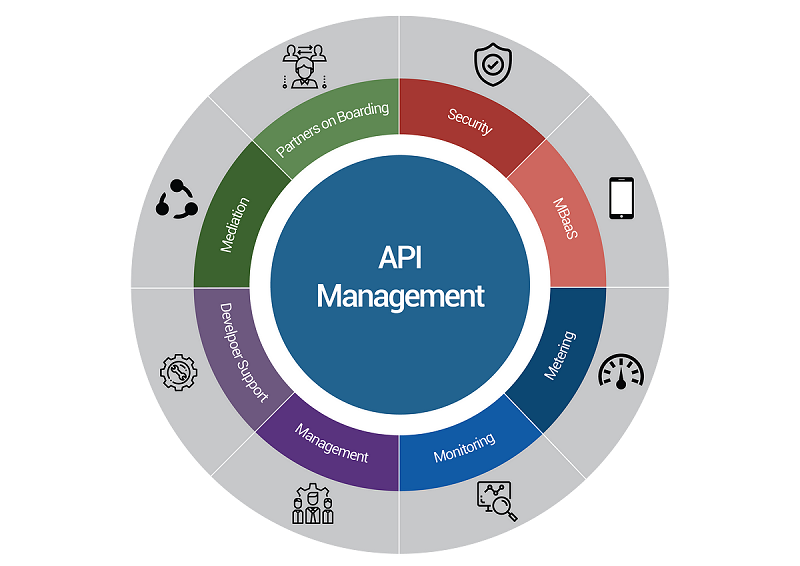
The explosive growth of the digital economy, built on a foundation of interconnected applications and services, has fueled the rapid expansion of a critical enterprise infrastructure market. The global API Management Market is a large and thriving ecosystem of software vendors and cloud providers dedicated to helping organizations control, secure, and scale their API programs. This market has moved from a niche concern for a few tech companies to a mainstream, mission-critical component of nearly every organization's IT strategy. Driven by the rise of microservices architectures, the adoption of hybrid and multi-cloud strategies, and the business imperative to create connected digital experiences, the demand for robust API management solutions has never been higher. This has created a highly competitive and innovative market where vendors compete on security, performance, and developer experience.
To better understand its structure, the market can be segmented by its core components, deployment models, and the size of the organization it serves. By component, the market is divided into the API management platform itself (which includes the gateway, developer portal, and analytics) and the associated professional services (which include API strategy consulting, implementation, and training). By deployment model, solutions are offered as traditional on-premise software, which provides maximum control; as a cloud-based (iPaaS - Integration Platform as a Service) offering, which provides scalability and ease of use; or, increasingly, as a hybrid model that allows an organization to deploy gateways on-premise or in any cloud while managing them from a single, centralized cloud control plane. The market serves organizations of all sizes, from startups with a few APIs to large enterprises managing thousands of them.
The primary forces propelling the market's expansion are deeply rooted in modern software architecture and business strategy. The number one driver is the architectural shift towards microservices. Instead of building large, monolithic applications, companies are now building applications as a collection of small, independent services that communicate with each other via APIs. This creates a massive increase in the number of internal ("east-west") APIs that need to be managed and secured. The push for digital transformation and the creation of "platform business models" is another major catalyst. Companies want to expose their data and services to external partners and developers to foster innovation, which is only possible with a secure and well-managed API program. Furthermore, the rise of mobile applications, which rely heavily on APIs to communicate with back-end services, has been a massive and sustained driver of demand.
Despite the strong growth prospects and clear benefits, the API management market is not without its challenges. The primary challenge is the complexity of managing a diverse and distributed API landscape. As organizations adopt hybrid and multi-cloud strategies, their APIs are spread across many different environments, making it difficult to achieve consistent security and governance. The security of the APIs themselves is a paramount concern. APIs are a prime target for attackers, and a single insecure API can expose an organization's most sensitive data. This requires a "shift-left" approach to API security, where security is built into the entire API lifecycle, from design to deployment. Finally, driving developer adoption and creating a great developer experience through clear documentation and easy-to-use tools is a critical, and often overlooked, challenge for a successful API program.
Top Trending Reports:

 English
 Arabic
 French
 Spanish
 Portuguese
 Deutsch
 Turkish
 Dutch
Dutch
 Russian
 Romaian
 Portuguese (Brazil)
 Greek
Greek